


More news on this day
Major international airlines are prolonging or tightening restrictions on routes over parts of the Persian Gulf into 2027 after renewed drone and missile attacks on Saudi Arabia and Kuwait, extending longer flight times, higher costs and ongoing uncertainty for passengers traveling between Europe, Asia and the Gulf.
Get the latest news straight to your inbox!
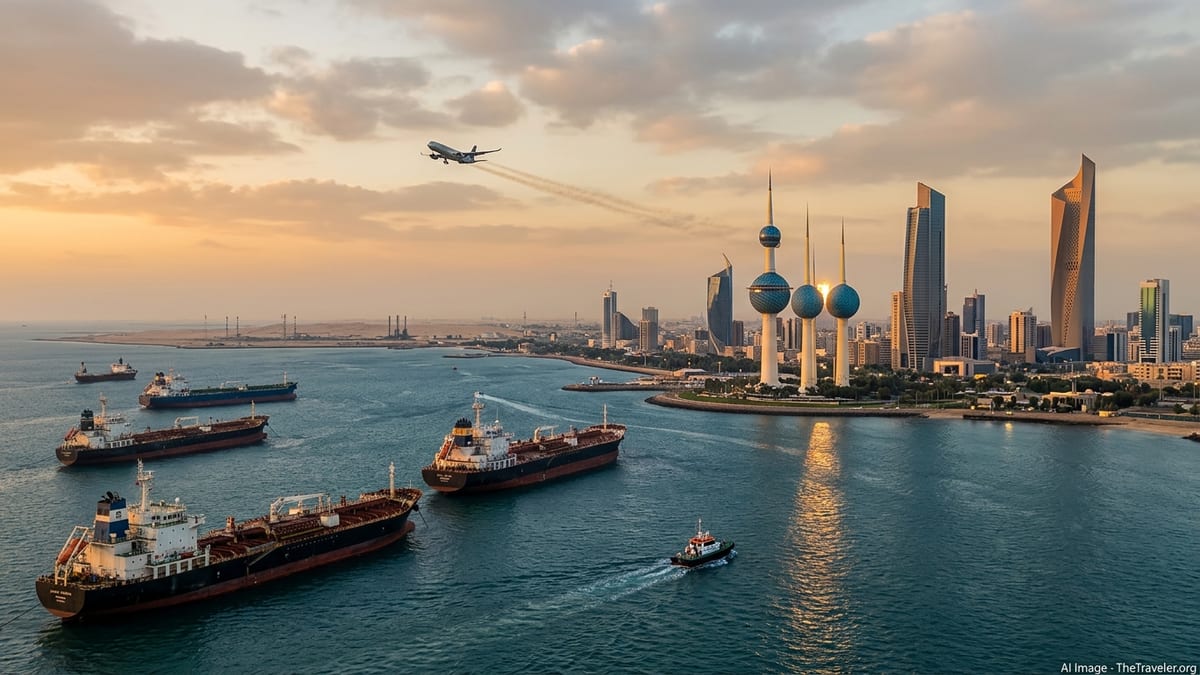
Fresh attacks revive safety concerns over Gulf airspace
The latest adjustments to routings follow several incidents in November 2026 in which Saudi and Kuwaiti authorities reported incoming drones and missiles linked to the wider confrontation between Iran, its allies and Gulf states. Kuwait’s defense ministry said on 26 November that it had intercepted multiple Iranian drones for the second time in a month, while Saudi Arabia reported an attack on a refinery in the kingdom’s southwest that killed a worker and caused new damage to energy infrastructure.
These incidents build on a series of strikes and attempted strikes earlier in 2026, including ballistic and drone attacks that have repeatedly targeted Saudi oil facilities and airports and at least two Iranian drone barrages aimed at Kuwait. Regional reports and video from Kuwait’s civil aviation authorities in June showed damage at Kuwait International Airport, including parts of the passenger terminal, after incoming drones and missiles were intercepted over the airfield.
Although most recent attacks have not directly involved civil aircraft, the combination of weapons falling or being intercepted at high altitude, the risk of misidentification by air defenses and the possibility of miscalculation in crowded airspace have led airlines and regulators to reassess the safety of some overwater routes across the northern and central Gulf. The concern is less about airports such as Riyadh, Jeddah or Kuwait City closing outright and more about transit corridors that pass near active military activity.
Regulators extend conflict-zone advisories into 2027
The European Union Aviation Safety Agency has taken the lead in updating official guidance for operators under its remit. In July 2026 EASA issued a revised Conflict Zone Information Bulletin for the airspace of the Persian Gulf and Gulf of Oman that remains in force into early 2027. The current version, identified as CZIB-2026-07R4 and active until at least 31 January 2027, cites a high risk to civil flights at all altitudes over the waters of the Gulf due to the potential use of missiles, drones, combat aircraft and air defense systems.
Under this advisory, airlines covered by European rules are told not to operate at any altitude over the waters of the Persian Gulf within the Bahrain, Kuwait, Doha and Emirates flight information regions, except as necessary for arrivals to and departures from airports in those FIRs. EASA separately recommends avoiding the airspace of Iran, Iraq and Yemen’s Sana’a region, meaning that many of the most direct historical routings between Europe and Gulf hubs or on to South and East Asia remain unavailable for compliant operators.
The United States Federal Aviation Administration maintains its own security advisories for the region. A standing FAA notice on the Persian Gulf and Gulf of Oman warns U.S. carriers of potential hazards from military activities, while a separate advisory for the Jeddah flight information region highlights the risk posed by Houthi drone and missile attacks and related defensive operations. Although these documents stop short of a blanket prohibition on Saudi airspace, they reinforce a cautious approach and have supported airlines’ decisions to avoid certain corridors or altitudes that might otherwise be technically open.
How airlines are adjusting routes over Saudi Arabia and Kuwait
Publicly, many airlines have framed their responses as routine risk management rather than as a wholesale shutdown of Gulf connectivity. Flights to and from major hubs in Saudi Arabia, Kuwait, Qatar and the United Arab Emirates continue to operate, supported by dense military air defense coverage and close coordination between civil and military authorities. However, the combination of EASA and FAA guidance and operators’ own assessments has led to sustained avoidance of some international transit routes across the central and northern Gulf, especially those passing close to conflict flashpoints or energy infrastructure repeatedly targeted by drones.
For some European and Asian carriers, this has meant extending previously temporary detours around parts of the Bahrain, Kuwait and Emirates flight information regions into the northern half of 2027. Routes that traditionally tracked across the waters of the Gulf are now more likely to remain over Saudi territory further south, to route via the Arabian Sea and Oman, or, where permitted, to cross Iraq on more central trajectories. Industry briefings and specialist operational updates published in October and November describe these choices as a response to “unpredictable military developments” and stress that airlines are being encouraged to keep to clearly defined corridors instead of ad hoc shortcuts over areas of active military interest.
For travelers, the practical effect is most visible on Europe to South and Southeast Asia services that would normally combine segments across Iran, the Gulf and parts of Iraq. With Iranian airspace still subject to avoidance by many carriers and overwater portions of the Gulf now constrained by conflict-zone guidance, airlines are stringing together longer, more southerly tracks that can add noticeable time to a trip. Some comparative analyses suggest that certain Europe to Gulf to Asia journeys are now up to several hours longer than they would be if all the region’s airspace were freely available, with associated increases in fuel burn and crew time.
Operational and commercial impact on passengers and airlines
The most immediate passenger impact is on schedules and journey time rather than on the availability of flights. Major Gulf carriers, as well as European and Asian airlines with significant regional operations, have so far chosen to maintain most of their existing frequencies while redesigning routings and adjusting timetables to reflect longer track miles and anticipated air traffic control constraints. Travelers may see slightly earlier departure times from Europe, later arrivals in Asia or adjusted connection banks at hubs in cities such as Dubai, Doha and Riyadh.
Longer routings can increase exposure to weather and congestion on alternative paths, which in turn may lead to tighter fuel policies, higher operational costs and, occasionally, en route technical stops if strong headwinds or other conditions significantly exceed forecasts. Airlines rarely break out the cost of such diversions in public reporting, but the combination of extended flight times, higher fuel consumption and the need to roster additional crew on some rotations is understood to weigh on margins, particularly for routes already operating close to economic thresholds.
From a safety standpoint, operators stress that they will not schedule a flight over or near a conflict zone without a formal risk assessment that meets regulatory requirements. International standards set out by the International Civil Aviation Organization require airlines to assess conflict-zone risks and to ensure that flights do not commence unless those risks are deemed acceptable. Updated ICAO guidance published in recent years places particular emphasis on the threats posed by surface-to-air and surface-to-surface missiles, drones and other weapons, and encourages states and airlines to share timely intelligence about developing situations.
What travelers should check for 2027 bookings
The continuing conflict-zone advisories and the prospect of further attacks in or near Gulf states mean that airlines and regulators are unlikely to restore pre-crisis routings early in 2027. The current EASA conflict-zone bulletin on the Persian Gulf and Gulf of Oman runs at least until the end of January 2027, with a separate advisory on Yemen’s Sana’a region in place through April. Authorities have signaled that both could be extended if tensions remain high or if additional strikes occur, which would keep some of the present detours and routing restrictions in place for an extended period.
Passengers booking for travel in 2027 should be aware that flight times on some Europe to Gulf and Europe to Asia routes may continue to be longer than historical norms and remain subject to short-notice schedule changes if airlines need to adjust routings further. Travelers connecting in hubs such as Dubai, Doha, Riyadh or Kuwait City may wish to allow extra time between flights to account for possible arrival delays, particularly during peak travel periods when air traffic management is already stressed.
Because individual airlines interpret advisories differently and may secure approvals for certain corridors that others do not use, routing patterns can vary significantly by carrier and by date. Travelers who are especially sensitive to journey time or overnight arrivals may find it useful to compare schedules across multiple airlines and to recheck itineraries in the days before departure. Regardless of carrier, itineraries involving flight segments that would normally cross Iran, Iraq or the central Gulf are the most likely to see rerouting if security conditions deteriorate, while point-to-point flights entirely within the Arabian Peninsula are generally less exposed to rapid change.