


Ramadan in Dubai is one of the most atmospheric times to visit the city, and by 2027 the holy month is expected to fall entirely within the busy winter tourism season. With a little planning, non-Muslim visitors can enjoy normal sightseeing, world-class dining and special evening experiences, while still showing respect for local religious practice. This guide explains how Ramadan will shape a typical Dubai holiday in 2027, what has changed from older rules, and how to plan day-by-day.
Get the latest updates straight to your inbox!
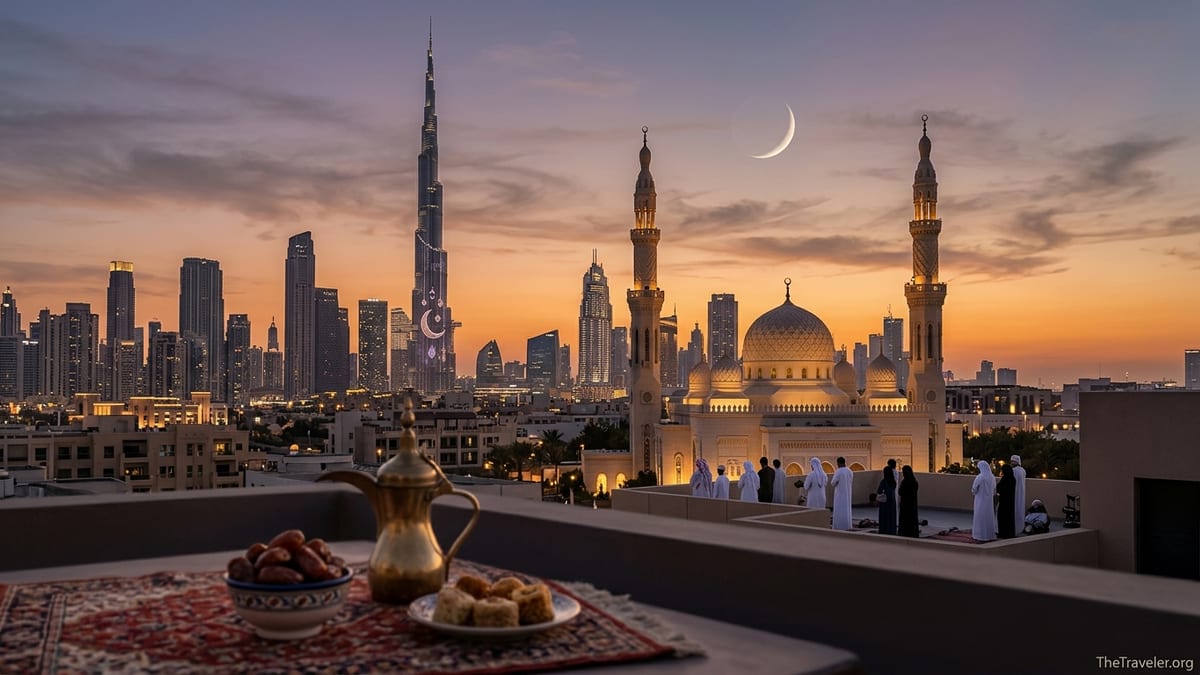
Ramadan 2027 dates in Dubai and how they are confirmed
Astronomical projections in the UAE indicate that Ramadan 2027 is likely to begin on or around Monday 8 February 2027 and continue for 29 or 30 days into early March. Several local calendars and corporate planners currently expect Eid al Fitr, which marks the end of Ramadan, to fall around 9 or 10 March 2027. These dates are helpful for booking flights and hotels, but should still be treated as provisional.
The key distinction visitors need to understand is between astronomical calculations and the official decision. Astronomers can predict when the new crescent moon will be visible, but in the UAE the start of Ramadan is only confirmed by an official moon-sighting committee, which meets shortly before the expected date. The UAE government’s public information platforms explain that the country follows this committee’s announcement, not the earlier scientific forecasts, when setting public holidays and school calendars.
For travellers, the practical implication is that your booked dates will not suddenly move; flights and hotel reservations remain valid. What may change by a day is the exact start of reduced working hours, the first evening of widespread iftar meals, and the timing of Eid public holidays. If you are arriving in the first half of February 2027, be prepared for a one-day variation and check local news or your hotel a week before departure.
Because Ramadan 2027 will fall in late winter, daytime temperatures in Dubai are usually in the mid-20s to low 30s Celsius. This is considerably more comfortable than the hot summer Ramadans of a few years ago and means most outdoor attractions, desert tours and walking in historic areas can continue almost as normal, especially in the mornings and evenings.
Religious fasting versus practical rules for visitors
Ramadan is one of the five central pillars of Islam. Capable adult Muslims abstain from food, drink, smoking and certain other physical pleasures from dawn to sunset, focusing instead on prayer, charity and time with family. Government guidance in the UAE describes this as a personal religious obligation and notes that exemptions apply for travellers, children, pregnant people and those with medical conditions.
For non-Muslim tourists, however, there is no legal requirement to fast. Recent information from Dubai government entities and the emirate’s official tourism board is clear that restaurants, cafes and food courts are allowed to operate during daylight hours and that eating and drinking in public is legally permitted for visitors. In 2024 and 2025, most mall food courts, hotel buffets and independent cafes across Dubai served breakfast and lunch as usual, without screens or curtains.
The main expectation today is one of courtesy rather than law. Official Dubai guidance and cultural etiquette leaflets describe it as a kindness to avoid obvious eating, drinking or smoking in front of those who are fasting, especially in queues, on the Metro or while walking in older residential districts. In practice, this means finishing your iced coffee inside the cafe instead of carrying it openly through a busy bus stop, and being discreet with snacks in government offices or smaller workplaces.
Dress expectations are also framed as respectful rather than strictly enforced rules. Throughout the year, malls and government portals advise visitors to keep shoulders and knees covered in official buildings, traditional souqs and family-oriented public spaces. During Ramadan, this advice is emphasised a little more. Tourists at beach clubs and hotel pools can still wear swimwear, but it is advisable to cover up when walking through lobbies, metro stations or older neighbourhoods on the way.
How restaurants, hotels and venues operate during Ramadan
In the past, many daytime eateries in the UAE closed or served food behind screens, and non-Muslims were urged not to eat in public. Regulations have been relaxed. Recent circulars from Dubai authorities explain that restaurants and cafes can serve customers during the day in Ramadan without applying for special permits, provided they maintain a respectful environment. By 2026 this change was visible across the city: breakfast spots in Jumeirah, independent cafes in Dubai Marina and casual chains in Dubai Mall stayed open from morning until late evening.
For 2027, visitors should expect most hotel restaurants to offer buffet breakfast from around 7.00 to 10.30, lunch service as normal, and then to pivot in the evening to large iftar spreads at sunset and late suhoor menus that may run until midnight or later. A mid-range hotel on Sheikh Zayed Road might, for example, offer a Ramadan iftar buffet priced around 180 to 260 dirhams per person, while luxury resorts on Palm Jumeirah and at Madinat Jumeirah can charge 300 to 450 dirhams for elaborate iftar experiences with live cooking stations.
Shopping malls such as Dubai Mall, Mall of the Emirates and Dubai Hills Mall have generally kept all food courts fully operational through the day in recent Ramadans. Well-known international franchises from fast-food chains to coffee brands serve dine-in and takeaway as usual. Some outlets may modestly adjust hours, opening slightly later in the morning or staying open later at night to catch post-taraweeh prayer crowds.
Licensed venues, including bars and restaurants that serve alcohol in hotels and private clubs, continue to operate during Ramadan, although some adjust music and entertainment. Live bands are often paused or toned down and evening service may feel calmer, particularly in the first week of Ramadan. Alcohol is still only served to adults in licensed premises; it is not allowed in public spaces, and public drunkenness remains an offence regardless of the time of year.
Working hours, attractions and public transport during Ramadan
Across the UAE, federal guidelines reduce working hours for public-sector employees and many private companies during Ramadan, usually by about two hours per day. In recent years, official circulars have set government office hours at something like 9.00 to 14.30, while many banks and local businesses have opened from about 10.00 to 14.00 and then again for an evening shift. In 2027, visitors can expect broadly similar patterns, although individual institutions announce exact timings closer to the time.
Major tourist attractions tend to adapt in a way that suits visitors. Burj Khalifa’s At The Top observation decks traditionally operate from mid-morning until late at night, and Ramadan periods often see additional late-evening slots added. Dubai Mall itself stays open into the late evening, frequently until 23.00 or midnight, and its key attractions such as Dubai Aquarium & Underwater Zoo and the Dubai Ice Rink follow mall timings with only minor tweaks.
Dubai’s Roads and Transport Authority usually announces revised public transport hours just before Ramadan each year. In recent announcements, the Metro Red and Green lines have started service around 5.00 and continued until midnight or later, with Friday and Saturday running slightly extended hours. Trams, buses and marine transport such as abras across Dubai Creek adopt similar or slightly modified timetables, but there has been no pattern of major reductions. The RTA often adds extra taxis around iftar time and for late-night mosque departures, which can make it easier rather than harder to find a cab after dark.
Airport operations at Dubai International and Al Maktoum International remain 24 hours throughout Ramadan. Arriving passengers may notice some small service points, such as certain coffee kiosks, opening a little later in the morning, but essential airport transfers, hotel shuttles and the dedicated airport Metro stations run as normal. If you are landing close to sunset, allow additional time on the road, as traffic can thicken just before iftar.
Iftar, evenings and special Ramadan experiences
Sunset, known as maghrib, is the daily pivot point of Ramadan in Dubai. As the call to prayer sounds, Muslims break their fast with dates and water followed by the main iftar meal. For visitors, this creates some of the most memorable dining and cultural moments of the trip, but it also affects practicalities such as restaurant availability and traffic patterns.
On main roads like Sheikh Zayed Road and in busy districts such as Deira, Karama and Al Nahda, traffic often spikes in the hour before sunset as people rush home or to restaurant reservations. Roads then quieten for an hour or so during iftar itself, before another wave of activity as families head out to malls, Ramadan markets or evening prayers. Tourists planning a Burj Khalifa sunset visit or a desert safari return transfer should factor this in; it is wise to book earlier slots or allow generous travel time.
Dubai is known for its large iftar tents and buffets. Five-star hotels in areas like Business Bay, Downtown Dubai and Palm Jumeirah set up ornate majlis-style venues offering Arabic and international dishes, traditional drinks and sweets, often accompanied by oud music. Prices in 2024 and 2025 ranged widely, from roughly 160 dirhams at simpler hotel restaurants to 400 dirhams or more at premium beachfront properties. In parallel, there are free or low-cost community iftar projects, particularly in Old Dubai and near labour accommodations, but these are primarily intended for fasting workers rather than as tourist attractions.
Cultural initiatives play an increasing role each year. Events such as Ramadan markets at major venues, heritage evenings at Al Fahidi Historical Neighbourhood, and special programming at museums and cultural centres typically include storytelling, calligraphy, henna and guided talks on Emirati traditions. Some of these are free public events sponsored by government or semi-government bodies, while others are ticketed experiences bundled with iftar or suhoor at hotels and private venues.
Key attractions, beaches and desert trips during Ramadan
Most headline attractions remain open throughout Ramadan and can be visited much as at any other time of year. The Burj Khalifa observation decks stay popular, and during Ramadan evenings they can be particularly atmospheric when you look down on the city’s iftar lights and mosque courtyards filling up. Advance booking for prime hours around sunset and early evening is recommended, especially on Thursday and Friday nights when local families also go out.
Dubai Mall and its surrounding Downtown district remain busy from late afternoon until midnight, with the Dubai Fountain shows operating in the evening as usual. Inside the mall, shopping might feel a little quieter during the last afternoon hour before iftar as staff conserve energy, but the pace picks up quickly once people have eaten. Museums such as Etihad Museum and the Dubai Museum of the Future have tended to keep regular or slightly adjusted timings in previous Ramadans; by 2027 it is reasonable to expect continued operation with minor schedule tweaks announced closer to the dates.
Jumeirah’s public beaches stay open, and daytime beach clubs on Palm Jumeirah and along the JBR shoreline continue to serve food and non-alcoholic drinks, sometimes with the music volume toned down out of respect. Alcohol service at certain daytime beach venues may be limited or shifted towards indoor bar areas. Modest swimwear standards do not change, but visitors should be more mindful about covering up when travelling to and from the sand, especially on public streets or in older residential quarters near local mosques.
Desert safaris and outdoor excursions still run, taking advantage of the cooler temperatures of a February and March Ramadan. Many operators build Ramadan-specific experiences into their evening programs, allowing guests to break fast with dates and Arabic coffee in a Bedouin-style camp, watch traditional performances after dark, and learn about Emirati customs. Morning safaris are an option for those who prefer emptier dunes and cooler starts, and these are less affected by iftar schedules.
Transport, photography, mosques and Eid travel considerations
Getting around Dubai in Ramadan is largely straightforward. The Metro, taxis and ride-hailing services operate across almost the full day, and in recent years transport authorities have in fact extended some evening services to accommodate post-iftar crowds. Visitors might notice short surges in demand just before sunset and after late-night prayers, particularly near major mosques and in residential districts, but hotel districts and the airport remain well served by taxis at all hours.
Photography etiquette becomes more sensitive during Ramadan, especially around mosques, older neighbourhoods and community iftars. Official tourism advice stresses that visitors should always ask permission before photographing individuals, avoid photographing people while they are eating at iftar tables, and be cautious about shooting during prayers or directly into mosque prayer halls. Public Ramadan decorations, skyline views and general street scenes are fine, but discretion is valued.
Mosque visits for non-Muslims continue during Ramadan, subject to each mosque’s visitor policy. In Abu Dhabi, the Sheikh Zayed Grand Mosque routinely runs special Ramadan programs for visitors, and in Dubai, mosques that participate in cultural exchange programs may offer guided tours that explain Ramadan practices and conclude with an iftar. Strict modest dress is required: long sleeves, long trousers or skirts, and for women, a headscarf; many mosques provide additional coverings at the entrance.
Eid al Fitr, expected in early to mid-March 2027, is a particularly lively time. Public-sector holidays can last several days, and malls, beaches and popular attractions often become crowded with local families celebrating during the day and late into the night. Hotel prices may peak and availability can tighten, especially for waterfront properties and family suites. If your visit overlaps with Eid, book accommodation and key activities well in advance, and be prepared for heavier road traffic during peak celebration times, along with a festive atmosphere of lights, sales and evening fireworks at major destinations.
Sample three-day itineraries and indicative costs
For a first-time visitor wanting a balanced mix of sightseeing and Ramadan experiences, a three-night itinerary might start with a cultural focus. Day one could centre on Old Dubai: explore Al Fahidi Historical Neighbourhood and the Dubai Museum quarter in the morning, cross Dubai Creek on an abra, and visit the spice and gold souqs in Deira. After a rest at your hotel, book an early-evening iftar at a heritage-style restaurant along the Creek, where fixed menus in recent years have run somewhere between 150 and 220 dirhams per person.
On day two, shift to modern Dubai. Visit Burj Khalifa late morning, followed by lunch inside Dubai Mall and a relaxed afternoon visiting Dubai Aquarium or simply shopping. As sunset approaches, watch an early Dubai Fountain show and then head to a rooftop iftar buffet at a hotel in Downtown Dubai, where prices often start around 220 to 300 dirhams. Finish the night with a stroll through Ramadan markets or late-opening cafes at City Walk or Boxpark, taking advantage of the extended evening hours.
Day three might focus on the desert. Spend the morning by your hotel pool or walking along JBR beach, then join an afternoon desert safari that includes dune driving, camel rides and a barbecue-style dinner. Many operators price these packages in the 250 to 400 dirham range per adult, with hotel pick-up included. Some camps adapt the program for Ramadan with a more traditional iftar component at sunset, making it a memorable way to experience the break of fast under desert skies.
For a family-focused alternative, you could substitute more child-oriented attractions. One day might revolve around Dubai Parks and Resorts or a large indoor park like Dubai Parks’ Motiongate, with evening iftar back at a family resort on Palm Jumeirah. Another day could combine Dubai Miracle Garden or a waterpark such as Aquaventure with a simpler hotel iftar buffet at around 140 to 180 dirhams per child. Families usually find that using the Metro and occasional taxis keeps daily transport costs in the range of 30 to 80 dirhams, depending on distance and group size.
Budgeting: accommodation, meals and everyday expenses
Hotel prices in Dubai are driven more by season and demand than by Ramadan itself. With February and early March considered high season, typical nightly rates in 2026 have ranged from roughly 350 to 550 dirhams for mid-range chain hotels in areas like Al Barsha, Deira and Business Bay, rising to 900 dirhams and above for well-known international brands near Downtown Dubai and Dubai Marina. Beachfront resorts on Palm Jumeirah frequently command 1,200 dirhams per night or more for standard rooms, while budget hotels and serviced apartments in older districts can sometimes be found under 300 dirhams outside peak weekends.
For food, non-buffet daytime meals in malls and casual restaurants are broadly similar in cost to the rest of the year. A quick breakfast of coffee and a pastry at a popular international cafe chain in Dubai Mall might total 25 to 35 dirhams, while a sit-down lunch at a mid-range restaurant with a main course and soft drink could fall between 60 and 120 dirhams per person. Iftar buffets are usually priced higher than standard dinner menus due to their variety and special setting. Travellers who prefer lighter meals can always order from standard à la carte menus in hotel or independent restaurants that do not offer buffet-only service.
Public transport remains good value. As of recent years, a Nol card for the Metro and buses charges per distance band, with many typical journeys around central Dubai costing in the region of 3 to 8 dirhams in standard class. Taxis start with a modest flag-down fare and then a per-kilometre rate; a trip from Dubai International Airport to Downtown Dubai has often come to somewhere between 40 and 70 dirhams depending on traffic and exact destination. Inflation and regulatory changes may adjust these figures modestly by 2027, but they provide a realistic baseline for planning.
Entrance fees to major attractions are unaffected by Ramadan. Standard adult tickets for Burj Khalifa’s lower observation decks have in recent seasons started around 170 to 220 dirhams for off-peak hours, rising for sunset and for premium combined experiences. Indoor family attractions, from aquariums to themed parks, tend to price day passes from about 150 dirhams upwards per adult, with discounted child tickets. Many Ramadan-specific heritage programs in Old Dubai are free or very low cost, especially those run directly by municipal or cultural authorities.
Does Ramadan change a typical Dubai vacation?
For most international visitors, Ramadan 2027 will change the atmosphere of Dubai more than the practical possibilities. The city no longer shuts down during the day: restaurants stay open, malls trade, beaches welcome swimmers and tourist attractions function with only modest schedule tweaks. Public transport, taxis and airports all operate essentially as normal, occasionally with extended evening hours to handle post-iftar crowds.
The key differences a tourist will feel are a calmer daytime tempo, earlier government office closing times, and a strong emphasis on evenings. After sunset, malls, promenades and cafes come alive, and iftar and suhoor meals become central social events. Crowds shift from midday to late evening, so planning sightseeing for the early morning, pausing in the hottest and quietest mid-afternoon hours, and going out again at night usually delivers the smoothest experience.
With respect for a few simple guidelines on modest dress in public places, discretion when eating in front of those who are fasting, and sensitivity around photography and mosque etiquette, non-Muslim visitors can enjoy Dubai in Ramadan without difficulty. Those who embrace the chance to join an iftar, browse Ramadan markets and observe nightly prayers from a respectful distance often find that the month adds depth rather than limitations to their trip.
For first-time visitors, the practical recommendation is straightforward: do not avoid Dubai simply because your preferred dates fall in Ramadan 2027. Book key restaurants and iftar experiences in advance, allow extra time around sunset journeys, and choose accommodation close to a Metro station or main attractions. In return, you will see one of the world’s most modern cities at its most reflective and communal, with the added benefit of cooler weather and long, lively evenings.