


More news on this day
A powerful storm system that struck the United States on Thanksgiving Day, November 26, 2026, brought record coastal flooding, widespread power outages and major travel disruption across multiple regions, including the historic first postponement of New York City’s 100th Macy’s Thanksgiving Day Parade to Saturday.
Get the latest news straight to your inbox!
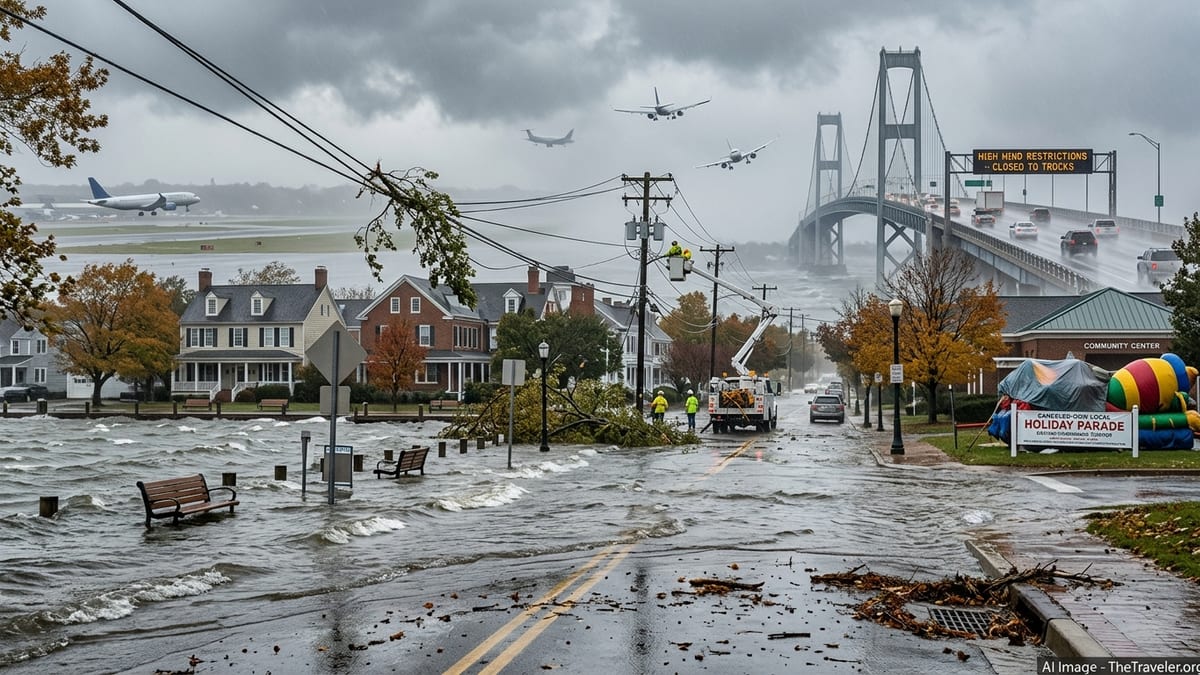
Storm Track, Scale of Outages and Impact on Air Travel
By Thursday evening, utility tracking data showed nearly 900,000 homes and businesses without electricity across the Midwest and Northeast, with particularly large outages reported in Pennsylvania, Virginia and Missouri as high winds and heavy rain moved through. While totals fluctuated during the day as repairs progressed and new damage occurred, the combined effect left many communities spending the holiday without power and dependent on backup supplies or shelters.
On the East Coast, the storm evolved into a strong coastal low that affected a broad swath from Florida to New England, combining heavy rain with gale to storm-force winds. Forecast discussions from the National Weather Service in the days leading up to Thanksgiving had highlighted the risk of moderate to major tidal flooding during Thursday’s high tides, along with damaging gusts along exposed shorelines and over open water. Inland, bands of heavy rain, embedded thunderstorms and saturated ground conditions contributed to downed trees and power lines.
Holiday air travel was significantly disrupted. By late afternoon on Thanksgiving Day, real-time aviation tracking services were reporting well over 1,000 delays and several hundred cancellations nationwide, with the highest impacts at major hubs along the storm track in the Northeast and Mid-Atlantic. Disruptions extended beyond the immediate weather-affected airports as aircraft and crews were displaced, and schedules remained unsettled into Friday while airlines repositioned equipment and worked through backlogs of passengers.
States of Emergency and Coastal Flooding From Virginia to New Jersey
Anticipating the severity of the coastal flooding and wind, New Jersey’s governor declared a statewide state of emergency effective on the evening of Wednesday, November 25, covering all 21 counties. The order cited forecasts for multiple rounds of tidal flooding, with the most significant impacts expected on Thanksgiving itself, and enabled state agencies to pre-position resources and bypass certain procurement rules for emergency response. Similar emergency measures were announced in neighboring states, including a limited state of emergency in parts of New York focused on downstate coastal counties.
The forecasts proved accurate along much of the Mid-Atlantic shoreline. Communities on barrier islands and low-lying back bays in New Jersey reported flooding that, in some locations, met or exceeded previous benchmarks outside the most extreme events. In Stone Harbor, local officials temporarily closed access to much of the borough as streets and parking areas filled with salt water around the morning high tide. Nearby Avalon issued multiple public alerts warning residents to move vehicles to higher ground, avoid driving through flooded roadways and stay away from beaches and bulkheads while the storm coincided with high astronomical tides.
Farther south, coastal Virginia saw some of the most acute life-safety impacts. In the Norfolk area, emergency management officials reported dozens of water rescues after rapidly rising floodwaters trapped motorists and inundated homes and businesses. Video and images from around the Tidewater region showed vehicles partially submerged on major thoroughfares and water reaching well into residential neighborhoods. The National Weather Service office serving the region confirmed that water levels at some gauges were among the highest on record for a November storm, driven by the combination of storm surge, onshore winds and an unusually strong high-tide cycle.
Urban Flooding, Parade Disruptions and Ground Transport Effects
New York City experienced a mix of surface flooding, wind damage and transportation disruption as the core of the storm passed near the region Thursday. Local emergency management officials reported scattered power outages, downed trees and ponding on arterial roads and near underpasses. Authorities urged residents not to walk, bike or drive through flooded sections of roadway, and New York’s governor issued targeted emergency declarations for New York City, Long Island and parts of the lower Hudson Valley to support rapid response and cleanup.
The most visible change for many travelers and viewers was the fate of the Macy’s Thanksgiving Day Parade. Organizers and city officials had already decided late Wednesday to postpone the 100th edition of the parade, citing concerns about forecast wind gusts near or above thresholds used to determine whether the event’s large balloons can safely operate between Manhattan’s tall buildings. The decision moved the live parade and broadcast from Thursday morning to Saturday, November 28, marking the first time in the event’s century of editions that weather forced a postponement rather than a day-of balloon grounding or a full cancellation in wartime.
Elsewhere in the Northeast corridor, surface transportation also contended with hazardous conditions. Portions of coastal highways in New Jersey, Delaware and Maryland were temporarily closed during peak flooding as waves and overwash pushed sand, debris and seawater across travel lanes. The Chesapeake Bay Bridge–Tunnel, a critical link across the mouth of the bay in Virginia, reported restrictions based on sustained high winds and, for a period, closed to certain vehicle types until conditions improved. Passenger rail operators in the region warned of potential delays from trees or debris on tracks and localized power issues affecting signaling, although most core services continued to operate with weather-related slowdowns.
West Coast King Tides, Infrastructure Damage and Travel Conditions
While the worst of the Thanksgiving storm’s wind and rain focused on the eastern half of the country, the West Coast contended with its own coastal hazards tied to exceptionally high tides and a separate Pacific weather system. In California, a combination of king tides and large, wind-driven waves caused significant damage in several shoreline communities. In Pacifica, just south of San Francisco, part of the city’s municipal fishing pier collapsed into the ocean on Wednesday, November 25, after repeated pounding by heavy surf. Local officials cordoned off the structure and nearby beachfront areas and warned residents to stay clear of the water, noting that debris from the damaged pier could be hidden below the surface and moved unpredictably by currents.
Reports from around the broader San Francisco Bay Area described flooded coastal roads, inundated parking lots and water overtopping some seawalls and revetments at peak tide. Tide gauges in San Francisco recorded one of the highest November water levels on record earlier in the week, and other locations in California and further north saw similarly elevated readings. Emergency services in low-lying communities responded to localized evacuations, vehicle rescues and property damage assessments, although impacts were more scattered than the concentrated flooding observed on the Mid-Atlantic and New Jersey coasts.
For travelers in Northern and Central California, the primary effects were delays and detours near beaches and waterfront districts, as authorities closed or restricted access to certain coastal routes until debris could be cleared and waters receded. Major airports on the West Coast continued to operate, but some flights experienced weather-related delays linked to the same high winds and heavy seas that were battering the shoreline. Transportation officials advised anyone heading to or from coastal destinations to check route conditions and heed closures, as attempting to bypass barricades posed both safety risks and the possibility of enforcement action.
What Travelers Should Know in the Aftermath
With the worst of the Thanksgiving storm now past, clean-up and recovery are under way across affected regions, but conditions remain variable for travelers. Power restoration is progressing, yet some neighborhoods in the hardest-hit areas of Pennsylvania, Virginia, New Jersey and coastal New England can expect intermittent outages or continued use of temporary generators while crews replace poles, transformers and damaged distribution lines. Travelers planning to stay in smaller hotels, vacation rentals or campgrounds in these zones should verify that their accommodations have both electricity and safe access before arriving.
Airlines are gradually returning schedules to normal, but residual disruptions continue as aircraft and crews return to their usual rotations. Many carriers issued weather waivers covering travel on and immediately after Thanksgiving in the most affected cities, allowing customers to rebook within a limited window without change fees or fare differences. Passengers who accepted alternative flights or are still seeking to travel in the days following the storm should confirm the latest status of their itineraries and re-check departure airport information, as gate assignments and departure times may still shift at short notice while operations stabilize.
On the ground, some coastal roads, bridges and tunnels that closed during peak flooding have reopened, while others may face temporary lane restrictions or speed limits as engineers evaluate structural impacts. Visitors heading to Atlantic and bayside communities in New Jersey, Delaware, Maryland and Virginia should monitor local government and emergency management updates on road conditions, as well as any remaining advisories about beach access, rip currents or residual debris in the surf zone. On the West Coast, travelers considering day trips to impacted waterfronts such as Pacifica should expect partial closures of piers, promenades and parking areas while detailed safety inspections and longer-term repair planning proceed.
In New York City, the Macy’s Thanksgiving Day Parade is now scheduled to take place on Saturday morning instead of its traditional Thursday slot. Spectators planning to attend in person must adjust their travel and accommodation plans accordingly, taking into account updated street closures, security checkpoints and public transport changes for the new date. As always after a major weather event, the most reliable strategy for travelers over the coming days is to build extra time into journeys, rely on official channels for operational updates and remain flexible as storm recovery continues.