


More news on this day
Major global airlines including Singapore Airlines, Scoot, Lufthansa, KLM and Air Canada are extending suspensions or reductions on key Middle East routes as ongoing conflict, airspace restrictions and airport capacity constraints continue to disrupt travel to hubs such as Dubai, Riyadh, Jeddah, Doha and Tel Aviv, reshaping long-haul networks and itineraries worldwide.
Get the latest news straight to your inbox!
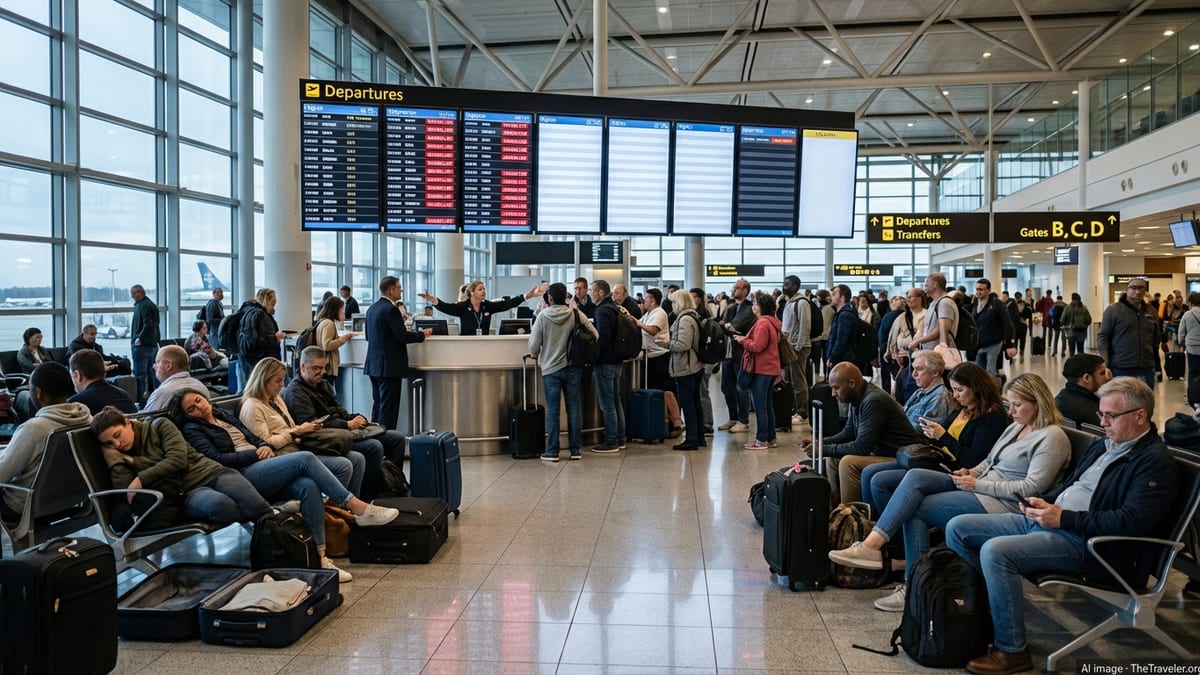
Prolonged Suspensions Spread Across Key Middle Eastern Gateways
Publicly available advisories show that Singapore Airlines has repeatedly extended the cancellation of its Singapore–Dubai service, with the latest schedules indicating a halt to operations well into the northern winter season. Its low cost subsidiary Scoot has also lengthened the suspension of Singapore–Jeddah flights, with the pause now stretching through much of the peak summer travel period.
These decisions follow earlier rounds of cancellations introduced after renewed hostilities involving Iran and Israel triggered widespread airspace closures and operational restrictions across the Gulf. Industry updates describe thousands of flights scrapped in the first weeks of the crisis, with major hubs in the United Arab Emirates, Saudi Arabia and Qatar forced to curtail movements as they managed security checks, damaged infrastructure and congestion.
Similar patterns are evident among European carriers. Lufthansa Group updates indicate an extended suspension of Tel Aviv services and significant limits on flights into Dubai, with capacity cuts framed as a response to both security assessments and reduced slot availability at Gulf airports. KLM, which had already halted Tel Aviv operations, continues to warn customers of disruption and flexible rebooking policies on affected routes.
North American operators are also maintaining a cautious stance. Public coverage of airline advisories notes that Air Canada has pushed back the resumption of some Tel Aviv and Dubai flights, citing security uncertainties and the knock-on effects of regional airspace constraints. For travellers, the result is a patchwork of reduced or cancelled services across multiple Middle Eastern destinations, often with little short term clarity on when full schedules will return.
From Hub Strategy to Risk Map: How Networks Are Being Redrawn
The extended suspensions are striking because airports such as Dubai, Doha and Riyadh are more than point to point destinations; they function as critical transfer nodes linking Europe, Asia, Africa and the Americas. When services into these hubs are cut or thinned out, entire long haul networks need to be rebalanced.
In Europe, Lufthansa and other network carriers have begun reallocating widebody aircraft away from disrupted Middle East routes toward more stable long haul markets, including North America, South Asia and parts of Africa. Reports on airline scheduling changes describe a shift in emphasis toward nonstop links that bypass volatile airspace, even if this requires longer routings and higher operating costs.
British and European media coverage of schedule changes at other legacy carriers illustrates a similar trend, with some airlines reducing frequencies to Dubai, Doha, Riyadh and Tel Aviv while boosting capacity to destinations such as India and East Africa. This pattern underlines how the Middle East, once marketed as an ultra-reliable super connector region, is now being treated more like a high risk zone that must be balanced against network resilience and aircraft utilization.
For Singapore Airlines and Scoot, which use Changi Airport as a major transit hub between Europe and Australasia, the loss or downgrading of key Middle East points removes important niche flows, including religious tourism to Saudi Arabia and high yielding corporate traffic to Dubai and Riyadh. At the same time, their network decisions reflect a calculation that reliability and safety perceptions on remaining routes are more important than defending every former spoke in the region.
Travellers Face Longer Journeys, Scarce Seats and Complex Rerouting
For passengers, the immediate impact of the prolonged suspensions is a mixture of cancelled flights, longer itineraries and limited alternatives during peak holiday periods. Travellers who once relied on convenient one stop connections via Dubai, Doha or Jeddah are increasingly being routed through secondary hubs in Europe or Asia, often involving backtracking and extended layovers.
Online discussions among affected customers and travel agents describe difficulties securing seats on remaining services, as demand is funneled into a smaller number of flights operated by carriers that still serve the region. In some cases, travellers originating in North America or Europe must now connect through multiple hubs to reach destinations in Southeast Asia or Africa that were previously accessible with a single stop in the Gulf.
Airlines are broadly offering the usual menu of options, including date changes, alternative routings and refunds where flights have been cancelled. However, published coverage and traveller reports indicate that rebooking is complicated by limited interline availability and rapidly changing timetables. Passengers with itineraries touching Dubai, Riyadh, Jeddah, Doha or Tel Aviv are being advised to monitor booking tools and airline apps frequently in the days before travel.
These disruptions are also feeding into higher fares on certain long haul corridors. With capacity withdrawn from the Middle East and aircraft reassigned elsewhere, some markets are seeing constrained supply even as leisure and migrant worker demand remains strong, particularly between Asia, the Indian subcontinent and Europe.
Security, Airspace and Capacity Constraints Drive Cautious Timelines
The underlying reasons for the extended suspensions go beyond any single airline’s commercial strategy. Aviation and security analyses highlight three interlocking pressures: regional conflict risk, closures or restrictions in key airspace segments, and temporary capacity limitations at major airports.
The conflict involving Iran has generated a highly dynamic risk environment, with analysts pointing to missile and drone incidents around Gulf and Levantine cities, as well as concerns over the potential targeting of civil aviation. Governments and regulators in multiple countries have issued guidance limiting or prohibiting overflights of certain areas, forcing airlines to choose between substantially longer routings or suspending services altogether.
At the same time, operational capacity at airports such as Dubai and Doha has been constrained by infrastructure checks, security procedures and the need to manage dense waves of diverted and rescheduled flights. Some carriers note in their public advisories that local restrictions on daily movements and slot allocations make it difficult to operate a stable schedule, particularly for overnight services tightly timed to global connection banks.
These conditions mean that even when hostilities ease temporarily, airlines are wary of announcing rapid resumptions. Instead, many have pushed suspensions and reduced frequencies well into the future season, creating planning certainty for crews and customers while maintaining the flexibility to restore capacity if risk levels fall and airport throughput improves.
What Comes Next for Middle East Connectivity
Industry bodies tracking global traffic patterns note that the Middle East remains a structurally important region for long haul aviation, but the current crisis has exposed vulnerabilities in a model that relies heavily on a small number of super hubs and narrow airspace corridors. As suspensions by Singapore Airlines, Scoot, Lufthansa, KLM, Air Canada and others drag on, there is growing discussion of how carriers might diversify their risk.
Some network planners are signaling a gradual shift toward more nonstop city pairs that bypass traditional Gulf transit points, particularly between Europe and South Asia or between Asia and Africa. Others are exploring greater use of secondary hubs in Türkiye, Central Asia or southern Europe, spreading exposure across a wider geography rather than concentrating connections in just a few cities.
For the Middle Eastern hubs themselves, restoration of full long haul connectivity will depend on an enduring reduction in regional tensions, clear and stable airspace rules, and the lifting of capacity caps that currently limit the number of movements per hour. Until those conditions are met, airlines are likely to maintain conservative schedules, prioritizing network reliability and risk management over rapid expansion.
For global travellers planning journeys in the coming months, the practical takeaway is that routes touching Dubai, Riyadh, Jeddah, Doha and Tel Aviv will remain more vulnerable to late changes than comparable flights elsewhere. Advance booking remains possible, but flexibility, close monitoring of itineraries and willingness to accept alternative routings are becoming essential parts of flying through the region in 2026.