


More news on this day
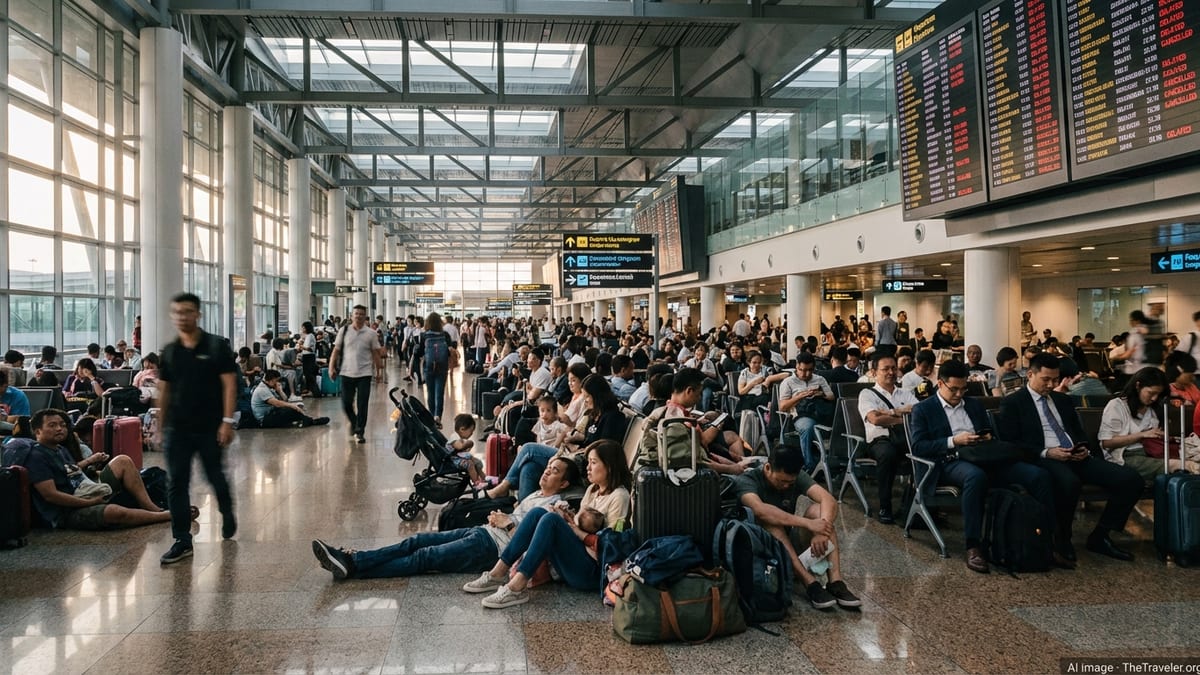
Flight disruption across the Middle East and parts of Asia has intensified this week, with aviation data indicating 6,951 delays and 472 cancellations as major Gulf carriers and regional airlines grapple with airspace restrictions, security alerts and rolling schedule changes.
Get the latest news straight to your inbox!
Regional Security Tensions Keep Airlines Off Balance
Publicly available flight and airspace information shows that the latest wave of disruption is closely linked to the ongoing security fallout from the recent conflict involving Iran, the United States and regional allies. Conflict-related airspace warnings over parts of Iraq, Iran, Syria and Israel continue to push airlines onto longer, more congested routes or to suspend services altogether on certain corridors between Europe and Asia.
Industry factboxes and advisories indicate that while some international airlines have begun restoring limited services to Gulf hubs, many routes remain suspended well into the autumn season, particularly to destinations such as Dubai, Doha, Riyadh, Jeddah, Tel Aviv and selected Saudi regional airports. Capacity on restored routes is often sharply reduced, with carriers cutting frequencies to a single daily flight and removing secondary destinations from their networks.
For Middle East giants, including Emirates and Etihad, the challenge lies in keeping core hubs in Dubai and Abu Dhabi running while navigating conflict zone advisories and fluctuating demand on Asia and Europe services. Analysts tracking the recovery note that even as these airlines restore a large share of their pre-crisis networks, periodic spikes in tension can still trigger sudden cancellations and rolling delays across multiple days.
Economic assessments of the Iran war’s impact on aviation highlight that the region remains susceptible to renewed disruption as long as conflict-related airspace closures and warnings persist. Any incident affecting airports or airspace in Saudi Arabia, Kuwait or Bahrain can have immediate knock-on effects on flight flows through the United Arab Emirates and further into South and Southeast Asia.
Abha Airport Disruptions Ripple Across Gulf Networks
One of the most visible flashpoints this week has been Abha International Airport in southwest Saudi Arabia, where operations have been repeatedly disrupted after missile and drone incidents in the surrounding area. Regional coverage shows that by Friday the airport had experienced a fourth consecutive day of irregular operations, with international flights bearing the brunt of cancellations.
Flights between Abha and the United Arab Emirates have been particularly affected. Services to Dubai and Sharjah remained suspended, with arriving and departing flights operated by Saudia, flydubai, Air Arabia and flyadeal among those cancelled. Domestic routes within Saudi Arabia have continued at a reduced scale, but the loss of key international links has left many passengers seeking alternative routings through Jeddah, Riyadh or Dammam.
The Abha disruption has added further strain to the networks of Gulf carriers that already face tighter airspace corridors and security advisories. Passengers with itineraries connecting through UAE hubs to or from Abha have reported missed onward flights and last-minute rebookings, illustrating how issues at a single regional airport can reverberate through long-haul schedules linking Europe, Asia and Africa.
Travel updates and airport notices suggest that carriers are adjusting day by day, with some Abha services reinstated on short notice and others pulled as security assessments evolve. This pattern has made it difficult for travelers to plan with confidence, especially those relying on time-sensitive connections onward to South Asia and Southeast Asia.
Emirates, Etihad and Saudia Juggle Restorations and Setbacks
Operational updates from airlines and airport authorities indicate that Emirates has restored the vast majority of its global network in recent months, reaching close to pre-crisis coverage across the Americas, Europe, Africa, Asia and Australasia. However, the latest episodes of Middle East and Asian disruption have underscored how quickly conditions can shift, with targeted cancellations and extended delays reappearing on certain routes.
Etihad has faced similar challenges as it works to maintain connectivity through Abu Dhabi. Media reports and passenger accounts describe delayed or turned-back flights on routes such as Abu Dhabi to Bahrain and Manila after technical issues or sudden airport closures in neighboring states, compounding the scheduling uncertainties created by the wider regional security picture.
Saudia and its low-cost affiliate flyadeal have been at the center of the Abha turmoil, with multiple domestic and international services to and from the airport listed as cancelled in recent days. These cancellations come on top of broader schedule adjustments across the kingdom, where carriers are responding both to security guidance and to shifting demand on routes into and out of the Gulf.
Across the wider region, international airlines such as Singapore Airlines, Scoot and several European carriers have announced prolonged suspensions or heavy reductions on services to Dubai, Doha, Jeddah and other Gulf destinations. In some cases, cancellations on specific city pairs run into late October, highlighting the expectation that instability and airspace complexity will persist through the current peak travel season.
Knock-on Effects Across Asia and Europe Routes
The Middle East’s role as a bridge between Europe and Asia means that disruption in Gulf airspace is rapidly felt along long-haul corridors that rely on hubs in Dubai, Abu Dhabi, Doha and major Saudi cities. Reports from Asia-focused outlets show that airlines in Singapore and other Southeast Asian markets have suspended or rerouted flights to the Gulf, with some services to Dubai and Jeddah canceled for weeks at a time.
These changes are forcing both leisure and business travelers to seek alternate paths via secondary hubs in South Asia or Europe. Longer routings increase flight times and operating costs, while constrained capacity on remaining services often translates into higher fares and reduced flexibility for short-notice travel.
European carriers have also adjusted their schedules, reducing frequencies or postponing the resumption of certain Middle East routes. According to recent industry roundups, flights to Dubai, Doha, Riyadh and Tel Aviv from several European hubs remain suspended or sharply curtailed, while airlines continue to avoid conflict-affected airspace over Iraq, Iran and Syria where feasible.
For passengers traveling between Europe and destinations in South and East Asia, these shifts can mean additional connections, extended layovers and greater exposure to rolling delays. With nearly 7,000 flights delayed and hundreds canceled in the current disruption window, the cumulative effect on global connectivity is significant, even as many airports and airlines elsewhere operate normally.
What Passengers Can Expect Now
Travel advisories and airline updates suggest that volatility is likely to remain a feature of Middle East and Asia travel in the coming weeks. While major hubs in Dubai and Abu Dhabi continue to function as primary gateways, intermittent airport closures, airspace warnings and technical disruptions are expected to generate further schedule changes at short notice.
Passengers booked on Emirates, Etihad, Saudia and regional partners are being encouraged through public information channels to monitor their bookings closely, as same-day timetable shifts, equipment changes and rerouted flights remain common on corridors that pass near conflict-affected areas. In many cases, airlines are offering fee-free rebooking, travel credits or refunds where flights are canceled outright.
Industry observers note that airlines are also refining contingency playbooks developed earlier in the crisis. These include priority use of available airspace slots, temporary consolidation of lightly booked flights, and the strategic use of larger aircraft on high-demand sectors to accommodate stranded passengers after clusters of cancellations.
For now, the combination of airspace restrictions, localized security incidents such as those at Abha, and cautious capacity planning by global carriers continues to produce an unstable operating environment. Travelers crossing through the Middle East and connecting to Asia are likely to face a heightened risk of disruption until regional tensions ease and regulators scale back the most restrictive conflict-zone advisories.