


More news on this day
Austin’s long‑awaited light rail system cleared a major milestone this week as Austin Transit Partnership selected Stadler to supply 21 light rail vehicles, locking in the fleet that will serve the first phase of Project Connect’s new Austin Light Rail line.
Get the latest news straight to your inbox!
A Landmark Contract for Austin’s Rail Debut
According to published coverage, the vehicle award to Stadler is among the final large procurements identified in Austin Transit Partnership’s delivery plan for the Austin Light Rail Phase 1 project. The selection of a rolling stock supplier is considered a key prerequisite for advancing detailed engineering, systems integration and construction staging across the 9‑mile starter line.
Publicly available information indicates that the base order covers 21 light rail vehicles, with contractual options for up to 19 additional units as the system expands. The agreement also preserves an option for a long‑term technical support and spare parts package, positioning Stadler to support maintenance and reliability over the life of the fleet if that option is exercised.
The light rail vehicles will be built on Stadler’s Citylink platform, which is already in use in other North American cities. For Austin, the design will be customized to local operating conditions, climate and accessibility standards, while retaining a standardized core that can be replicated if future options are ordered. The contract forms part of an overall Austin Light Rail program budgeted in the multi‑billion‑dollar range.
The award comes as Austin Transit Partnership continues to advance the project through the Federal Transit Administration’s Capital Investment Grants pipeline. Project profiles published by the FTA describe Austin Light Rail Phase 1 as a high‑capacity, dedicated‑guideway system intended to offer more reliable travel times than surface traffic, particularly in key employment and education corridors.
What the New Stadler Fleet Will Look Like
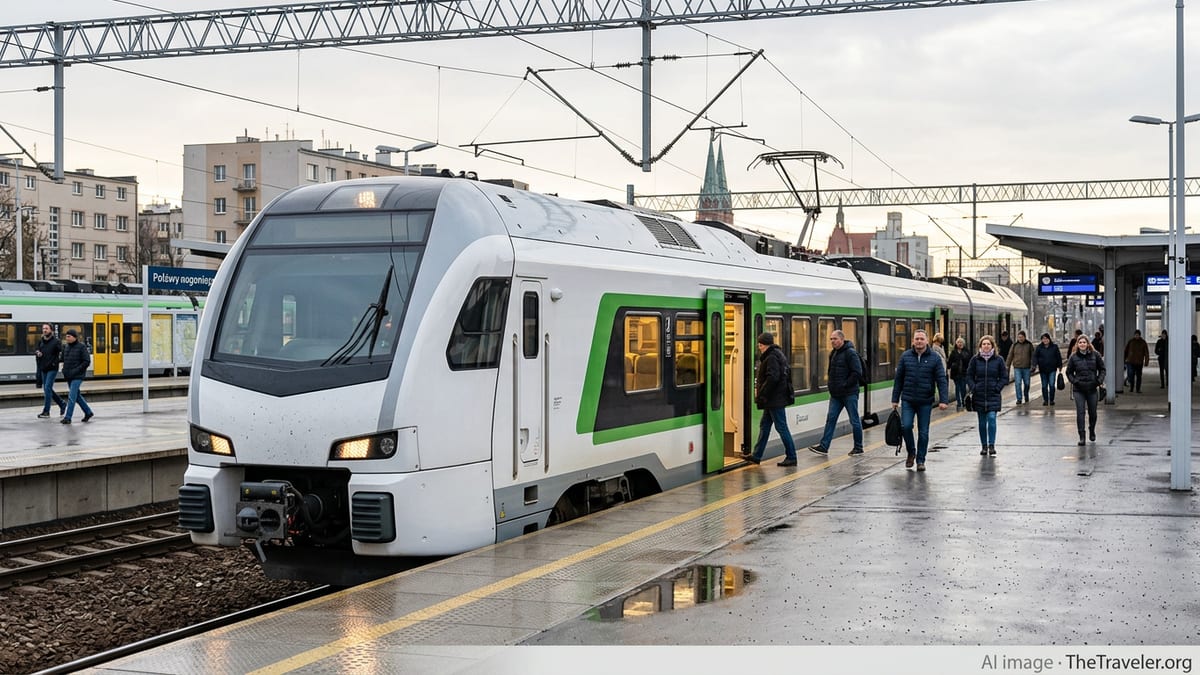
Technical details released through industry reporting describe the Austin vehicles as fully electric, low‑floor light rail trains with multi‑section articulated bodies. The low‑floor configuration is expected to allow level boarding from station platforms, which can reduce dwell times and improve accessibility for passengers using wheelchairs, strollers or bicycles.
The new trains are anticipated to carry roughly 240 passengers each at maximum load, combining seated and standing space. Interior layouts are expected to emphasize wide aisles, multi‑door access and open gangways between car sections to distribute crowds more evenly, a feature that has become standard in many newer light rail fleets.
Stadler’s Citylink platform is designed for mixed urban environments, with tight turning capability, quick acceleration and braking, and compatibility with street‑running and reserved‑track segments. For Austin, the vehicles will be specified to operate in the region’s hot summers, likely incorporating enhanced air‑conditioning, thermal insulation and energy‑efficient traction systems to manage power consumption.
The contract structure, which includes options for additional vehicles, reflects expectations that Austin’s light rail network will grow beyond the initial Phase 1 corridor. As ridership builds and extensions are funded, the city can call off additional units that match the initial fleet, simplifying driver training, maintenance and spare parts management.
Keeping Project Connect on Schedule
Public documents from Austin Transit Partnership outline a target to begin major light rail construction around 2027, following completion of design, right‑of‑way work and federal review. The Stadler vehicle procurement is framed within that schedule as a critical path item, since carbody design, signaling interfaces and depot layouts must be coordinated well before any trains arrive in Central Texas.
Reports indicate that the light rail contract follows earlier steps that advanced the project into the federal project development phase and launched procurement for final design and construction partners. City and agency budget documents describe a total capital program cost in excess of 8 billion dollars for the broader Austin Light Rail Phase 1 effort, with a significant share expected from federal grants.
Project Connect, the wider transit expansion program that includes Austin Light Rail, new rapid bus lines and other improvements, was approved by city voters in 2020. Since then, the program has undergone several scope refinements to align with available funding, with the current Phase 1 alignment focusing on the city’s core north‑south spine and future opportunities for airport and regional connections.
By locking in a vehicle supplier now, project planners can begin detailed modeling of operating plans, maintenance cycles and fleet sizing. The base order of 21 vehicles is expected to cover initial peak service, while the additional options would allow more frequent trains or route extensions as demand and funding permit.
Implications for Riders and the Urban Corridor
Austin Light Rail is intended to operate every five to ten minutes along much of the Phase 1 corridor, according to information published on project outreach sites. The capacity and performance of the Stadler fleet will therefore directly shape the rider experience, particularly during peak commuting periods and major events.
The combination of dedicated lanes, modern signaling and level boarding is expected to make travel times more predictable than current bus service through congested corridors. For many riders, the most notable changes will be shorter waits, more consistent trip times and the ability to bypass traffic bottlenecks that regularly affect surface streets and freeways.
Project materials emphasize that the system is being designed with a focus on equity, connecting dense residential areas and key job centers that have historically lacked high‑capacity transit. The light rail vehicles themselves must accommodate diverse passenger needs, including priority seating, robust climate control and clear wayfinding in both English and Spanish.
As construction approaches, planners are preparing for staged integration of the new fleet with existing Capital Metro bus and commuter rail services. Schedules, fare policies and station designs will be coordinated so that riders can transfer between modes with minimal delay, using the Stadler trains as the high‑capacity backbone of the central Austin network.
Stadler’s Growing Footprint in the U.S. Rail Market
The Austin award adds to a growing list of U.S. contracts for Stadler, particularly for its Citylink and FLIRT platforms. In recent years, agencies such as Utah Transit Authority have selected Stadler for new light rail vehicles intended to replace or supplement aging fleets, reflecting a gradual diversification of the North American rolling stock market beyond legacy suppliers.
Stadler already has a presence in Central Texas through diesel multiple units used on Capital Metro’s Red Line commuter service, giving the company familiarity with local regulatory requirements and operating conditions. That experience is expected to inform the design, testing and maintenance planning for the new electric light rail fleet.
Industry observers note that vehicle standardization across regions can bring long‑term cost advantages, from shared component designs to streamlined certification processes. At the same time, each contract, including Austin’s, incorporates local customization for platform heights, signaling systems and crashworthiness standards, among other technical parameters.
With Austin Transit Partnership moving ahead on vehicle procurement while advancing final design and construction contracts, the selection of Stadler marks a tangible step from planning to implementation. For residents watching Project Connect’s progress, the new trains offer a concrete preview of how the city’s first modern light rail line is expected to look and feel once service begins later this decade.