


More news on this day
Travelers passing through Bahrain International Airport are facing mounting disruption as a wave of delays and cancellations ripples across regional and long-haul networks, leaving passengers stranded overnight and forcing last-minute rebookings on already stressed routes.
Get the latest news straight to your inbox!
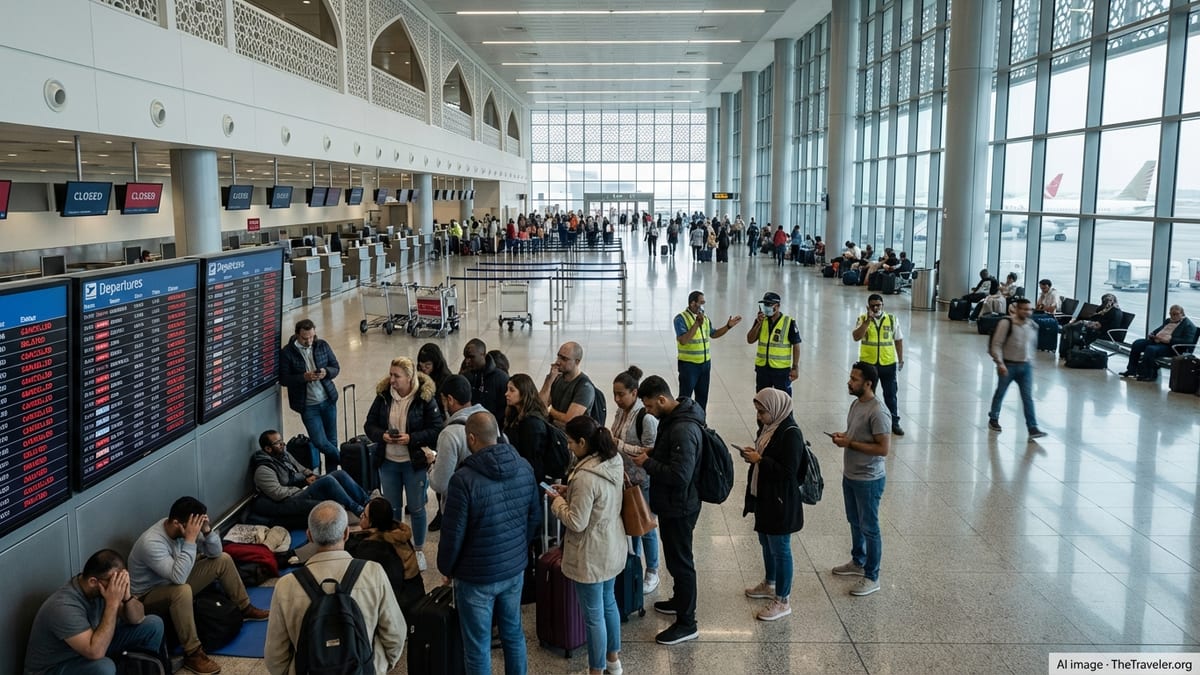
Live data shows rolling delays and cancellations at Bahrain hub
Operational data from Bahrain International Airport on July 17 indicates a busy schedule under strain, with dozens of services departing behind schedule and multiple flights cancelled outright. Live departure boards show a pattern of late-running services across the morning and early afternoon peak, particularly on routes connecting to Gulf neighbors and South Asia.
Among the most affected services are regional links to Muscat and Dubai, with several flights recorded as cancelled, alongside knock-on delays to departures bound for Kuwait City and Doha. Arrivals data also shows inbound flights from Istanbul and other regional hubs operating behind schedule, compressing turnaround times and increasing the risk of further slippage later in the day.
While exact tallies fluctuate hour by hour, publicly available tracking platforms through Friday afternoon indicate that more than 30 flights at Bahrain International Airport have been delayed, with at least half a dozen cancelled, as airlines struggle to maintain normal operations in the face of wider regional disruption.
Passenger reports posted to social platforms and travel forums describe terminal areas filling with transit travelers whose connecting flights have been pushed back repeatedly, with some saying they have been issued meal vouchers and hotel arrangements while they await rebooking options.
Regional security tensions feed into Bahrain disruptions
The turbulence in Bahrain’s schedules is unfolding against the backdrop of heightened security tensions across the Gulf. Recent coverage in regional media describes renewed missile and drone activity affecting airspace in parts of Saudi Arabia and Kuwait, as well as intermittent restrictions and reroutings that have reshaped traditional flight corridors between the Middle East, Europe and Asia.
Analysts note that Bahrain sits at a critical junction on these routes, acting as both a point-to-point gateway and a transfer hub, particularly for passengers traveling between South Asia and Europe. When airlines divert, delay or cancel flights elsewhere in the region, Bahrain’s network often experiences secondary effects as aircraft and crews fall out of position and scheduled rotations are forced to change at short notice.
Reports from aviation and logistics bulletins over recent weeks have highlighted that airspace in Gulf states, including Bahrain, remains operational but fragile, with warnings that schedules are subject to rapid change. Travel risk advisories circulating to corporate clients emphasize the likelihood of selective cancellations, extended flight times due to rerouting, and sporadic congestion at key hubs as capacity is reallocated.
The result on the ground in Bahrain is a pattern of rolling disruption rather than a full shutdown: a steady accumulation of late arrivals, missed connections and cancellations that leaves travelers stranded in the terminal even as parts of the timetable continue to operate.
Saudi Arabia, India and UAE routes bear the brunt
Routes linking Bahrain with Saudi Arabia, India and the United Arab Emirates are among the most heavily affected, reflecting both their importance in the network and their exposure to broader Gulf airspace constraints. Flight status boards on Friday list delayed or cancelled departures on services to Riyadh, Muscat and Dubai, while regional media reports point to continuing schedule adjustments at major Saudi and Emirati airports.
For India-bound travelers, the situation is particularly sensitive. Bahrain is a key connecting point for flights serving major Indian cities such as New Delhi, Mumbai, Kochi, Chennai and Bengaluru. Any significant delay to these departures can strand passengers in Bahrain overnight, especially those arriving from Europe or North America who miss tightly timed connections onward to the subcontinent.
Travel advisories published for passengers flying between the UAE and India this week already highlight an environment of changing schedules, new documentation requirements and rerouted services in response to the regional security outlook. Those dynamics, combined with the operational pressures visible in Bahrain, increase the risk of last-minute gate changes, extended layovers and cancellations that ripple across multiple carriers.
Services between Bahrain and Saudi Arabia also remain vulnerable to sudden disruption. Previous missile and drone incidents affecting airports in southern Saudi Arabia have led to temporary suspensions and diversions in recent months, and industry updates continue to caution that selective delays and cancellations on Saudi routes are possible with limited warning.
Knock-on effects hit Kuwait, Egypt, Turkey and European links
Beyond the immediate Gulf triangle of Saudi Arabia, Bahrain and the UAE, flight links from Bahrain to Kuwait, Egypt, Turkey and Europe are also coming under pressure. Operational feeds on Friday list delays on Bahrain’s services to Kuwait City and Cairo, while at least one Istanbul-bound flight has been logged as cancelled. These disturbances echo wider reports of congestion and schedule changes at Kuwait International Airport and Turkish hubs as airlines respond to evolving airspace restrictions.
Travel industry updates circulated in recent days describe delayed inbound flights to Kuwait on carriers from Abu Dhabi, Istanbul and Hyderabad, underscoring how disruption in one hub can quickly spill over into another. With Bahrain feeding traffic into these same airports, even small changes in departure times can cause missed connections onward to European cities.
European routes are feeling the impact both directly and indirectly. Some Gulf-based carriers continue to operate reduced schedules to Europe after earlier periods of airspace closure and rerouting added time and cost to long-haul services. Passengers attempting to connect in Bahrain onto flights bound for major European capitals are reporting rebookings onto later departures or alternative routings via other hubs when the Bahrain leg arrives late or is cancelled.
Logistics and supply chain bulletins for the Middle East note that capacity on Europe-Asia and Europe-Gulf routes remains tight, with airlines prioritizing certain trunk services. In this environment, a cluster of delays and cancellations at Bahrain International Airport can quickly translate into a shortage of available seats on alternative flights, lengthening the time that stranded travelers remain in the terminal.
Airlines juggle contingency plans as travelers seek alternatives
Major airlines operating at Bahrain International Airport, including Gulf-based network carriers and regional low-cost airlines, are relying on a mix of contingency measures to manage the disruption. Publicly available statements in recent months have outlined strategies such as consolidating lightly booked flights, adding ad hoc services on heavily affected routes when aircraft become available, and coordinating with partner airlines to reaccommodate passengers over alternative hubs.
In parallel, aviation advisories from global consultancies describe a sustained period of strained operations for carriers across the Middle East, with aircraft and crew utilization models repeatedly revised as conflict-driven airspace closures and security considerations shift the shape of viable routes. Bahrain’s role as an operationally important but relatively compact hub means that changes made in Abu Dhabi, Dubai, Doha or Istanbul can have immediate effects on its daily timetable.
For travelers currently isolated in Bahrain International Airport, options depend largely on ticket conditions and route flexibility. Some passengers are being rerouted via Saudi Arabia, Kuwait or other Gulf states when seats are available, while others are offered travel on later Bahrain departures if and when aircraft rotations stabilize. Travel specialists advise that passengers check flight status frequently, allow extra time for connections, and remain prepared for itinerary changes even after check-in.
With regional tensions still elevated and airlines signaling that further schedule adjustments are possible, the situation at Bahrain International Airport is likely to remain fluid over the coming days. For now, the combination of 39 recorded delays, six cancellations and a fragile regional network has turned what should be a routine transit point into an unexpected and often involuntary stopover for hundreds of travelers.