


More news on this day
Airlines are gradually reinstating some services to the Middle East after months of war-related disruption, yet reduced schedules, extended suspensions and widespread rerouting mean travelers still face an unpredictable network across the region.
Get the latest news straight to your inbox!
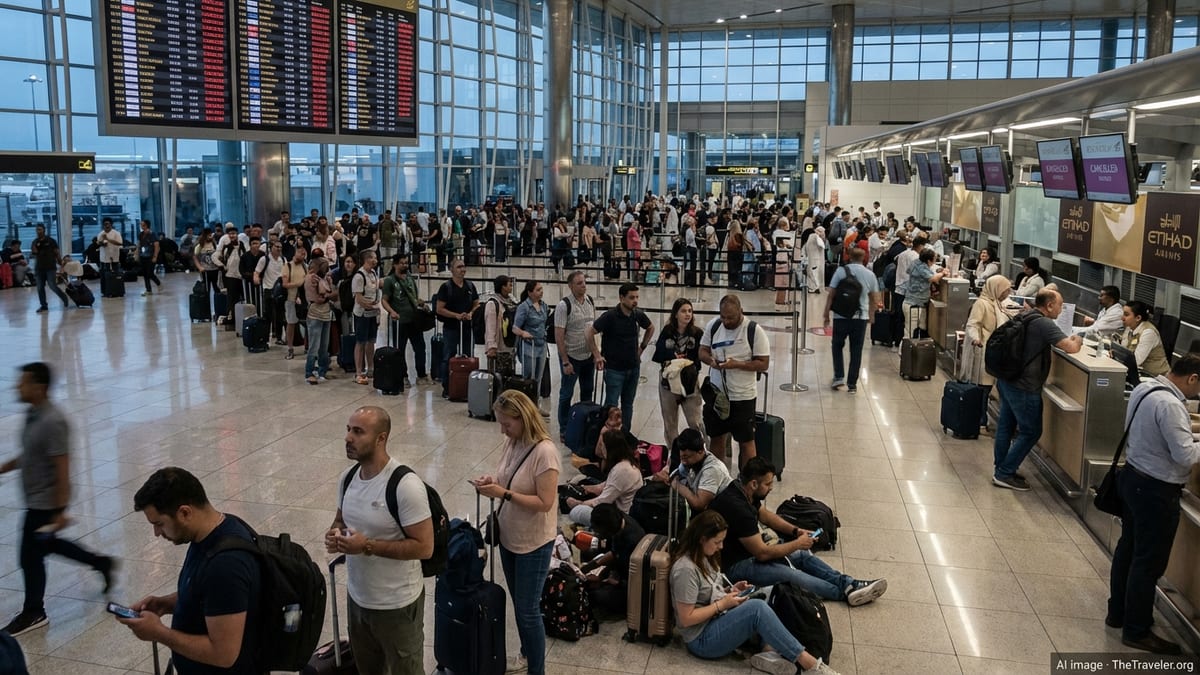
Selective Restarts at Major Gulf and Levant Hubs
Published coverage indicates that a growing number of international airlines are restoring limited services to major hubs such as Dubai, Doha, Riyadh and Tel Aviv as of mid-July 2026. Several European and Asian carriers have brought back at least one daily flight on key routes, often after weeks of complete suspension when airspace closures and missile strikes forced mass cancellations.
Reports summarizing airline notices show that some carriers have resumed flights to Dubai and Riyadh while trimming frequencies, turning what were previously multiple daily departures into a single rotation designed to preserve essential connectivity. Tel Aviv has seen a similar pattern of cautious return, with certain airlines restarting operations but keeping capacity well below pre-conflict levels.
Industry data suggests that Middle Eastern airports, which typically handle around 15% of global air traffic, remain far from normal volumes. Even where terminals and runways are open again, schedules are being rebuilt slowly, with airlines prioritizing routes that can reliably fill seats and be operated within revised safety and insurance parameters.
Extended Suspensions and Capacity Cuts Keep Pressure on Travelers
Despite the gradual reopening of some routes, many airlines continue to keep parts of their Middle East networks offline. According to recent factbox-style summaries in global business media, several European carriers have prolonged suspensions of flights to Dubai and other Gulf destinations into September, citing ongoing security and operational constraints.
Elsewhere, flights to cities such as Jeddah have been dropped entirely from some summer schedules, while services to Beirut and certain Saudi destinations remain on hold or are only available on a reduced basis. For travelers, this patchwork of resumptions and cancellations translates into fewer options, higher load factors on operating routes and continued difficulty securing last-minute seats.
On transatlantic markets, some North American airlines are still keeping selected Middle East routes suspended into late 2026, even as they move ahead with plans to restart others. Publicly available timetables point to staggered resumptions, with carriers slotting in tentative restart dates that could still shift if regional conditions deteriorate again.
Rerouting Around Conflict Zones Lengthens Journeys and Raises Costs
The conflict and associated airspace closures have not only affected flights into and out of the Middle East, but also the wider flow of traffic between Europe and Asia. Industry and economic reports note that airlines which previously routed over Iran and neighboring countries have been forced to adopt longer detours, pushing up flying times and fuel consumption.
These extended routings are particularly evident on services linking European cities with South and Southeast Asia, where carriers are skirting sensitive corridors by flying either further north via the Caucasus and Central Asia or further south across Egypt and Saudi Arabia. The extra distance can add significant time to journeys and has contributed to higher operating costs at a moment when fuel prices are already elevated.
Travelers passing through non-Gulf hubs are feeling the impact as well. Longer sector times compress connection windows and can ripple through airline schedules when delays occur, making missed connections and tight transfers more likely. While airlines have adjusted timetables and block times, the system remains under strain as long as major overflight corridors stay constrained.
Regional Carriers Adapt Faster Than Global Rivals
Within the Middle East, large network airlines based in the Gulf and neighboring states have generally moved more quickly to restore capacity once local conditions allowed. Market analysis from aviation groups indicates that these carriers, whose business models depend on long-haul connecting traffic, have ramped up flights where they can, even while operating around damaged infrastructure and shifting risk assessments.
Some regional airlines are using widebody aircraft on truncated schedules, consolidating demand that previously would have been spread across multiple frequencies. Others have redeployed aircraft to alternative hubs or secondary airports that are less exposed to security concerns, aiming to preserve transfer flows between Asia, Europe and Africa.
However, even among these carriers, the recovery is uneven. Published timetables show that key markets such as Dubai and Abu Dhabi are operating below pre-war capacity, and certain night-time bank structures that once allowed rapid connections have been thinned out. For passengers, that can mean longer layovers and fewer same-day connection options, especially on lower-density routes.
Uncertain Outlook for Summer and Beyond
Economic and traffic forecasts released in recent weeks underline that disruption is likely to persist through at least the peak northern summer season. Industry outlooks emphasize that while global air travel demand remains robust, the Middle East conflict has removed a meaningful share of capacity and forced airlines to reconfigure networks built around the region’s major hubs.
Analysts tracking schedule data highlight that many carriers have locked in reduced frequencies on Middle East routes through August, with some planning only a modest increase heading into the autumn if security conditions remain stable. High fuel prices associated with the broader economic fallout of the conflict are another constraint, limiting the viability of lightly booked or marginal routes.
For travelers planning journeys that rely on Middle East connections, the message from public timetables and airline notices is to expect continued volatility. Seats may be harder to find on preferred dates, routings may involve additional stops or detours, and last-minute cancellations remain a possibility as airlines continue to manage a complex and shifting operating environment.