


More news on this day
Ryanair is warning passengers to prepare for "significant" delays and long queues at nine major European airports this summer, as a combination of new EU border checks and peak-season crowds threatens to stretch passport control and security capacity to breaking point.
Get the latest news straight to your inbox!
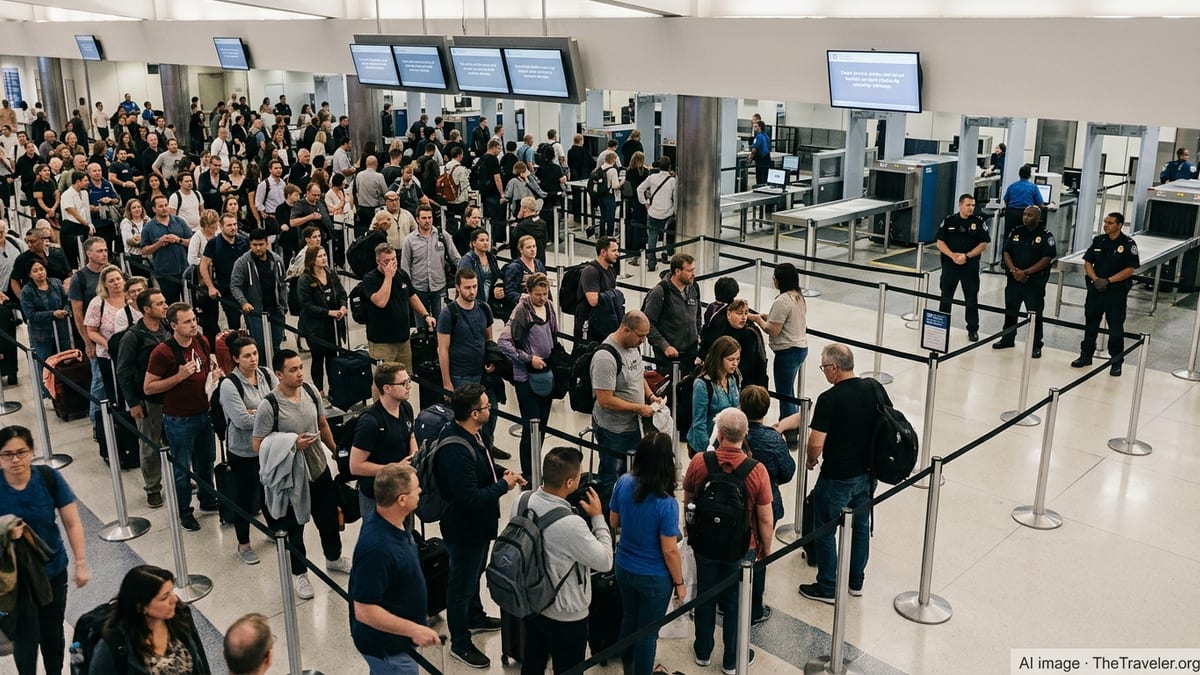
Nine hotspot airports flagged for severe congestion
According to recent updates from the airline and regional media coverage, Ryanair has identified nine airports across its network where long queues and extended processing times have become a persistent problem. The list focuses on large leisure gateways handling heavy volumes of UK and non-EU travelers, where new biometric border checks and staffing constraints are slowing passenger flows.
Reports indicate that major Spanish holiday hubs such as Palma de Mallorca, Malaga, Alicante and Tenerife South are among the worst affected, with passengers facing waits that can stretch well beyond an hour at peak times. Italian bases including Milan Bergamo and other popular city and resort airports have also been singled out for chronic congestion at passport control and security.
Coverage from French and Polish aviation outlets points to Paris Beauvais and key regional airports in countries like France and Poland experiencing similarly pressured conditions. Ryanair’s own operational updates describe these locations as recurring "hotspots" where the combination of border checks and summer demand is already generating significant queues on both arrivals and departures.
The airline has framed the warning as an attempt to alert millions of customers in advance of the main school holiday period, when traffic through these nine airports is expected to climb further and queuing times are likely to deteriorate.
EU Entry/Exit System blamed for longer passport queues
A central factor in the delays is the European Union’s new Entry/Exit System, which captures biometric data and entry records for non-EU nationals crossing external Schengen borders. The system, which has been rolling out across much of the bloc in 2026, requires additional fingerprint and facial scans for many UK and other third-country passengers.
Publicly available information from airline and industry briefings indicates that the technology has proved slower to process passengers than originally anticipated, particularly at leisure-focused airports that rely heavily on manual passport booths. Aviation trade press reports describe queues of one to two hours at some European terminals since the system went live at scale.
Ryanair has repeatedly argued that introducing the new regime at the height of the travel season risks overwhelming already stretched border facilities. In recent correspondence highlighted by broadcasters and newspapers, the carrier has urged governments in Spain, Portugal, France and other participating states to postpone further expansion of the Entry/Exit System until after the peak summer period.
For now, however, most major tourist airports continue to apply the new checks, leaving operators and ground staff trying to manage more complex procedures for a record volume of holidaymakers.
Operational changes as Ryanair seeks to keep flights on time
To limit knock-on disruption to its own schedule, Ryanair has begun adjusting airport cut-off times and procedures in anticipation of slower passenger throughput. Recent company communications show that check-in and bag-drop deadlines at its airports will be brought forward, in some cases closing a full 60 minutes before departure rather than the 40 minutes many travelers are used to.
The airline presents this change as a way to give passengers extra time to clear security and passport checks, particularly at the nine airports where bottlenecks are most acute. Consumer travel reports note that late-arriving customers have increasingly been caught in queues and missed flights, even when they entered the airport well ahead of the departure time.
Ryanair has also stepped up public messaging on the importance of online check-in and traveling with cabin baggage only, arguing this can reduce the time spent in airport queues. However, ground delays linked to border controls and security screening remain largely outside the airline’s direct control, and even well-prepared passengers can face extended waiting times during busy periods.
Industry analysts quoted across European media point out that low-cost carriers depend heavily on fast turnarounds and punctuality, making extended boarding and arrival processes a particular concern for operators like Ryanair with dense summer schedules.
What passengers can expect at affected airports
Travel advisories published in recent days suggest that passengers using the nine highlighted airports should now treat long queues as likely rather than exceptional, especially at weekends and during early morning and late afternoon peaks. Families and groups traveling with checked baggage, strollers or mobility equipment are considered most exposed to delays as they navigate multiple stages of the journey.
Accounts shared via consumer media and passenger forums describe crowded check-in halls, slow-moving security lines and passport queues that can extend hundreds of meters at certain terminals. In some cases, travelers report arriving more than two hours before departure and still reaching the gate only shortly before, or after, boarding has closed.
Airline and airport communications broadly recommend that Ryanair customers arrive substantially earlier than the minimum suggested in normal conditions, factor in possible queuing at every stage of the process and keep a close eye on departure boards and announcements. While online check-in and priority services can speed up parts of the journey, they are not a guarantee against delays created by border-control backlogs.
For arrivals, the warning of "significant" delays implies that passengers may also face long waits before clearing immigration and collecting baggage, particularly on flights arriving in clusters from the UK and other non-EU points.
Summer travel outlook as peak season begins
The warning over the nine airports comes as Ryanair and other major carriers report record summer demand and high load factors across European short-haul networks. The airline’s latest traffic figures show passenger numbers continuing to rise year on year, reflecting the ongoing popularity of low-fare leisure travel despite wider economic uncertainty.
Aviation industry groups caution that without additional staffing and process adjustments at key borders, the Entry/Exit System is likely to remain a dominant driver of delays for the rest of the season. Calls from airlines to extend temporary flexibilities in the EU rules, or to pause full implementation until after the summer, have so far produced only limited changes at national level.
For outbound travelers from the United Kingdom and other non-EU countries, the practical impact is expected to be most visible at busy Mediterranean and city-break airports served intensively by low-cost carriers. Analysts note that any sustained disruption at these nine hotspots could quickly ripple across wider networks, as aircraft and crew are knocked off schedule.
With school holidays now under way in several major markets, the situation at the affected airports is likely to serve as a test of how well Europe’s new border-control infrastructure can cope with peak volumes. Ryanair’s warning underlines that, for many passengers, the biggest challenge of their trip this summer may be simply getting through the airport in time.