


More news on this day
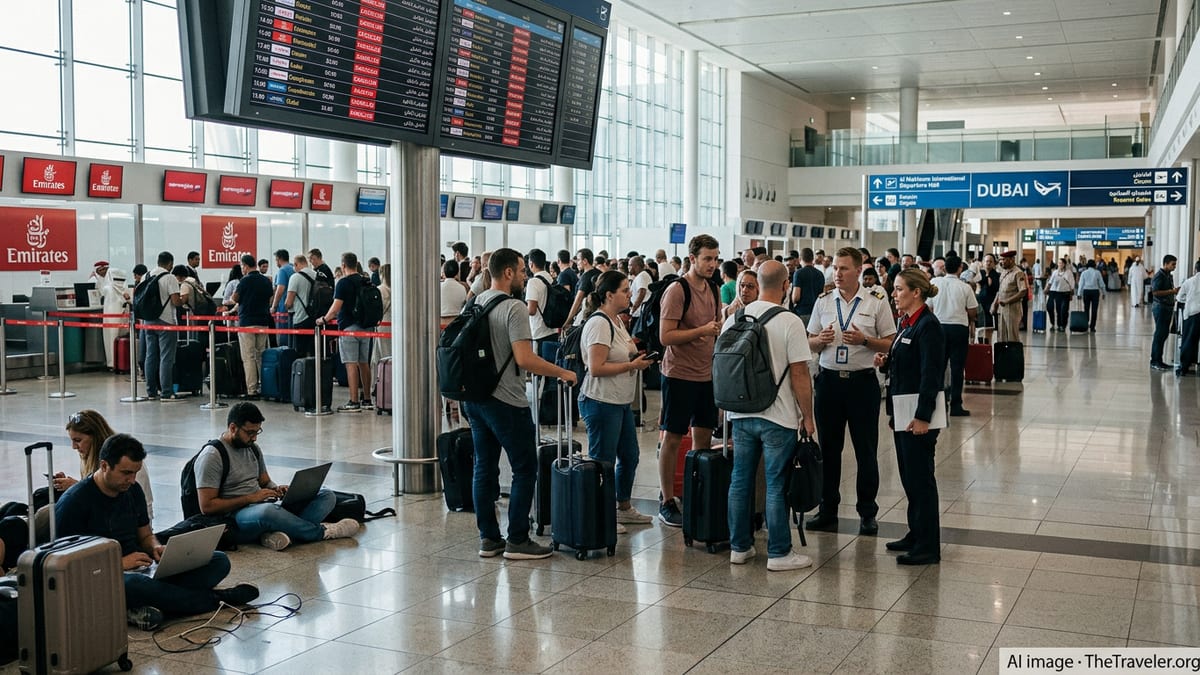
Air travel across Dubai and the wider Middle East is facing renewed disruption as airlines extend route suspensions and reroute flights in response to intensifying tensions between the United States and Iran.
Get the latest news straight to your inbox!
Extended suspensions on key Dubai and Gulf routes
Published coverage over recent days shows that many international carriers are keeping Dubai and wider Gulf services on hold well into late summer and early autumn, even as some regional traffic resumes. Factbox updates from global news agencies indicate that airlines including British Airways, Lufthansa Group carriers, Air France–KLM, Cathay Pacific and Singapore Airlines have pushed back their planned restart dates on various Dubai, Abu Dhabi and Riyadh routes, citing the ongoing security situation.
According to a July 16 round-up, several European airlines have maintained suspensions of flights to Dubai until mid or late September, with some planning only reduced schedules when services eventually return. Asian carriers have taken a similar stance, with Singapore Airlines extending the suspension of its Singapore–Dubai service until at least early August and its low-cost arm Scoot keeping certain Saudi routes offline until later in July.
Recent regional travel advisories from Dubai-based outlets also highlight additional cancellations to and from Saudi Arabia, particularly after attacks around Abha International Airport, and continued pauses on flights to cities such as Tel Aviv and Beirut. The picture for passengers is a patchwork of partial resumptions, extended suspensions and last-minute schedule revisions that vary by airline and destination.
Despite the scale of disruption, Gulf hubs have not shut down entirely. Reports from aviation and logistics bulletins describe major airports in Dubai and Abu Dhabi as operational, but operating under constrained capacity and with airlines avoiding particular airspace corridors. This combination has left departure boards noticeably altered, especially for Europe and North America services that would normally rely on smooth overflight across Iran and its neighbours.
Airspace restrictions reshape Europe–Asia connections
The core driver of the current disruption is the restriction and closure of airspace across parts of the Middle East following the latest flare-up in the US–Iran conflict. International aviation analyses note that airspace over Iran and sections of Iraq, Syria and nearby states has seen prolonged closures or severe limitations, forcing airlines to redraw long-haul routes between Europe and Asia.
Industry briefings from organisations such as IATA and private aviation consultancies describe how carriers have shifted to longer northern or southern corridors, routing via the Caucasus, Central Asia, Pakistan, Egypt or Saudi Arabia where feasible. These diversions increase flight times, fuel burn and crew costs, leading some airlines to cancel marginal routes altogether rather than operate significantly lengthened services through already congested skies.
Economic assessments of the conflict’s impact on aviation suggest that the Middle East’s role as a global transit crossroads has magnified the effect. Before the latest crisis, hubs in Dubai, Doha and Abu Dhabi handled a large share of Europe–Asia connecting traffic. With parts of the surrounding airspace heavily constrained and some airports temporarily affected by strikes and security concerns, airlines have redistributed traffic through alternative hubs, contributing to bottlenecks elsewhere.
Specialist supply-chain updates released in late June underline that cargo and passenger operators alike are dealing with longer transit times and unpredictable routings. While some capacity has shifted to sea freight on certain lanes, high-value and time-sensitive shipments still depend on air routes that remain vulnerable to sudden changes in security assessments.
Passenger disruption from Kuwait to Bahrain and beyond
The latest wave of schedule changes is not limited to the United Arab Emirates. Coverage from regional news outlets on July 15 and 16 shows delays and disruptions across Kuwait, Bahrain and other parts of the Gulf, as airlines adjust to evolving risks and official safety advisories.
At Kuwait International Airport, for example, publicly available arrival boards on July 16 showed delayed services from multiple regional and European carriers, including flights from Istanbul, Abu Dhabi and Indian cities. Travel reports attribute these knock-on delays partly to aircraft and crew rotations disrupted elsewhere in the network, as well as to airspace management measures introduced after renewed military action.
Bahrain has also been highlighted in risk briefings and travel alerts following strikes and temporary airspace closures earlier in the conflict. While some operations have since resumed, industry notes describe Bahrain’s airport and airspace as particularly sensitive to any further escalation, given its proximity to key maritime chokepoints and regional military infrastructure.
Travel advisories collated by consumer-facing outlets stress that passengers across the region should be prepared for short-notice timetable changes. Even when flights are operating, longer routings to avoid restricted zones can lead to missed connections and extended layovers, particularly for those using Gulf hubs as transit points between Europe, Asia and Africa.
Airlines balance safety, costs and capacity
The decisions to extend route suspensions into late 2026 reflect a mix of operational, financial and safety considerations. Public statements and route updates from major airlines emphasise that they are following international safety notices and national regulator guidance when determining whether to fly over or into affected areas.
Analysts cited in recent aviation outlooks point out that prolonged diversions around closed airspace significantly increase costs and tie up aircraft and crew, making some routes commercially unviable at current demand levels. For network carriers with limited spare capacity after a strong rebound in global travel, suspending selected Middle East destinations or delaying their return can be a more sustainable short-term response than absorbing sharply higher operating expenses.
At the same time, some Middle Eastern airlines and regional low-cost carriers have been able to step in and partially fill gaps on certain intra-Gulf and short-haul routes, drawing on their geographic familiarity and flexibility. Industry factboxes list Gulf-based airlines among those ramping capacity back up on specific corridors, although even these carriers are avoiding certain airspace and remain cautious about re-entering the most affected markets.
Financial market commentary notes that investors are closely watching how long the current pattern of suspensions and reroutings will last. Extended disruption through the peak northern summer season would add pressure to airline balance sheets and could push fares higher on remaining routes into and out of the Gulf.
What travellers through Dubai and the region should expect
Consumer travel coverage from Dubai and regional media underlines that passengers should not assume a quick return to normal schedules, even if broader diplomatic efforts continue. While some routes have reopened or are slated to resume later this year, a significant number of services to and from Dubai, Abu Dhabi and other Gulf cities remain suspended or reduced beyond the typical summer timetable change in late October.
Airports and travel advisers are broadly recommending that passengers monitor their airline’s app or booking page closely in the days before departure, as timetables can change with little notice in response to new security assessments or regulatory guidance. Many airlines have introduced or extended flexible rebooking and refund policies for affected Middle East routes, allowing travellers to shift dates, reroute via alternative hubs or opt for vouchers.
For those still travelling through the region, longer flight times and crowded alternative hubs are likely to remain features of the journey. Reports indicate that some carriers are funnelling Europe–Asia traffic through secondary airports, while others are adding capacity on routes that bypass the most sensitive airspace, such as via southern corridors over Egypt and the Red Sea.
Industry observers suggest that the overall outlook will depend heavily on whether tensions between the United States and Iran ease sufficiently to allow regulators and airlines to relax current restrictions. Until that happens, Dubai and its neighbouring hubs are expected to operate below their usual capacity, and the ripple effects of Middle East airspace constraints will continue to be felt across global travel networks.