


More news on this day
Airlines are gradually reinstating services to parts of the Middle East after months of disruption linked to the Iran conflict, but fragmented schedules, airspace restrictions and lingering safety concerns mean global travelers continue to face delays, diversions and sharply reduced capacity.
Get the latest news straight to your inbox!
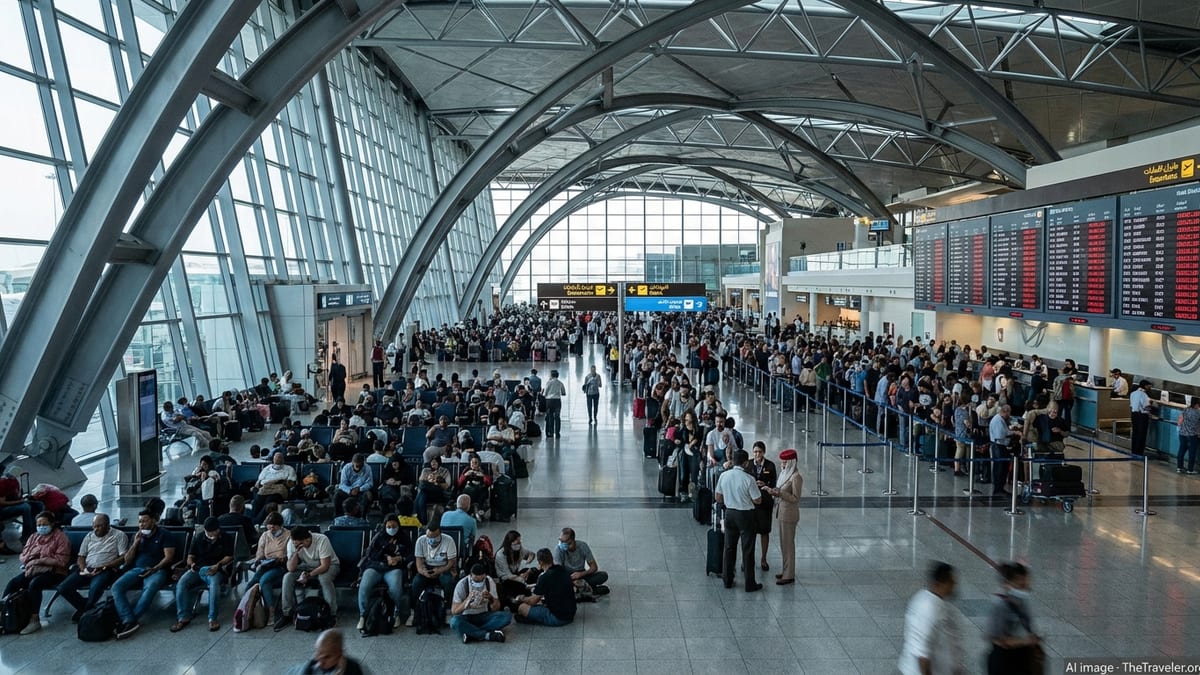
Patchwork Recovery After Airspace Closures
Commercial aviation across the Middle East is rebuilding in stages after airspace shutdowns and airport damage that followed United States and Israeli strikes on Iran earlier in 2026. According to recent agency rundowns of airline schedules, more carriers are now operating limited services back into the region, particularly to major hubs on the Arabian Peninsula, even as other routes remain suspended or heavily reconfigured.
Published coverage indicates that airlines are weighing the reopening of certain corridors against continuing military risks and changing overflight permissions. Some Gulf and Levant airspaces that once formed the backbone of fast links between Europe, Asia and Africa are only partially available, pushing airlines to design new routings that skirt sensitive areas. The result is a network map that looks markedly different from early 2026, with thinner schedules and longer flight times on some of the world’s busiest long-haul markets.
Industry analyses show that these constraints are having an outsized impact because Middle Eastern hubs previously handled a significant share of global connecting traffic. With several key airports and airspace zones still affected, carriers are restoring services in a cautious, incremental fashion rather than returning to pre-conflict frequencies.
Major Carriers Tiptoe Back Into Key Hubs
Recent factbox reporting from international news wires shows that a growing list of global airlines have restarted at least some flights into the region’s primary hubs, including Dubai and Riyadh, while planning phased resumptions to other destinations such as Tel Aviv and Doha. Timelines differ by carrier, but many of the reopenings have clustered in June and July, with additional capacity expected later in the northern summer if security conditions allow.
According to these schedules, some European and Asian airlines have already resumed selected routes to the Gulf after earlier suspensions, often beginning with a single daily rotation on core city pairs. In several cases, carriers that once operated multiple daily frequencies are returning with a scaled-down pattern, indicating a focus on consolidating demand and closely managing operational risk.
North American and European airlines serving Israel are taking an even more gradual approach. Publicly available timetables point to staggered restart dates for Tel Aviv services running into late 2026, while certain routes remain halted for the rest of the year. Capacity into Israel is therefore rebuilding more slowly than into nearby Gulf markets, keeping pressure on alternative hubs and ground transport options in the region.
Disruption Persists on Europe–Asia Corridors
For travelers flying between Europe and Asia, the partial reopening of Middle East routes has not yet translated into a full return to normal. Aviation data referenced in recent coverage shows that many non-Gulf airlines are still diverting flights around Iraqi, Iranian and adjacent airspaces, adding significant detours to journeys that once passed directly over the region.
These longer routings increase block times and fuel burn, pushing up operating costs and narrowing schedule flexibility. Industry outlooks from aviation consultancies and trade bodies highlight that the structural role of Middle Eastern hubs in facilitating one-stop Europe–Asia and Africa–Asia connections has been sharply curtailed, forcing airlines to rely more heavily on alternative paths through Central Asia, the Caucasus or southern maritime corridors.
The knock-on effects are visible in aircraft utilization and crew planning. With jets spending more hours in the air to complete the same city pairs, carriers have less slack in their fleets, reducing resilience when fresh disruptions occur. Passengers, meanwhile, continue to report missed connections and irregular operations on itineraries that previously offered tightly timed transfers through Gulf and Levant hubs.
Travelers Face Higher Fares and Tighter Capacity
Publicly available economic assessments suggest that the combination of closed airspace, longer flight paths and selective route suspensions is feeding directly into higher fares on many Middle East and connecting long-haul sectors. With capacity constrained and operational costs rising, airlines have limited room to absorb the shock, and ticket prices on surviving nonstop services have generally trended upward.
Industry forecasts released in June point to pressure on airline profit margins globally, but highlight the Middle East as one of the regions most exposed to conflict-related disruption. Reduced frequencies to major hubs, the elimination of some secondary destinations and the suspension of cargo services on particular lanes have all contributed to a tighter supply-demand balance, particularly for peak summer departures.
For leisure travelers heading to or through the region, this manifests as fewer available seats, more complex routings and higher overall trip costs. Corporate travel managers are also contending with shrinking options for time-sensitive business itineraries, especially where company policies restrict staff from flying through certain airports or airspaces still viewed as high-risk.
Uncertain Outlook as Diplomacy and Security Evolve
Despite the resumption of some flights, the medium-term outlook for Middle East aviation remains highly uncertain. Reports on the diplomatic track describe ongoing efforts to stabilize the situation following the Iran conflict, but security conditions on the ground and in the air remain fluid. Any renewed escalation or further strikes on aviation infrastructure could quickly reverse recent gains in connectivity.
Airlines are therefore building flexibility into their plans, filing provisional schedules that can be adjusted at short notice if airspace restrictions tighten or demand shifts. Some carriers have signaled through their published timetables that they will keep reduced frequencies in place for several months, and in certain cases into the final quarter of 2026, even if conditions gradually improve.
For now, travelers planning journeys to, from or via the Middle East are advised by publicly available guidance to monitor itineraries closely and allow extra time for connections. While the reopening of marquee routes to hubs such as Dubai and Riyadh marks a significant step toward normality, the wider network is still in flux, and the return of the region to its former role at the heart of global aviation remains a work in progress.