


More news on this day
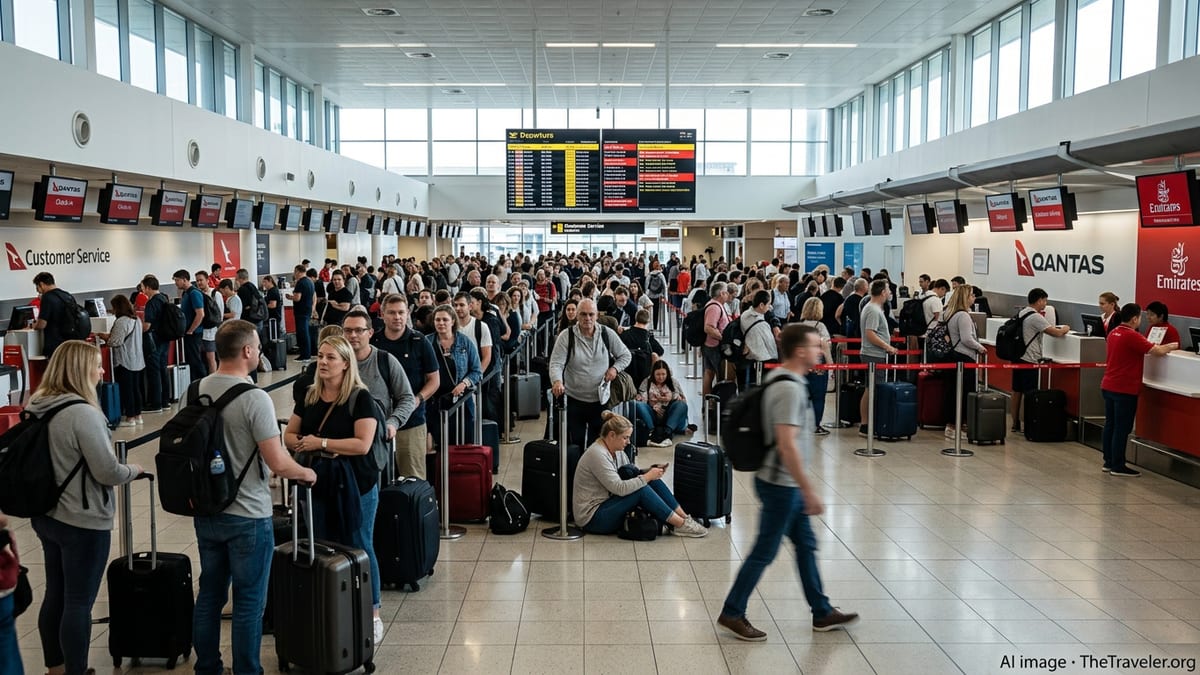
Airservices Australia has begun offering triple pay to some air traffic controllers at Sydney Kingsford Smith Airport in an effort to shore up staffing and reduce mounting flight delays that have frustrated passengers through the Australian winter.
Get the latest news straight to your inbox!
Emergency pay incentives follow months of disruption
Publicly available information indicates that Airservices has introduced temporary incentive payments worth up to three times standard rates for controllers who agree to cover short notice shifts at Sydney. The measures are targeted at periods when the network has been hit hardest by staffing gaps, compounding weather and congestion issues at Australia’s busiest airport.
The decision comes after a series of high profile delays affecting domestic and international services into and out of Sydney. In a statement on 10 August 2026, Airservices chief executive Rob Sharp acknowledged recent disruptions and said the agency was building a larger pool of standby controllers in Sydney and increasing training capacity at the airport’s tower simulator to improve performance.
Industry coverage links the offer of triple pay directly to that push to create deeper contingency for days when rostered staff call in sick or traffic levels exceed forecasts. While the incentives are described as temporary, they highlight how staffing pressures in air traffic control have intensified just as demand for air travel has returned to, and in some markets exceeded, pre pandemic levels.
For travellers, the new arrangements are aimed at reducing the risk of airborne holding and ground delays triggered when Airservices declares so called flow restrictions at Sydney because there are not enough controllers on duty to handle the planned schedule safely.
Sydney’s role as a national bottleneck
Sydney Kingsford Smith Airport is the primary international gateway for Australia and a key domestic hub, handling tens of millions of passengers each year. Its combination of a long standing movement cap, nighttime curfew and complex runway layout means that any operational constraint can quickly ripple across the national network.
When controllers are unavailable, Airservices reduces the rate at which aircraft can land and depart Sydney. That affects not only local travellers but also passengers on connecting flights to and from cities such as Melbourne, Brisbane, Adelaide and Canberra, as well as long haul services to Asia, North America and the Middle East. Airlines then face difficult choices about which flights to delay or cancel and how to re accommodate disrupted customers.
Recent government analysis of airline performance has pointed to air traffic management issues as one factor in Australian delays, alongside airline resourcing, airport ground handling and weather. Debate around a proposed Airline Passenger Protections framework in the federal parliament has also drawn attention to the role of Airservices in managing congestion and its accountability to the travelling public.
Against that backdrop, the introduction of triple pay appears designed not only to keep more controllers on roster at critical times but also to demonstrate that the air navigation provider is using the tools at its disposal to support more reliable schedules.
Enterprise agreements and ongoing staffing challenges
The incentive payments sit on top of a broader industrial framework that has been reshaped over the past two years. In mid 2024, Airservices reached an in principle enterprise agreement with its air traffic control workforce that was later declared by the Fair Work Commission. Public documents show the deal included an 11.2 per cent pay rise over three years and various improvements to allowances and conditions.
Despite that settlement, multiple reviews and disputes have underlined the difficulty of recruiting, training and retaining controllers in sufficient numbers. Airservices has reported that it can take several years to bring a trainee from ab initio status to full rating on a complex tower or en route sector, making it hard to respond quickly when traffic rebounds or when experienced staff retire or leave the profession.
The agency has moved to expand training capacity, including installing a new tower simulator in Sydney to accelerate accreditation for local controllers. It has also been working under the federal government’s Aviation White Paper framework, which emphasises workforce development and more resilient service delivery across the aviation system.
However, traffic data and anecdotal accounts from airlines suggest that controller availability at certain locations, particularly Sydney, remains tight. That has left Airservices reliant on overtime and now on elevated pay incentives to keep positions filled, a pattern that some industry observers argue is not sustainable as a long term staffing model.
What triple pay could mean for travellers
For passengers, the most immediate impact of triple pay offers is likely to be felt in the form of more stable schedules during peak periods at Sydney. If Airservices can consistently staff all required positions in the tower and approach control, airlines should experience fewer flow restrictions linked specifically to controller shortages.
Travel industry analysts note that any improvement in on time performance could have an outsized benefit during school holidays and long weekends, when aircraft are heavily booked and spare seats to reaccommodate delayed passengers are scarce. Fewer air traffic driven delays at Sydney could translate into more reliable connections at airports such as Melbourne and Brisbane, where knock on disruptions have been a recurring frustration.
At the same time, Airservices has indicated in public statements that safety will remain the overriding priority. When staffing falls below required levels, the agency continues to slow the rate of arrivals and departures rather than stretching remaining controllers, even if that leads to queuing on the ground and in the air. Travellers are therefore unlikely to see delays vanish completely, particularly during severe weather events or when runway works constrain capacity.
Consumer advocates argue that the new incentives should be assessed alongside forthcoming reforms such as a national airline ombudsman and a passenger rights charter, which are intended to provide clearer remedies for travellers when flights are significantly disrupted.
Cost and sustainability of emergency incentives
The financial impact of triple pay on Airservices’ budget is another point of interest for the industry. The organisation funds its operations largely through navigation and terminal charges levied on airlines. In August 2025 it implemented a weighted average price increase of 6 per cent across its services, after obtaining regulatory clearance to help fund frontline operations and key investment projects.
While the new pay incentives at Sydney have not been detailed publicly in dollar terms, analysts caution that extensive reliance on premium overtime can push up operating costs, which may eventually be reflected in higher charges to airlines. Carriers, in turn, often factor such costs into ticket prices, particularly on routes where competition is limited.
Airservices has presented the current measures as part of a broader program to stabilise performance and restore confidence in air traffic services following a turbulent period of industrial bargaining and operational strain. The organisation is also contending with external scrutiny after a series of airspace incidents at Sydney prompted investigation and heightened public concern about safety margins.
For now, the offer of triple pay underscores how critical reliable air traffic control has become to Australia’s travel recovery. As the busy summer season approaches, travellers and airlines alike will be watching closely to see whether the additional incentives in Sydney translate into fewer cancellations, shorter delays and a smoother experience across the domestic network.