


More news on this day
The United States Embassy in Jerusalem has issued a new security alert ahead of Yom Kippur, cautioning American travelers that Israel’s airspace and major airports could experience sudden closures, flight cancellations and other disruptions as regional tensions coincide with the country’s holiest day.
Get the latest news straight to your inbox!
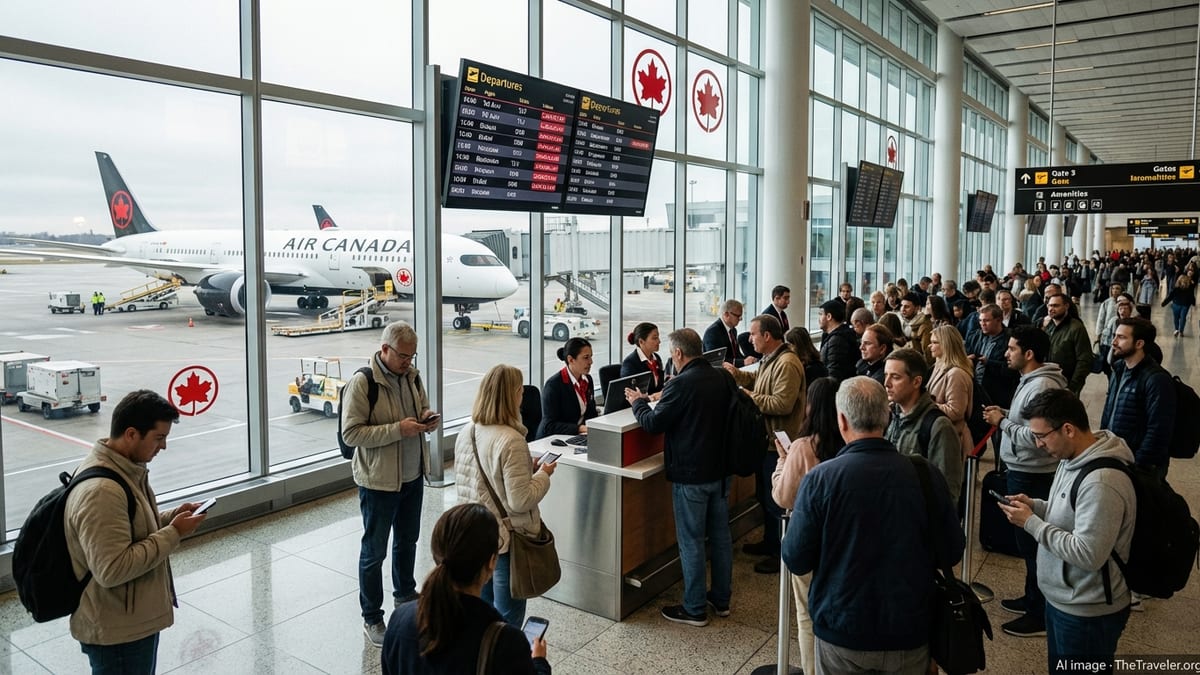
Security Alert Highlights Risk of Sudden Travel Disruptions
According to publicly available information, the embassy’s alert, dated September 19, 2026, warns that Americans traveling to and from Israel should be prepared for abrupt changes to flight schedules and potential airspace closures linked both to security concerns and the operational shutdown that accompanies Yom Kippur. Reports indicate that the message urges travelers to monitor their bookings closely and remain ready for last-minute adjustments.
The alert comes as Israel prepares to observe Yom Kippur, when normal life largely pauses, roads empty and commercial aviation halts for the 25-hour fast. Local aviation coverage notes that Israeli airspace is formally closed for the holiday, with Ben Gurion Airport suspending takeoffs and landings for a defined window, creating a sharp but predictable break in international connections.
Travel industry briefings on Israel emphasize that, in addition to the scheduled shutdown, the regional security environment remains fluid. Recent advisories from the US Department of State keep Israel, the West Bank and Gaza at Level 3, advising travelers to reconsider nonessential trips due to unrest and terrorism, with specific “do not travel” areas near Gaza, parts of northern Israel and sections of the border with Egypt.
The combination of a fixed aviation pause for religious observance and the possibility of additional, unscheduled closures tied to security developments is at the core of the latest embassy warning. Travelers are being encouraged, through various public channels, to plan for contingencies rather than assume operations will resume exactly as timetabled once the holiday ends.
Yom Kippur Closures Add to an Already Tight Aviation Picture
Yom Kippur in Israel traditionally brings the near-complete cessation of public and commercial activity. Media reports and airline notices describe how Ben Gurion Airport, the country’s main international gateway, closes to regular traffic from the evening before the fast until the fast concludes the following night, leaving only limited emergency operations available.
For foreign visitors and diaspora travelers, the pause has long been a logistical consideration. However, the current advisory context means that flights before and after the holiday may face added pressure. Published schedules show that carriers tend to cluster departures in the hours immediately before closure and after reopening, heightening the impact of any delay or last-minute cancellation.
Analysts following Israel’s aviation sector point out that regional tensions, including recent flare-ups involving Iran-linked groups and neighboring states, have periodically prompted additional restrictions on airspace use. Previous embassy alerts in 2025 and early 2026 referenced the possibility of rocket or drone activity affecting flight paths, which can lead to diversions, holds or temporary ground stops, even outside holiday periods.
In this environment, the new warning ahead of Yom Kippur is being framed less as a signal of a specific, named threat, and more as a reminder that small changes in the regional security picture can quickly ripple through airport operations and flight planning.
Existing Travel Advisories for Israel, the West Bank and Gaza
The latest notice from the US Embassy in Jerusalem sits alongside a broader State Department Travel Advisory for Israel, the West Bank and Gaza, updated on August 26, 2026. That advisory keeps the overall destination at Level 3, urging travelers to reconsider travel because of terrorism and unrest, and sets out additional restrictions for certain border areas and zones adjacent to Gaza and northern Israel.
Publicly posted guidance details several areas where travel is not recommended, including locations within roughly 7 miles of the Gaza Strip and segments along the Israel-Egypt border away from the Taba crossing. It also notes separate travel considerations for Jerusalem, where tensions can spike around religious holidays and in the Old City.
Supplemental information for the West Bank describes a Level 3 environment with heightened risk of demonstrations, clashes and sporadic violence. Restrictions on US government employee movement highlight the sensitivity of travel to many Palestinian cities and certain checkpoints, particularly after dark. While these internal rules apply to official staff rather than private citizens, they are often cited as an indicator of how the US government assesses on-the-ground conditions.
Alongside destination-specific advisories, a broader regional alert issued earlier in 2026 for parts of the Middle East underscores that the security environment across several neighboring countries remains complex and can change quickly. This broader context is shaping how risk is communicated to travelers headed to Israel during the High Holy Days.
What the Warning Means for American Travelers
For US citizens planning travel to Israel over Yom Kippur, the new alert translates into a call for flexibility and awareness rather than a blanket order to cancel trips. Airline and tourism briefings stress that most journeys continue to operate, but travelers may encounter schedule shifts, extended layovers or route changes as carriers adjust to both the planned holiday closure and any emerging security factors.
Passengers with tickets into or out of Ben Gurion Airport around the holiday window are being advised, through airline channels and travel bulletins, to verify departure and arrival times repeatedly in the days leading up to their flights. Some airlines servicing Tel Aviv typically introduce flexible rebooking policies during major disruptions, though the specific terms depend on the carrier and the nature of any operational restrictions announced by Israeli authorities.
Within Israel, foreign visitors should anticipate limited public transport during Yom Kippur itself. Urban roads in cities such as Tel Aviv and Jerusalem are unusually quiet, with many residents walking or cycling, and most shops, restaurants and visitor attractions closed. Travelers arriving shortly before the fast or immediately after are encouraged by local tourism information to arrange ground transport and accommodation well in advance, as airport taxis, private transfers and hotel front desks may face surges immediately before closure and after reopening.
Given the Level 3 advisory and the potential for localized unrest, travelers are also urged in official online materials to avoid demonstrations and large gatherings, stay alert in and around religious sites and transport hubs, and make use of alert apps or local information services that provide real-time updates on security incidents and rocket or drone warnings.
Practical Planning Steps for Trips Around the Holiday
While the embassy’s Yom Kippur alert focuses on aviation and border disruptions, the implications for trip planning are broader. Travel risk consultants recommend that visitors build in additional buffer time when connecting through Israel to other regional destinations, particularly if itineraries involve tight same-day transfers around the start or end of the fast.
Booking changeable fares, confirming travel insurance coverage for security-related delays and keeping accommodation plans flexible are among the measures frequently highlighted in public guidance from consular and tourism information sources. For those already in Israel, enrolling in traveler alert programs that distribute security updates by email or text can help ensure that any new restrictions or incidents are communicated quickly.
Travelers planning visits to the West Bank or border-adjacent regions are also being encouraged, via online advisories, to review current maps of restricted areas and to stay in close contact with tour operators or local hosts who can relay changes in checkpoint operations or road closures. Many organized tours now build contingency routes into their itineraries to adapt quickly if access to certain cities or religious sites is curtailed.
As Israel moves through the High Holy Day season, the embassy’s Yom Kippur-focused alert serves as another signal that, while travel to the country continues, it requires more advance research, a higher tolerance for last-minute adjustments and careful attention to both holiday logistics and the evolving regional security picture.