


More news on this day
Flights are moving again at Philadelphia International Airport after a major air-traffic equipment outage triggered federal ground stops across the Northeast, but travelers are being told to expect significant delays and residual disruptions well into Tuesday.
Get the latest news straight to your inbox!
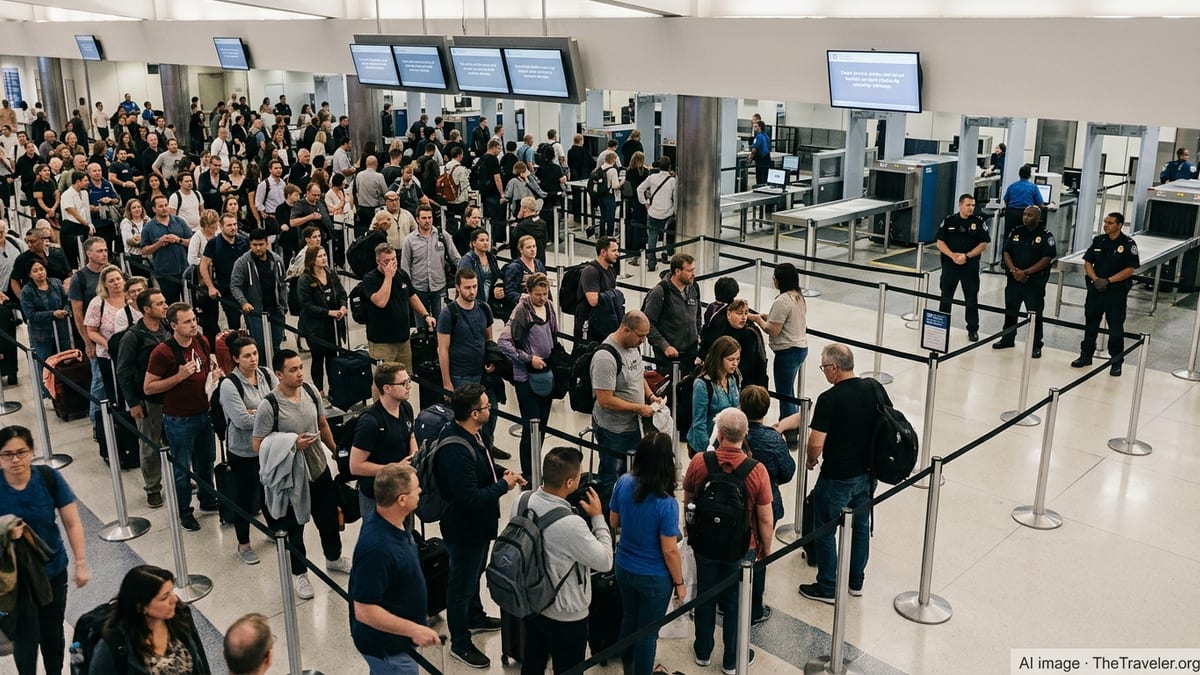
Ground stop lifted after communications failure repaired
Publicly available Federal Aviation Administration advisories show that arrivals into Philadelphia International Airport were halted for extended periods on Monday, September 21, 2026, following an equipment outage at the region’s air traffic control facility. The stoppage affected flights bound for Philadelphia and contributed to cascading delays at other major Northeast hubs.
Regional broadcast coverage indicates that the FAA issued more than one ground stop for PHL during the day, pausing inbound traffic while technicians worked to stabilize systems. Advisories later showed the stop lifted around late afternoon local time, allowing arrivals to gradually resume, even as departure flows remained constrained.
News reports from Philadelphia outlets describe the outage as originating at the Philadelphia Terminal Radar Approach Control facility, which manages approaches and departures for multiple airports in the region. The interruption sharply reduced the number of aircraft controllers could safely handle at once, prompting the national command center to use ground stops and ground delays to meter traffic into the affected airspace.
By Monday evening, coverage from national and local media indicated that the damaged communications links had been repaired and that airports across the Northeast, including Philadelphia, Newark, and the New York City airports, were able to restart operations. However, published accounts emphasized that the return of traffic did not immediately translate into normal conditions for passengers.
Damaged fiber lines in New Jersey at center of disruption
According to multiple news organizations summarizing federal transportation updates, the disruptions traced back to a failed circuit at the Philadelphia-area air traffic facility and a problem with the backup connection. A fiber-optic line associated with the redundant system was reported to have been severed at a construction site in New Jersey, cutting communications capacity for controllers managing crowded Northeast airspace.
Industry analysis pieces note that when both primary and backup communications links are compromised, air traffic managers significantly reduce arrival and departure rates or halt certain flows entirely until reliability is restored. That approach appeared to be reflected in FAA advisories for PHL and nearby airports, which showed arrivals periodically stopped, then cautiously restarted as system performance was tested.
Regional coverage of the incident points out that the outage did not only affect Philadelphia-bound flights. Advisories and flight-tracking data cited in those reports show impacts at Newark Liberty International, John F. Kennedy International, LaGuardia, and smaller airports in the New York metropolitan area, reflecting how closely integrated the region’s air traffic operations are.
Transportation updates shared publicly on Monday night indicated that the damaged telecom lines had been repaired and that operations across the Northeast were resuming. Even with that repair in place, observers noted that a full return to normal traffic flows would depend on how quickly airlines could reposition aircraft and crews that had been left out of place by the day’s interruptions.
Residual delays and cancellations expected to persist
On Tuesday morning, September 22, 2026, local media reports from Philadelphia indicated that PHL was still seeing a noticeable number of delays and cancellations, even though the previous day’s ground stop and formal FAA delay programs were no longer in effect. Data cited from flight-tracking services showed that hundreds of flights into and out of Philadelphia had been disrupted on Monday, leaving airlines with a substantial backlog.
Coverage of the airport’s status described a much lighter impact on Tuesday compared with the peak of the outage. One Philadelphia news report, drawing on airport and tracking data, referenced several dozen delays and cancellations among more than 700 scheduled flights, suggesting that the operation was stabilizing but not yet fully recovered.
Analyses published by aviation-focused outlets explain that the knock-on effects from such a large-scale disruption can last many hours after the technical fault is fixed. When aircraft and flight crews are stranded at the wrong airports or pushed past duty-time limits, carriers often need additional rotations or even the next day’s schedule to fully realign their networks.
Public guidance highlighted in regional coverage advises travelers with flights into or out of PHL to monitor their airline’s app or website for the latest gate and timing information. Airlines have been encouraging customers to allow extra time at the airport on Tuesday and to be prepared for possible rebookings as the system works through the backlog.
Impact spreads across the Northeast air travel network
Reports from national wire services and aviation news sites indicate that the Philadelphia-area outage sent ripples through the broader Northeast corridor on Monday. Ground stops or heavy flow restrictions were recorded not only at Philadelphia but also at key New York-area airports, amplifying delays along some of the country’s busiest air routes.
Flight-tracking data cited by multiple outlets showed hundreds of delays and cancellations concentrated at Newark Liberty International, with additional disruptions at John F. Kennedy International and LaGuardia. Because many aircraft and crews operate multi-leg sequences through several of these hubs in a single day, a failure at one control facility can quickly disrupt schedules for passengers far from the original problem site.
Travel industry reporting notes that several major carriers issued travel waivers for affected dates, allowing passengers booked through airports such as Philadelphia and Newark to change flights without standard fees. These waivers focused on tickets touching the region on September 21 and, in some cases, September 22, reflecting expectations that recovery would continue into Tuesday.
Analysts quoted in aviation coverage describe the incident as another example of how infrastructure weaknesses can reverberate through the national air system. They point to previous outages linked to data system failures and cable cuts as evidence that even geographically limited technical issues can have nationwide effects when they affect a critical hub or control node.
What travelers passing through PHL should know now
For passengers traveling through Philadelphia on Tuesday and into the evening, publicly available airport and FAA status pages show operations largely restored but with intermittent delays. Airlines are focusing on operating as many flights as possible while working through the backlog created during Monday’s ground stops and subsequent flow restrictions.
Travel advisories highlighted in local and national coverage recommend that passengers pay careful attention to departure and arrival times, as some flights may still be retimed or swapped for different aircraft as schedules are rebuilt. Same-day connections through other Northeast hubs may require additional buffer time, especially during peak afternoon and evening periods when traffic is heaviest.
Experts writing in aviation publications advise that travelers holding nonessential trips consider flexible options such as free rebooking offered under airline waivers, where available. Those who must travel are encouraged to confirm their flight status before heading to the airport and to be prepared for longer-than-usual lines at check-in, security, and customer service counters.
With the equipment problem resolved and air traffic gradually normalizing, attention is shifting to how regulators and infrastructure providers will address the vulnerabilities exposed by the outage. Policy and industry discussions are likely to focus on redundancy of communications links, protection of critical fiber lines near construction sites, and contingency planning designed to keep air travel moving more smoothly if similar disruptions occur in the future.