


More news on this day
UAE flag carriers Emirates and Etihad are maintaining normal schedules on routes between the United Arab Emirates and the United States after a major air traffic outage in the US grounded hundreds of domestic flights and triggered widespread cancellations across the American network, according to publicly available flight updates and local media reports.
Get the latest news straight to your inbox!
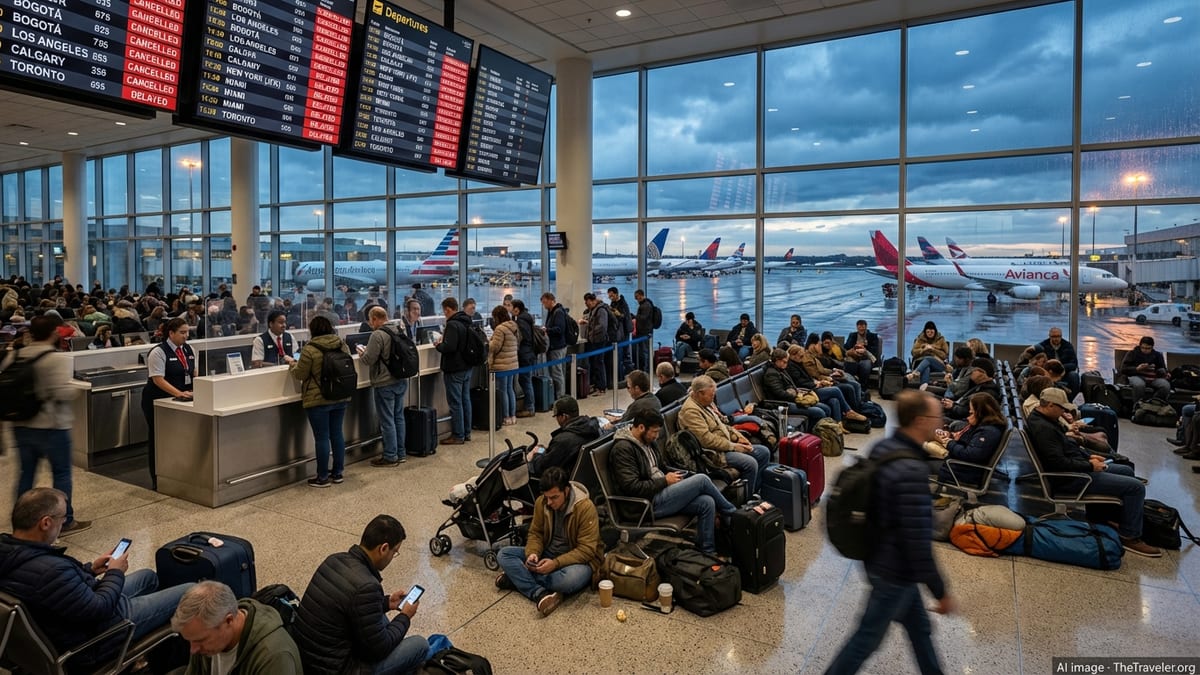
US outage triggers widespread disruption, but UAE links hold
Published coverage indicates that a communications failure affecting parts of the US air traffic system led to significant disruption at several major airports, including New York John F. Kennedy, Newark Liberty, LaGuardia and Philadelphia. Flight-tracking data and US media reports point to thousands of delays and cancellations concentrated within the domestic network and on some transatlantic services.
Despite the scale of the issue within the United States, Dubai-based Emirates and Abu Dhabi-based Etihad Airways have reported that their own services between the UAE and US cities are operating broadly to schedule. Regional aviation outlets describe operations as “unaffected” on direct UAE–US sectors, even as congestion ripples through the wider US system and affects onward connections.
Travel industry coverage notes that the outage has come at a busy time for transatlantic and long-haul travel, increasing the risk of missed connections, aircraft rotation challenges and crew scheduling complications. However, the long-haul nature of UAE–US flights, combined with the use of dedicated widebody fleets, appears to have helped insulate most nonstop services from the worst of the disruption seen on shorter domestic routes.
Local reports from Dubai and Abu Dhabi airports describe normal check-in and departure hall conditions for US-bound flights, in contrast to scenes of congestion and queues reported at some affected US gateways. Airport information screens for Dubai and Abu Dhabi show Emirates and Etihad departures to US hubs as generally “on time,” while displaying a larger number of delays and cancellations on services within the wider region that remain affected by separate geopolitical factors.
Emirates and Etihad publish guidance for affected travelers
While nonstop UAE–US flights continue to run, both Emirates and Etihad have emphasized established disruption policies for passengers whose broader itineraries are impacted by the US outage. Publicly available guidance on Emirates’ website states that customers whose flights are canceled are eligible for rebooking on the next available service, with reissue and cancellation fees typically waived during major disruption events.
Emirates’ disrupted-travel information further explains that passengers can be rebooked on alternative flights and, in certain circumstances, on other carriers when required to complete a journey. The airline outlines options for travel vouchers or refunds if re-accommodation is not possible, and advises customers not to proceed to the airport if they do not hold a confirmed seat on an alternative flight following a cancellation or major schedule change.
Etihad publishes similar guidance through its customer information channels, indicating that travelers affected by operational disruptions may be rebooked or offered other forms of assistance in line with the carrier’s conditions of carriage. These policies are particularly relevant for passengers who began their trips on US domestic services that were canceled or heavily delayed before an onward connection to the UAE.
Consumer advisories from regional and international media consistently recommend that passengers use official airline channels to monitor their bookings. Travelers are encouraged to consult airline apps, manage-booking tools and airport flight-status boards for the latest information before setting out, as schedules can change rapidly when large-scale outages occur.
Knock-on delays for connecting itineraries via US hubs
Although Emirates and Etihad are operating their UAE–US flights largely as scheduled, the disruption within the American network continues to create challenges for travelers using US gateways as connection points. Published coverage notes that delays and cancellations at New York-area airports and Philadelphia have complicated same-day transfers onto and off long-haul services.
Passengers flying from US regional cities to connect with Emirates or Etihad codeshare partners may face missed connections if their initial domestic legs are delayed or canceled. In these cases, travelers may need to be rebooked onto later long-haul departures or rerouted through different hubs, depending on seat availability and operational constraints.
Travel reports highlight that knock-on delays may persist for several days after the initial outage as airlines reposition aircraft and crews, clear backlogs and restore normal rotations. Even where UAE–US sectors depart on time, incoming aircraft could be arriving from US cities that experienced earlier disruption, adding a layer of schedule complexity that may not be immediately visible to passengers.
Advisories from aviation-focused outlets suggest that travelers with imminent departures build in extra time for check-in and security at affected US airports, keep boarding passes and travel documents easily accessible, and be prepared for schedule changes on short notice. Those with flexible itineraries may choose to accept voluntary rebookings to less crowded days or alternative routings if offered by their airline.
Regional backdrop of earlier Middle East flight suspensions
The US outage comes against a broader backdrop of recent flight disruptions involving Gulf carriers, including Emirates and Etihad, related to tensions between the United States, Israel and Iran. Earlier this year, regional airspace closures prompted temporary suspensions of flights to and from the UAE, with both carriers halting all operations at points when UAE airspace was restricted.
Reports from regional media detail how Emirates, Etihad, flydubai and Air Arabia previously canceled or adjusted services to destinations such as Bahrain and Kuwait as airspace and security conditions changed. In those instances, travelers experienced a combination of outright cancellations, extended delays and diversions as airlines worked around restricted corridors and closed airports.
Industry analysis notes that, compared with those earlier episodes, the current disruption is geographically concentrated within the US system rather than centered on Gulf airspace. This difference helps explain why UAE–US services are able to continue operating, while domestic US routes and some transatlantic flights have been more heavily affected by the latest technical issues.
Even so, recent experience with Middle East airspace closures has kept airlines and airports in the UAE focused on contingency planning. The rapid deployment of disruption-management teams, flexible rebooking rules and enhanced customer communications used during prior regional events are now being applied to support passengers caught up in the US outage’s secondary effects.
What travelers flying between the UAE and US should do now
For travelers planning journeys between the UAE and United States in the coming days, publicly available guidance from airlines and airports points to a clear set of practical steps. The most important is to verify the status of each flight segment shortly before leaving for the airport, using the airline’s official website, mobile app or automated phone systems.
Passengers whose itineraries involve a domestic US connection are advised to pay particular attention to the first leg of their journey, as this is where most of the remaining cancellations and long delays are concentrated. If a domestic sector is canceled or heavily delayed, travelers may be rebooked on an alternative route or later departure that still connects with their long-haul Emirates or Etihad flight.
Travel analysts also emphasize the value of keeping contact details up to date in airline profiles so that carriers can send real-time notifications of changes via email or text message. This can be especially important for passengers already en route or in transit, who may need to make quick decisions about accepting new routings or overnight accommodation when significant delays arise.
Overall, the latest information suggests that nonstop links between Dubai, Abu Dhabi and major US gateways remain stable despite the US outage’s impact on domestic operations. Travelers with confirmed bookings on Emirates and Etihad services between the UAE and the United States are generally able to proceed with their plans, while remaining alert to possible schedule adjustments affecting connecting flights on either side of the Atlantic.