


More news on this day
An Alaska Airlines flight operating from San Diego to Spokane on August 6 diverted to Boise, leading to an unplanned intermediate stop for passengers traveling across the western United States.
Get the latest news straight to your inbox!
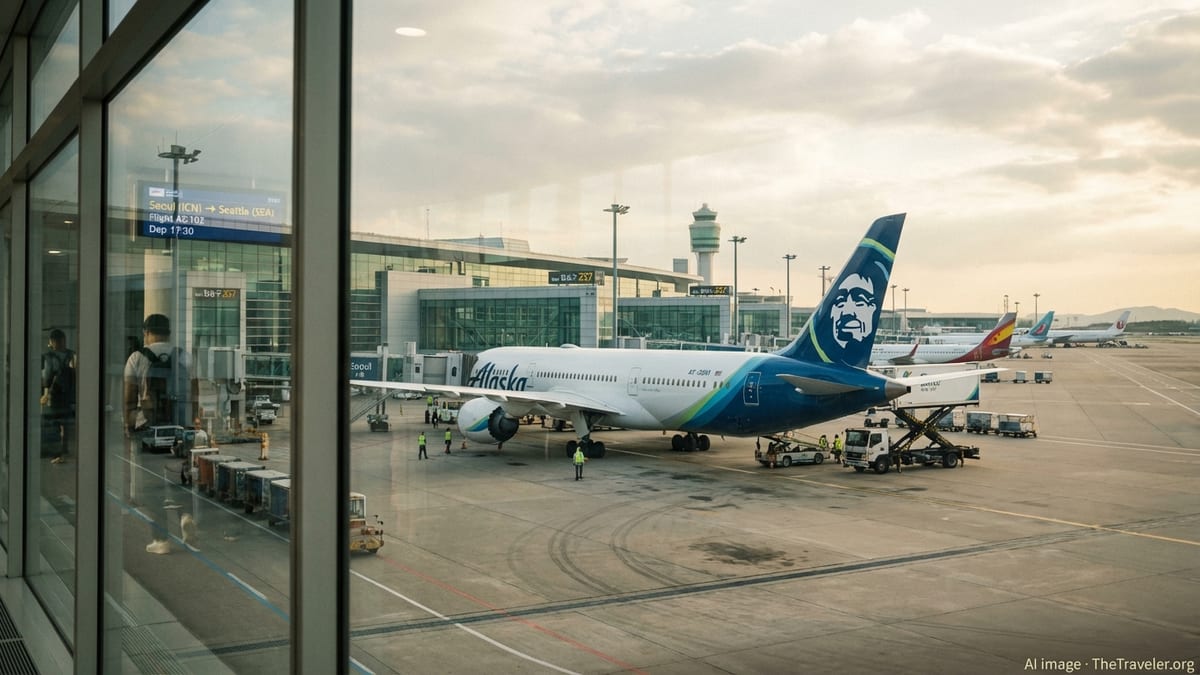
San Diego to Spokane Flight Alters Course to Boise
Publicly available flight tracking data indicate that Alaska Airlines flight ASA566, a Boeing 737-890 service from San Diego International Airport to Spokane International Airport, diverted to Boise Airport on the evening of August 6. The aircraft, operating a regularly scheduled route in the carrier’s West Coast network, altered its planned flight path partway into the journey and landed in Idaho rather than continuing directly to eastern Washington.
The diversion resulted in an additional ground stop for travelers who had expected a nonstop service between San Diego and Spokane. Information available through flight tracking platforms and schedule data shows that the aircraft had departed from San Diego as planned before the route change toward Boise, where passengers waited while the airline managed onward arrangements.
There were no immediate public indications of any injuries or emergency evacuations associated with the diversion. Available data point instead to a controlled landing at Boise Airport, followed by standard ground handling as the flight’s status and onward routing were updated.
Operational Factors Behind Midroute Diversions
Reports from aviation and traveler forums, together with general operational patterns in U.S. air travel, suggest several common reasons why a flight such as ASA566 may divert midroute. Typical drivers include weather conditions developing along the planned route or at the destination, technical or maintenance inspections that require the aircraft to be checked at an alternate airport, or fuel and performance considerations linked to winds or high temperatures.
In the western United States, flights crossing several states often encounter rapidly changing summer weather systems. Convective activity, thunderstorms, or reduced visibility at destination airports can require re-routing or temporary diversions to nearby facilities capable of handling a Boeing 737. Boise Airport, situated along key north–south and east–west corridors, frequently serves as a practical alternate for flights operating between California and the inland Northwest.
Other historic cases reported by travelers across multiple airlines show that strong headwinds, high terrain and heat-related performance limits sometimes lead to additional fuel stops when conditions differ from initial forecasts. In such situations, pilots may decide to land at an intermediate airport both to refuel and to remain within fuel reserve requirements, adding an unplanned but managed stop to the itinerary.
Boise’s Role as an Alternate and Connection Point
Boise Airport functions as an important regional node in the U.S. Northwest, with several carriers using it as a convenient diversion and connection point. Alaska Airlines in particular maintains a presence linking Boise to cities such as Seattle and other western destinations, making the airport a logical choice for handling a rerouted San Diego to Spokane service. Established ground operations, available gates, and maintenance support increase the likelihood that a carrier will choose Boise when an in-flight route adjustment becomes necessary.
Passengers from ASA566 arriving in Boise on August 6 were able to disembark into a facility that is accustomed to handling both scheduled and irregular operations. Historical traffic patterns show that western carriers regularly rely on inland airports with multi-runway capacity and established support infrastructure when flights cannot proceed directly to their intended destination.
The use of Boise as an alternate also positions the airline to manage crew duty times and aircraft utilization more effectively. With access to additional flights and crews in the region, an airline can either continue the original aircraft on to Spokane after a delay, or rebook travelers onto later services if required by scheduling or maintenance needs.
Impact on Passengers and Subsequent Travel
For travelers on ASA566, the diversion translated into extra time on the ground and a later arrival into Spokane compared with the original schedule. Based on publicly available information about flight arrivals and general airline practices, passengers likely experienced a combination of onboard delay, time spent parked at Boise, and a revised arrival time at their final destination.
Standard airline responses to such disruptions typically include providing updated departure and arrival estimates, arranging for onward travel once the aircraft is cleared or a replacement is identified, and supporting passengers with tight onward connections. While the specifics of individual arrangements for those on board ASA566 are not detailed in public sources, patterns from similar events indicate that airline staff and digital tools are used to rebook or adjust itineraries on a case by case basis.
Travelers affected by unplanned stops often face additional challenges such as rescheduling ground transportation, updating hotel check ins, or communicating revised arrival times to contacts at their destination. In this instance, passengers flying between San Diego and Spokane had to navigate those practicalities with an extra city added to their journey.
Context within Alaska Airlines’ West Coast Network
The San Diego to Spokane route sits within a wider Alaska Airlines network that connects California, the Pacific Northwest, and inland regional centers. Public route maps and schedule information show strong links between San Diego and multiple western cities, while Spokane and Boise each serve as important points in the carrier’s broader system for business and leisure travel.
Diverted flights such as ASA566 highlight how interconnected that network has become. When a disruption arises, airlines increasingly rely on intermediate airports like Boise to keep passengers and aircraft moving, rather than canceling services outright. These route adjustments, though inconvenient in the short term, are part of a broader operational strategy aimed at maintaining overall schedule reliability in a complex, weather sensitive environment.
As summer travel continues across the western United States, events of this kind underline the variable nature of air travel in the region. Passengers on routes such as San Diego to Spokane may experience occasional diversions, but the presence of well equipped alternates along the way helps ensure that most journeys can ultimately be completed, even when they include an unexpected stop.