


More news on this day
Alaska Airlines is sharpening its transatlantic ambitions with a new cargo sales partnership in Europe that aims to turn upcoming Rome and London routes into a springboard for global trade growth.
Get the latest news straight to your inbox!
Strategic Cargo Partnership Anchors Europe Expansion
Alaska Air Group has selected Global GSA Group as its general sales and service agent for cargo in Italy, in a move designed to support the launch of Seattle–Rome services in late April 2026 and build wider European freight connectivity. Publicly available information indicates that Global GSA will market and manage Alaska’s cargo capacity on the new route, giving the airline an immediate commercial footprint in one of Europe’s most competitive cargo markets.
Industry coverage describes the partnership as a key step in turning Alaska’s first transatlantic routes into viable freight corridors, not just passenger links. By working with an established European cargo specialist, Alaska Air Cargo can plug into existing shipper and freight forwarder relationships, rather than building its own sales network from scratch across the continent.
Separate reporting shows that Alaska has also appointed Kales Airline Services as a wider general sales and service partner, broadening its representation across Europe. This layered approach, combining targeted support in Italy with broader regional coverage, points to a strategy focused on rapid market entry and scalable volume growth as the airline’s European footprint expands.
Observers note that the new partnerships follow several years in which Alaska’s cargo business has grown faster than its passenger segment, helped by increased widebody capacity and the integration of Hawaiian Air Cargo. The latest moves suggest that the group sees Europe as the next logical frontier for freight revenue.
New Transatlantic Routes Turn Seattle into a Cargo Gateway
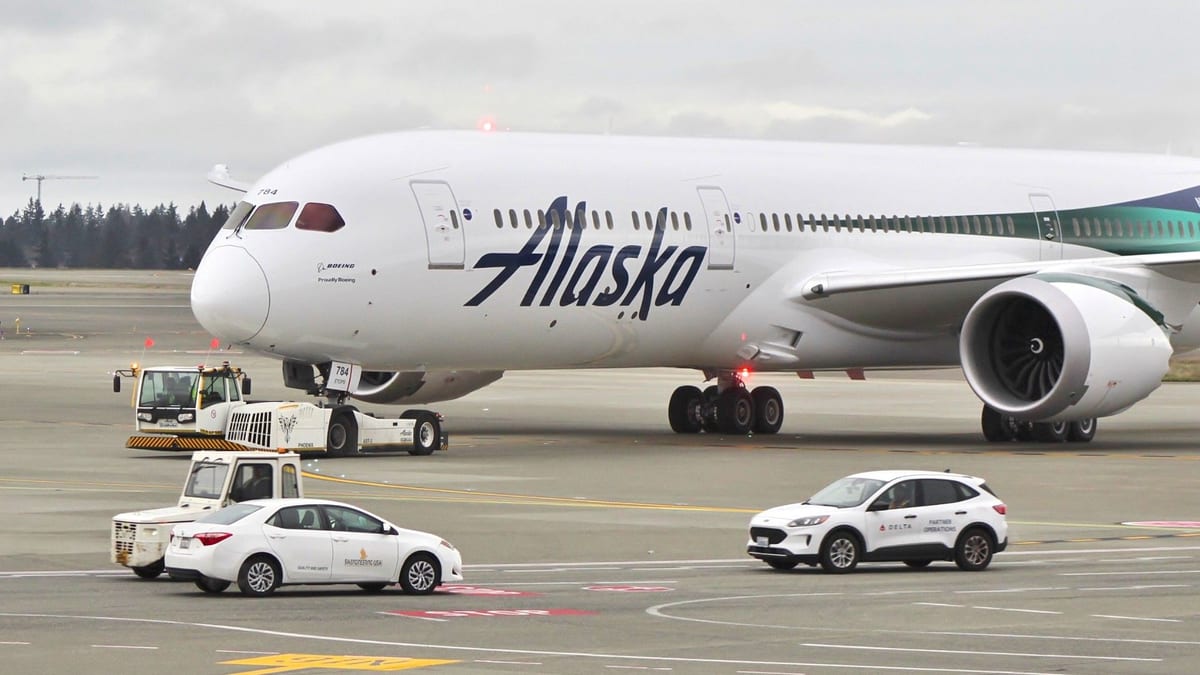
Alaska Airlines is preparing to launch daily nonstop flights between Seattle and Rome Fiumicino in late April 2026, followed by a daily Seattle–London Heathrow service in May 2026. According to published schedules and company filings, these routes mark the first transatlantic services in Alaska Air Group’s history and will be operated by Boeing 787-9 aircraft, offering substantial belly cargo capacity alongside passenger demand.
Freight-focused publications report that Alaska has already begun validation flights with its 787 fleet across the North Atlantic, including proving runs to Glasgow Prestwick. These test operations are intended to fine-tune long-haul processes, from maintenance and crew procedures to ground handling and cargo workflows, ahead of the Rome and London launches.
On the ground in the United Kingdom, PrimeFlight Cargo has been selected as the cargo handler for Alaska’s forthcoming Seattle–London route at Heathrow. Industry news reports indicate that PrimeFlight will oversee ramp and warehouse operations for freight carried on the 787-9, reinforcing Alaska’s strategy of relying on established partners to manage complex transatlantic handling.
For Seattle, the new services deepen the city’s role as a West Coast long-haul gateway. With Rome and London added to existing Asia and Pacific links inherited through the Hawaiian acquisition, Alaska is positioning Seattle as a hub where cargo flows from Europe can be redistributed across North America, and eventually to Asia, on a single carrier platform.
Europe Link Complements Asia and Pacific Cargo Network
Alaska’s long-haul expansion is unfolding against the backdrop of a broader global cargo strategy centered on combined Alaska and Hawaiian networks. Corporate disclosures and trade coverage highlight that together the two brands already serve more than 130 cargo destinations, including key cities in Asia, the South Pacific, Canada and Mexico, from gateways in Seattle and Honolulu.
Rome and London add a crucial missing piece on the European side of that map. Publicly available commentary from the airline’s cargo leadership has emphasized that the new routes will allow freight from Asia and the Pacific to move to Europe via Seattle, providing an alternative to traditional hubs in the Midwest and on the U.S. East Coast.
For shippers in Italy and the United Kingdom, the arrangement provides direct access not only to the U.S. Pacific Northwest, but also to Alaska’s domestic network and Hawaiian’s inter-island and transpacific services. Industry analysts suggest that this could be particularly attractive for time-sensitive goods such as perishables, e-commerce shipments and high-value manufacturing components that benefit from single-carrier handling and shorter total transit times.
Market observers note that this integrated network arrives at a time when supply chains are still recalibrating after several years of disruption. Additional point-to-point options between Europe, North America and Asia introduce flexibility for freight forwarders seeking alternatives to congested corridors and volatile capacity on other carriers.
General Sales Agents Step Into a Growing GSSA Role
The choice of Global GSA Group in Italy and Kales Airline Services across wider Europe highlights the increasingly central role of general sales and service agents in modern cargo strategy. Air cargo publications describe GSSAs as commercial extensions of airlines in regions where carriers lack their own sales teams or infrastructure, handling everything from rate negotiation to account management and documentation.
In Alaska’s case, the partnerships allow the airline to monetise its new long-haul capacity from day one by tapping into established European customer bases. Global GSA’s focus on Italy is expected to be particularly important at Rome Fiumicino, where competition for export cargo from fashion, automotive and pharmaceutical sectors is intense.
Kales Airline Services, which has a broad portfolio of airline clients across the continent, adds another layer of reach. According to trade press reporting, the company will support Alaska’s efforts to build brand visibility among European freight forwarders and coordinate sales activities as additional transatlantic or connecting routes are added.
Analysts view these arrangements as consistent with a wider industry pattern in which mid-sized and hybrid carriers rely on GSSAs to punch above their weight in overseas cargo markets. Rather than building costly in-house teams in multiple countries, airlines can scale capacity quickly and adjust representation as routes evolve.
Global Trade Tailwinds and Competitive Pressures
Alaska’s cargo expansion into Europe is unfolding in a market that is showing signs of renewed momentum after a period of softness. Industry data cited in recent financial statements indicates that Alaska’s cargo revenue rose at a double-digit pace in 2025, outpacing overall revenue growth and contributing meaningfully to profitability targets through the middle of the decade.
Broader market forecasts from aviation consultancies point to continued recovery in international air freight volumes, driven by e-commerce, pharmaceuticals, electronics and high-value manufacturing. The addition of new widebody capacity between Europe and the U.S. West Coast positions Alaska to capture a share of this growth, particularly on lanes that link into its established domestic and Pacific networks.
At the same time, competitive pressures are intensifying. Other major carriers have also announced new or expanded transatlantic services from Seattle to Rome and Barcelona, raising the prospect of tight pricing and jostling for both passengers and freight. Observers suggest that Alaska’s differentiation will likely hinge on how effectively it integrates cargo sales partnerships, ground handling and network connectivity into a seamless product for shippers.
The success of the new cargo partnerships in Europe will therefore be closely watched as Alaska Airlines brings its first transatlantic routes online in 2026. If the strategy pays off, Seattle could emerge as a significant new bridge for global trade flows connecting Europe, North America and Asia.