


More news on this day
A massive glacier-related landslide in Alaska’s Tracy Arm fjord that triggered a tsunami in August 2025 is rippling through the 2026 cruise season, as major lines drop the famed glacier corridor from itineraries and analysts warn the episode marks a turning point for tourism in the state’s most fragile fjords.
Get the latest news straight to your inbox!
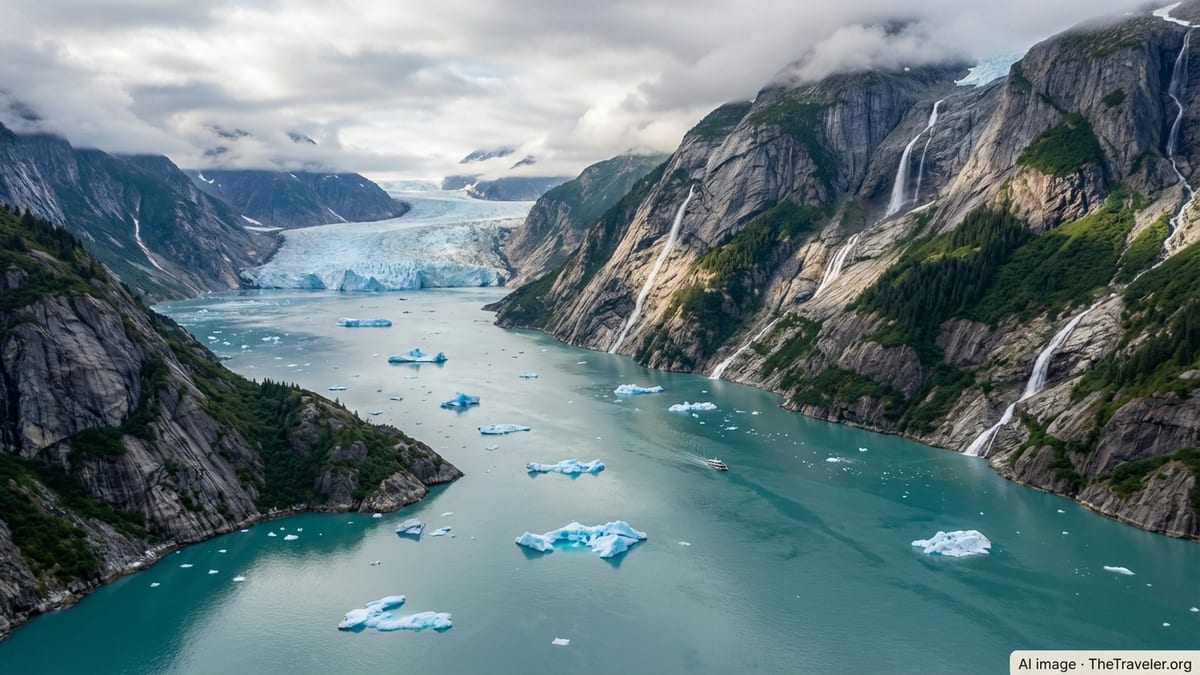
Iconic Tracy Arm Sidelined After 2025 Tsunami Scare
Tracy Arm, a narrow, 30-mile fjord southeast of Juneau long promoted as a highlight of Inside Passage cruises, has effectively been sidelined for 2026. Publicly available scientific briefings describe how, on August 10, 2025, a large slope high above South Sawyer Glacier collapsed into the water, sending a powerful wave surging up the opposite mountain wall and out through the fjord. No cruise ships were in the arm at the time, but the scale of the event and evidence of a run-up tens of meters above the waterline prompted detailed hazard assessments.
U.S. Geological Survey materials note that steep, newly exposed landslide scars can remain unstable for years, with ongoing rockfall and small collapses capable of generating localized tsunamis in confined fjords. That assessment has translated into practical caution for the cruise industry. Navigation in Tracy Arm, already complicated by tight turns and drift ice, is now considered significantly riskier in light of the altered slope and the possibility of further failures.
Recent coverage from outlets including the Associated Press, Juneau-based news sites and specialist cruise publications indicates that Holland America Line, Carnival Cruise Line, Royal Caribbean and Virgin Voyages have all removed Tracy Arm scenic cruising from their 2026 Alaska programs. Schedules and marketing materials reviewed by travel media show Tracy Arm excursions rebranded or replaced outright, with advisories citing unstable geological and ice conditions as the reason.
Industry observers describe the move as unusual in its scope. While weather and ice often force last-minute changes in Alaska, the broad, season-long withdrawal from one of the region’s marquee fjords reflects a more structural response to emerging natural hazards rather than routine operational flexibility.
Endicott Arm and Dawes Glacier Emerge as Primary Detour
In place of Tracy Arm, cruise lines are pivoting to nearby Endicott Arm and its tidewater Dawes Glacier. Travel trade reports show that Holland America and Carnival have redirected all affected scenic cruising days to Endicott Arm for 2026, while Royal Caribbean itinerary updates for ships such as Serenade of the Seas indicate the same substitution. Virgin Voyages has circulated similar adjustments for its Alaska sailings.
Endicott Arm has long served as a fallback when ice or fog blocked access to Tracy Arm, but this season it moves from backup to primary attraction. Public descriptions from cruise companies emphasize that Dawes Glacier still offers dramatic calving displays, towering ice walls and wildlife viewing, even if the fjord’s configuration and vistas differ from the tight, canyon-like walls of Tracy Arm.
For passengers, the practical impact is mixed. Those who booked specifically to experience Tracy Arm and the twin Sawyer glaciers are discovering that the flagship fjord is off the table, sometimes only weeks or months before departure, according to posts on cruise forums and social media. Others express satisfaction that a similarly scenic alternative remains on offer, particularly as Endicott Arm is considered somewhat more forgiving for ship navigation.
Travel agents and Alaska tour operators quoted in recent coverage suggest that Endicott Arm’s higher capacity may be tested as more large vessels funnel through a single primary glacial corridor. Some smaller excursion operators are also adjusting, marketing Endicott and other nearby inlets more aggressively as the new focal point for close-up glacier viewing.
Shockwave Extends Across Alaska’s Fjord Network
The Tracy Arm landslide episode is being interpreted by scientists and regional planners as part of a broader pattern of slope instability in glaciated fjords. Research and agency updates on Alaska’s Barry Arm and Prince William Sound regions point to long-recognized hazards where warming temperatures, retreating ice and steep topography intersect. Those studies outline scenarios in which sudden landslides into confined waters could generate destructive waves affecting both local communities and passing vessels.
Recent reporting in Alaska-based outlets highlights how similar concerns have already reshaped operations elsewhere. In Prince William Sound, operators serving ports such as Whittier have modified routes to avoid areas considered at heightened risk from potential landslide-generated tsunamis. Glacier Bay National Park has also been the subject of remote-sensing studies examining unstable slopes perched above popular cruise routes.
While not all of these hazard zones are currently prompting outright closures, the layering of risks is driving what some analysts describe as a gradual but significant rethink of where and how cruise tourism can safely expand. Tracy Arm’s closure for 2026 is viewed as a case study in how a single, high-impact event can accelerate long-debated shifts in routing and risk tolerance across Alaska’s fjord network.
Publicly available planning documents and scientific presentations outline growing collaboration between geologists, emergency managers and marine interests to map unstable slopes and model worst-case scenarios. The goal is to anticipate not only immediate tsunami threats but also cumulative pressures on sensitive coastlines that host both cruise passengers and year-round residents.
Economic Jolt for Southeast Alaska’s Tourism Engine
The retreat from Tracy Arm is rippling through the closely linked tourism economies of southeast Alaska. For years, the fjord’s dramatic scenery has featured heavily in brochures, online promotions and shore-excursion catalogues. With cruise lines now prioritizing Endicott Arm and alternative glacier experiences, small-boat tour companies, guides and outfitters built around Tracy Arm itineraries are reassessing business plans for 2026 and beyond.
Local media accounts describe a mix of anxiety and adaptation. Operators that specialized in getting smaller vessels deeper into Tracy Arm, or in combining glacier viewing with kayaking and camping near its mouth, face a season of recalibrating routes to other arms and inlets. Some are promoting more time in Holkham Bay and Stephens Passage, while others are shifting capacity toward whale-watching or cultural and historical tours that are less exposed to landslide-related disruptions.
For cruise-dependent communities such as Juneau, the headline visitor numbers for 2026 are still expected to be strong, according to tourism board forecasts cited in recent coverage. Ships are not abandoning Alaska, only redistributing glacier-viewing time. Even so, subtle changes in passenger flow and excursion demand can influence seasonal employment, small-business revenues and investment decisions in dockside infrastructure.
Travel planners note that itineraries featuring Glacier Bay National Park, Hubbard Glacier or College Fjord may gain relative prominence in marketing as lines look to reassure prospective guests that Alaska still offers multiple, iconic glacier experiences, even with Tracy Arm temporarily off the map.
Rethinking Cruise Tourism in a Warming, Unstable Landscape
Beyond immediate schedule changes, the Tracy Arm landslide is sharpening debate over the future of large-ship tourism in rapidly changing polar and subpolar environments. Climate research and hazard assessments cited in regional and national coverage link retreating glaciers, thawing permafrost and more frequent extreme precipitation to increased likelihood of slope failures in steep fjords.
Advocacy groups and some scientists argue that cruise itineraries need to be more conservative in such landscapes, favoring wider channels and deeper basins over narrow, enclosed arms where any slope collapse can focus wave energy. Industry representatives responding in public forums stress ongoing investments in route planning, real-time monitoring and cooperation with hazard experts, but they also acknowledge that popular, close-quarters glacier viewing carries inherent risk.
The 2025 Tracy Arm event is emerging as a reference point in these discussions. It underscored how quickly conditions can shift from postcard-perfect to potentially catastrophic, and how much depends on timing, given that no passenger vessels happened to be inside the fjord when the slide occurred. That near miss is now informing updated risk models and contingency plans across the Alaska cruise sector.
For travelers, the upshot is that Alaska’s scenic routes are likely to remain in flux. Experts suggest that itineraries may evolve more frequently as new data emerges about landslide-prone slopes, and that flexibility will become a more prominent theme in cruise marketing. For the moment, the absence of Tracy Arm from 2026 schedules signals that the region’s spectacular glacial landscapes are entering a more cautious era, where safety considerations and environmental realities increasingly shape how, and where, ships can go.