


More news on this day
Albania is emerging from the margins of European tourism to become one of the continent’s fastest-growing destinations, as record visitor numbers, expanding air links and aggressive promotion turn the small Balkan state into a mainstream hotspot.
Get the latest news straight to your inbox!
Record-Breaking Visitor Numbers Reshape Albania’s Economy
Published data from national and international tourism bodies indicate that Albania has undergone one of Europe’s steepest tourism growth curves over the past decade. Estimates show that the country welcomed around 10 million foreign visitors in 2023, up from only a few hundred thousand in the mid-2000s, placing it among the best-performing destinations in Europe for growth compared with pre-pandemic levels.
Economic reports for 2024 and early 2025 point to tourism as a core engine of Albania’s growth story. A recent fact sheet drawing on World Travel & Tourism Council analysis projects that travel and tourism will account for more than a quarter of national GDP, with sector revenues surpassing 4 billion euros in 2023 and climbing further in 2024. The rapid rise has helped shift Albania’s image from a low-profile, budget-friendly alternative to a central player in the Mediterranean tourism market.
Border and aviation statistics underline how quickly demand has accelerated. Passenger traffic through Tirana International Airport has more than tripled compared with a decade ago, with airport data showing traffic exceeding 10 million passengers in 2024. Reports on regional tourism performance rank Albania at or near the top in Europe for percentage growth in international arrivals versus 2019, highlighting how strongly it has rebounded and expanded beyond its traditional markets in the Balkans and Italy.
Analysts note that such numbers are significant in a European context where mature destinations often grow only modestly year on year. Albania’s double-digit annual increases have prompted regional comparisons with earlier tourism booms in Croatia and Montenegro, yet on a compressed timeline and from a lower cost base.
Why Travelers Are Flocking to a Once-Hidden Balkan Coast
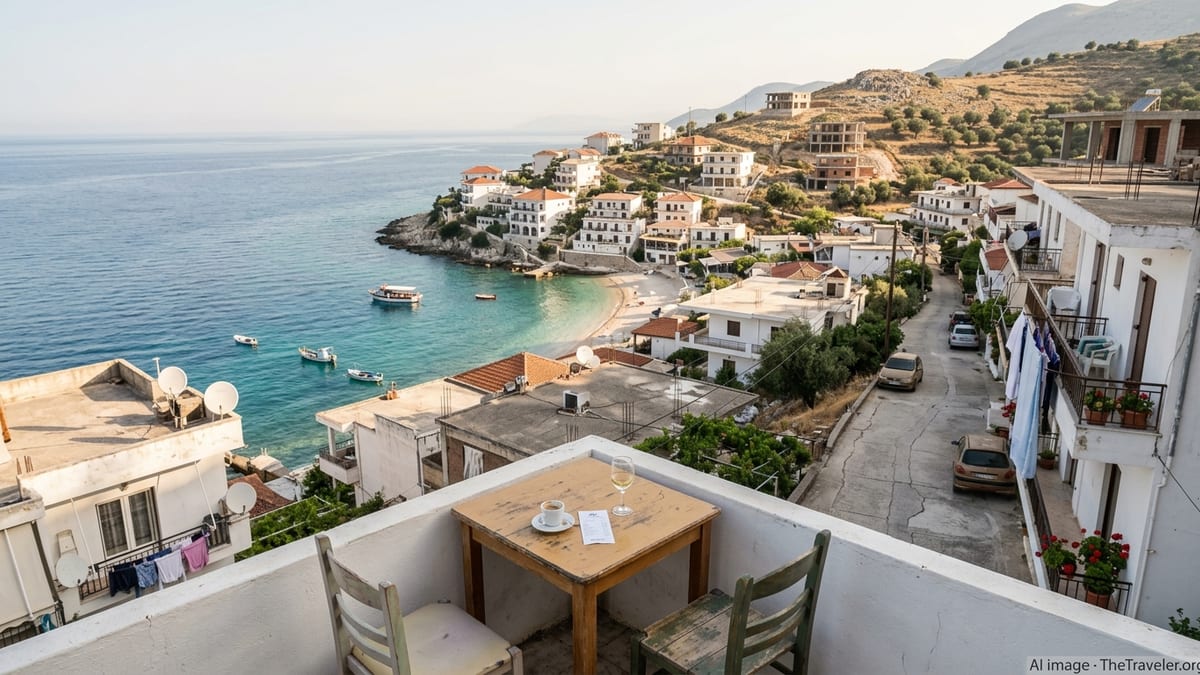
Travel coverage across European and global media increasingly frames Albania as a “hidden paradise” that is now entering the mainstream. The country’s Adriatic and Ionian coastlines, with resort towns such as Saranda, Ksamil and Himarë, are frequently compared with better-known Mediterranean hotspots, but at prices that remain lower than in many neighboring countries.
Consumer travel reports describe Albania as one of the best value destinations in Europe, pointing to restaurant meals, accommodation and local transport costs that are generally below those in Italy, Greece or Croatia. This perception of value has resonated strongly with budget-conscious visitors from Western and Central Europe who are seeking alternatives to more expensive beach destinations while still expecting clear water, reliable summer weather and dramatic coastal scenery.
At the same time, social media exposure has amplified Albania’s appeal. Viral images of turquoise bays in the south, the lakes and Ottoman-era towns of the interior and the jagged peaks of the Albanian Alps have helped reposition the country from an unknown quantity to an aspirational destination. Travel trend reports for 2025 from major online agencies single out Albania’s coast as one of the fastest-rising areas for new bookings, reflecting how rapidly awareness is spreading.
Tourism specialists also highlight the country’s geographic position as a factor in its appeal. Albania offers access to both beach and mountain experiences within a few hours’ travel, allowing visitors to combine coastal stays with hiking in Valbona or Theth, or with city breaks in Tirana and Shkodër. This diversity, within a relatively compact territory, is seen as a competitive advantage as travelers look for multi-experience trips in a single country.
Europe’s Fastest-Growing Air Hub Fuels the Boom
The transformation of Tirana International Airport into one of Europe’s fastest-growing mid-size hubs has been central to Albania’s tourism surge. Industry analysis shows that passenger volumes at the airport passed the 10 million mark in 2024, with growth rates placing Tirana at the top of the continent’s rankings among comparable airports.
Publicly available aviation data indicate that more than a dozen new airlines and routes have been added since 2023, linking Tirana to a widening network of European cities. Low-cost carriers have ramped up frequencies from hubs in Italy, Germany, the United Kingdom and Scandinavia, while regional airlines have deepened connectivity with the Balkans and Central Europe. This increase in capacity has lowered fares on many routes and made Albania accessible for short breaks as well as longer holidays.
Infrastructure expansion has attempted to keep pace. Airport planning documents and sector reports describe terminal enlargements, increased aircraft parking stands and work to accommodate larger jets. In parallel, the construction of a new international airport near the coastal city of Vlorë and upgrades to regional airports are intended to spread tourist arrivals beyond the capital and relieve seasonal pressure on Tirana.
The aviation boom mirrors broader shifts in European travel patterns. As tourists diversify away from saturated hubs, secondary airports in emerging destinations are capturing more traffic. For Albania, the ability to offer direct, relatively low-cost flights from multiple European origins has been a decisive factor in moving from niche to mainstream status on booking platforms.
Cruise Calls and Sustainable Tourism Shape the Next Phase
Beyond air arrivals, maritime tourism is becoming an increasingly visible part of Albania’s travel landscape. Ports along the Adriatic and Ionian coasts, notably Saranda and Durrës, are reporting a steady rise in cruise ship calls, bringing day visitors to coastal towns that previously saw limited international exposure. Recent updates from port authorities highlight bookings that stretch several years ahead, particularly for Saranda, underscoring cruise operators’ confidence in Albania as a Mediterranean stop.
Policy documents such as the National Tourism Strategy 2024–2030 emphasize sustainability and diversification as the sector evolves. The strategy focuses on managing rapid growth through investments in infrastructure, environmental protection and community-based tourism, aiming to avoid overtourism pressures that have affected more mature Mediterranean destinations. It also seeks to direct visitors beyond the coast to cultural and nature-based attractions inland.
Industry commentary notes that Albania’s challenge will be to maintain its reputation for affordability and authenticity while upgrading services and facilities. Rising demand has already pushed up prices in some popular beach areas, prompting debate at home and abroad about how to balance revenue generation with long-term competitiveness. Efforts to regulate coastal development, improve waste management and protect marine ecosystems are viewed as critical tests of the country’s sustainable tourism ambitions.
International observers point out that similar booms in other parts of Southern Europe have sometimes led to strain on local housing markets and infrastructure. Albanian planning documents and expert analyses suggest that authorities and private stakeholders are increasingly aware of these risks and are seeking to learn from regional examples as they map out the next decade of growth.
From Regional Secret to Global Travel Contender
For years, Albania’s visitor profile was dominated by neighboring Kosovo and North Macedonia, as well as the Albanian diaspora. Recent statistics, however, show a more diversified mix, with rising arrivals from Western Europe, the United States and markets as far afield as the Middle East. Travel industry surveys describe a shift from primarily regional, repeat summer visitors to a broader international audience including city-break travelers and adventure tourists.
Global travel rankings and features in outlets across Europe, North America and Asia now routinely include Albanian destinations among must-see lists, particularly for travelers looking for “new” Mediterranean experiences. The country’s combination of relatively low costs, unbranded coastline and still-developing resort infrastructure has made it attractive to visitors seeking an alternative to heavily commercialized beach regions.
At the same time, Albania’s growing prominence is feeding back into investment. Hotel chains, boutique properties and tourism-focused real estate projects have multiplied along the coast and in Tirana, with development agencies presenting tourism as one of the country’s most promising sectors for foreign capital. Analysts suggest that if infrastructure and sustainability commitments keep pace, Albania could consolidate its position as a major player in European tourism over the coming decade.
For now, the country stands at a pivotal moment. Once known mainly to regional travelers and adventurous backpackers, Albania is rapidly becoming part of the global travel conversation, signaling that Europe’s next big tourism story may be unfolding along the shores and mountain valleys of this former “hidden” Balkan destination.