


More news on this day
Alicante’s Port Authority and City Council are reinforcing joint procedures for fires and other emergencies, introducing updated coordination, equipment and staffing measures designed to protect residents, visitors and critical waterfront infrastructure.
Get the latest news straight to your inbox!
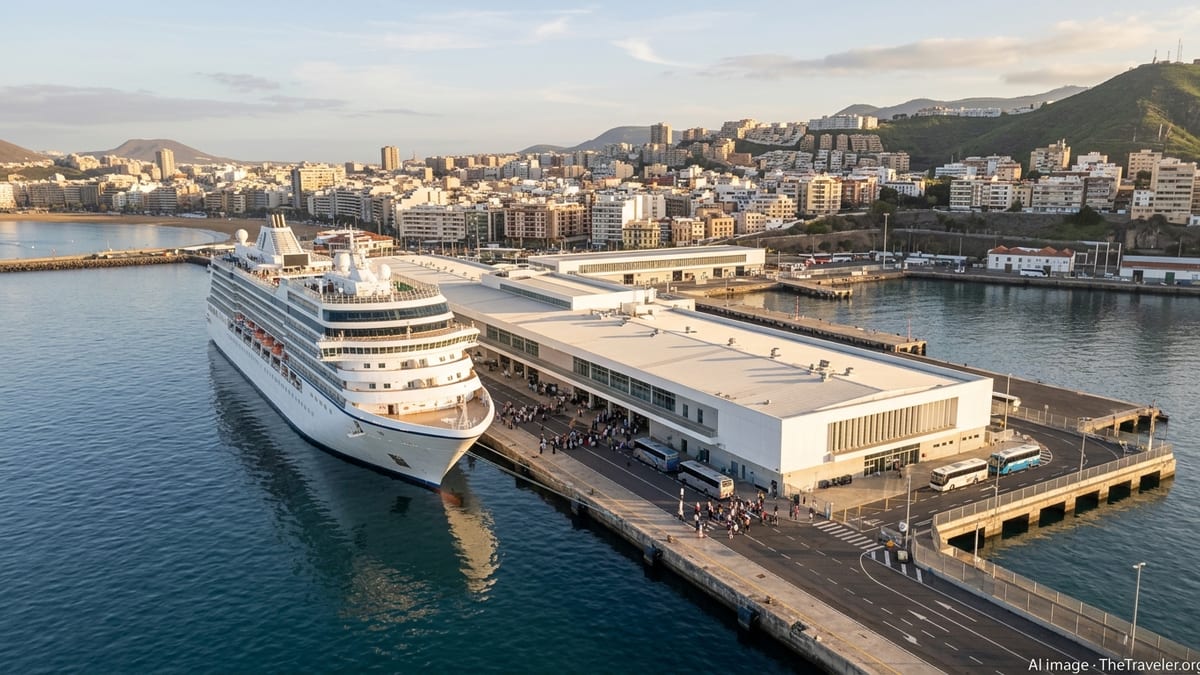
New protocol sharpens coordination at the waterfront
According to publicly available information from the Port Authority of Alicante and recent local coverage, a new protocol between the Port and City Council is focused on improving how incidents are detected, communicated and managed across port and urban jurisdictions. The agreement sets out how Local Police and Port Police share responsibilities in the port service area that is open to the public, including promenades, leisure zones and access roads.
Reports indicate that the protocol gives the city a clearer framework to prevent and respond to situations that can escalate into safety risks, such as abandoned vehicles, unregulated street vending or overcrowding near critical access points. These improvements are particularly relevant during peak cruise operations and major local festivities, when tens of thousands of people move through the port-city interface in short periods of time.
The Port Authority’s own documentation highlights a long-standing emphasis on emergency self-protection plans, coordination with the regional 112 system and regular updates to risk maps. The latest collaboration with the City Council is presented as a continuation of that work, designed to ensure that the waterfront’s growing role as a leisure and cruise destination is matched by upgraded emergency readiness.
Publicly available information also shows that this type of port-city protocol is increasingly common across Spanish ports, where mixed-use terminals host both cargo operations and high volumes of pedestrians. Alicante’s updated arrangement follows that trend, formalizing procedures that in many cases were already being applied informally during incidents.
Fire risk rises with tourism and summer heat
Recent seasons in the province have underlined how rising temperatures, drought conditions and heavier visitor numbers are reshaping local fire and emergency risk. Regional coverage points to a pattern of reinforced fire services each summer, particularly in coastal municipalities and natural areas that attract large numbers of tourists.
One notable measure has been the deployment of seasonal fire stations and extra crews in the Vega Baja area of Alicante province, including extended operating hours, mobile units and drone surveillance to spot potential outbreaks quickly. These initiatives are designed to shorten response times at precisely the moment when traffic congestion and full accommodation can complicate evacuations or access for emergency vehicles.
Within the city of Alicante, publicly available reports describe additional reinforcements around the Bonfires of San Juan festivities, which combine fireworks, bonfires and mass gatherings over several days. In recent editions of the festival, thousands of personnel from different agencies have been assigned to a single integrated safety operation that covers the city center, beaches and the port front.
Urban fires remain a concern throughout the year, particularly in older residential districts where building conditions and narrow streets can make firefighting more complex. Media coverage of recent residential fires in Alicante has drawn attention to the importance of early detection systems, updated evacuation plans and clear communication with residents who may not be familiar with local procedures.
Integrated emergency planning between port and city
The strengthened cooperation between the Port Authority and City Council forms part of a broader push in Spain for integrated emergency management across different levels of administration. In Alicante, this means aligning port emergency plans with municipal civil protection strategies, health services and regional firefighting resources.
Port documentation indicates that emergency control centers are designed to maintain direct links with regional coordination hubs, allowing information about incidents such as fires, pollution events or medical emergencies to be shared quickly. The new protocol with the City Council reinforces how those alerts translate into on-the-ground actions, such as traffic closures, public announcements or targeted deployment of firefighting units.
Publicly available information shows that similar port-city frameworks elsewhere in the Valencian Community include joint drills, shared communications systems and common criteria for when to escalate incidents to higher alert levels. Alicante’s updated agreement appears to move in the same direction, with the added dimension of a busy cruise and leisure port located immediately adjacent to densely populated neighborhoods.
For travelers, this integrated planning is most visible in the form of signage, controlled access zones and visible patrols in areas where port facilities and city streets converge. Less visible, but equally important, are the shared databases, mapping tools and risk analyses that underpin decisions during an emergency and that are now being refreshed under the new cooperation framework.
Implications for residents, visitors and tourism operators
The reinforcement of fire and emergency measures has direct implications for residents living near the waterfront, visitors passing through the cruise terminal and tourism businesses operating in and around the port. For residents, clearer rules on parking, public gatherings and the use of flammable materials in sensitive zones can reduce the likelihood of incidents starting in the first place.
For visitors, especially cruise passengers and short-stay tourists, improved coordination is likely to translate into more structured evacuation routes, clearer instructions during festivals and quicker responses if an incident occurs in busy areas such as promenades or beach access points. Travel industry publications describe the new protocol as a tool that helps keep the port’s public spaces safe and accessible while maintaining a welcoming atmosphere.
Tourism operators and event organizers are also expected to adapt to the updated framework, paying closer attention to capacity limits, fire load in temporary structures and access requirements for emergency vehicles. In practice, this may mean modified layouts for stages, stalls or terraces during large events, as well as additional staff training on how to respond to alarms in port-adjacent venues.
Observers in the local hospitality sector note that, while these adjustments can require extra planning, they contribute to Alicante’s reputation as a safe, well-managed destination. In a competitive Mediterranean cruise and city-break market, a demonstrable capacity to manage fires and emergencies is increasingly seen as an asset rather than a constraint.
Ongoing upgrades to vehicles, technology and staffing
The institutional agreements between the Port Authority and City Council are being complemented by gradual improvements in equipment and human resources across the province. In recent years, provincial firefighting services have invested in more versatile urban fire engines designed for narrow streets and historic centers, as well as in specialized vehicles for industrial or wildland fires.
Summer reinforcement plans reported in regional media often feature combinations of fixed fire posts, rapid-response vehicles and aerial surveillance, coordinated with meteorological services that track heatwaves and wind patterns. Digital tools, including geolocation of resources and real-time mapping of incidents, are being integrated into control centers to support faster, more precise decision making.
Staffing strategies also continue to evolve, with seasonal contracts, inter-agency agreements and joint training sessions aimed at ensuring that port, municipal and regional personnel can work together effectively during complex incidents. Public information suggests that exercises simulating multi-agency responses to fires or mass-casualty events are becoming more frequent, particularly ahead of high season.
For Alicante, where the boundary between port and city is especially porous, these combined investments in planning, technology and personnel give practical substance to the newly reinforced cooperation between the Port and City Council. As climate pressures and tourism flows converge, that partnership is positioned as a central pillar of the city’s strategy for managing fires and other emergencies.