


More news on this day
Passengers travelling through Manchester Airport on July 30 are facing a mixed picture of disruption, with a series of delays and a smaller number of outright cancellations affecting departures and arrivals through the day.
Get the latest news straight to your inbox!
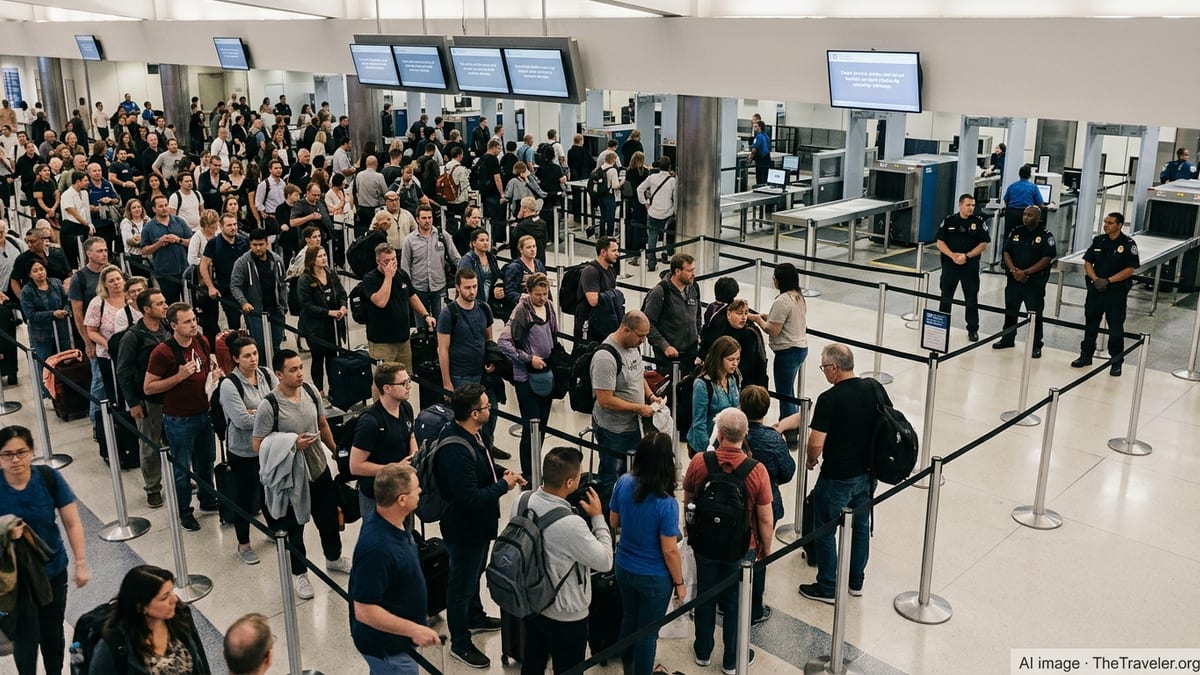
Current picture of disruption on July 30
Publicly available live-flight boards for Manchester Airport on the morning of July 30 show a pattern of scattered disruption rather than a full-scale outage, with individual flights delayed by anything from 30 minutes to several hours. Most services continue to operate, but some are departing significantly behind schedule, particularly at busy times of day.
The bulk of affected services appear to fall into two categories: short-haul European departures delayed by late-arriving inbound aircraft, and longer-haul flights that have been retimed or pushed back following earlier congestion. In many cases, flights are still shown as operating, but with boarding and departure times repeatedly revised as aircraft and crews reposition.
Arrivals into Manchester are also seeing knock-on effects. When inbound aircraft land late, their onward departures from Manchester are often delayed in turn, creating a rolling pattern of disruption across the schedule. This is particularly evident on routes operated with tight turnarounds, where there is little slack to absorb earlier delays.
Despite the disruption, there is no indication from public data of a single underlying systems failure at Manchester Airport on July 30. Instead, the pattern resembles the kind of cumulative operational pressure seen in peak summer, where high passenger numbers, weather, air-traffic restrictions in other parts of Europe and late-running aircraft compound each other throughout the day.
Key cancellations and heavily delayed services
Live departure and arrival screens for Manchester on July 30 list a limited number of outright cancellations alongside the more common delays. These cancellations are spread across several airlines and destinations, rather than focused on any one carrier or route, suggesting that individual operational or commercial decisions are at play rather than a blanket suspension of services from the airport.
Among the more severe disruptions are flights that have been subject to repeated departure-time revisions, leaving passengers in terminals for extended periods while updated information appears. In some instances, flights originally scheduled for the morning wave have been pushed well into the afternoon, while late-evening services are showing expected departures close to or beyond their original scheduled arrival times at destination.
On the arrivals side, some inbound flights to Manchester on July 30 have been diverted, retimed or cancelled at origin, either due to issues at departure airports or as part of broader network adjustments. When this happens, the associated return legs from Manchester commonly disappear from the schedule or are later marked as cancelled, contributing to the overall tally of disrupted services.
Because flight-status information is updated in real time, the precise list of cancelled and delayed services is changing throughout the day. Flights that appeared as “delayed” in the early morning have in some cases departed with a shorter delay than initially indicated, while others have moved from “scheduled” to “delayed” or “cancelled” as new information has become available.
Reasons for delays and cancellations
Manchester Airport has been operating close to peak summer capacity, and industry data for 2026 highlight how factors such as airspace restrictions, staffing pressures across airlines and ground handlers, and volatile weather patterns across Europe can quickly translate into localised disruption. When several of these factors combine, they can produce the kind of rolling delays visible across parts of the July 30 schedule.
Operational reports for European aviation this summer emphasise that late-arriving aircraft remain one of the most common causes of knock-on delays. When an aircraft arrives behind schedule from another airport, the following flight from Manchester often has to wait for cleaning, refuelling, catering and crew checks before boarding can begin, which pushes back departure even if conditions at Manchester itself are stable.
Weather or air-traffic control restrictions elsewhere along a route can also lead to ground delays at Manchester. If airspace is constrained due to storms, high winds, or wider network issues, airlines may be allocated later departure slots, forcing flights to hold at the gate until they are cleared to push back. In addition, routine technical inspections, crew duty-time limits and congestion at stands and taxiways can contribute to the build-up of delays across a busy day.
Cancellations often arise when airlines determine that a severely delayed service can no longer be operated within crew or aircraft-rotation limits, or when demand and operational complexity make consolidation onto another flight more practical. In those cases, passengers are typically rebooked onto later services or alternative routings, though the options available vary by airline and route.
What passengers should do if their flight is affected
Travellers booked to fly from or to Manchester Airport on July 30 are advised to monitor their flight status frequently on the day of travel. Live departure and arrival boards, airline apps and direct notifications provide the most up-to-date indication of whether a flight is running on time, delayed or cancelled, and these can change several times in the hours before departure.
Passengers who see a significant delay or cancellation listed for their flight should follow their airline’s published procedures for disruption. These typically include options such as accepting a revised departure time, moving to another available flight, or requesting a refund in cases where the service is not operated. Some carriers also provide meal vouchers or hotel accommodation subject to eligibility and local regulations, particularly for longer delays or overnight disruptions.
It is generally recommended that travellers allow extra time at Manchester Airport during peak summer days such as July 30, both for airport processes and for potential schedule changes. Arriving early can make it easier to respond quickly if a gate is changed, a standby seat becomes available, or a rebooking option is offered at check-in or service desks.
Passengers with tight onward connections, separate tickets or important time-sensitive commitments at their destination may wish to review their plans in light of the day’s disruption. Where possible, building in additional buffer time, confirming flexible arrangements on the ground, and keeping essential items such as medication and documents in hand luggage can help manage the impact of unexpected delays.
Outlook for the rest of the day
As of July 30, disruption at Manchester Airport appears to be dynamic rather than static, with the pattern of delays and cancellations shifting as airlines work through the day’s schedule. Morning delays can sometimes ease if airlines are able to recover time during quieter periods, while afternoon storms, airspace constraints or further technical issues could add new pressure later in the day.
Published flight information indicates that most services for the remainder of July 30 are still planned to operate, although some are already showing amended departure times. This suggests that airlines and the airport are attempting to balance high summer demand with the practical constraints of aircraft and crew availability, while keeping as much of the schedule running as possible.
Passengers due to travel in the later waves on July 30 should continue to track their flights closely, particularly in the two to three hours before departure. If additional cancellations or significant delays emerge, rebooking options are usually more straightforward when acted upon early, before alternative services fill up.
With school holidays underway and Manchester Airport remaining one of the United Kingdom’s busiest hubs, similar pockets of disruption are likely to recur through the summer peak. For travellers, staying informed, building in extra time and understanding airline disruption policies remain the most practical defences against the inconvenience of delayed or cancelled flights.