


More news on this day
Passengers travelling through Manchester Airport today are facing a mixed picture of disruption, with a series of delayed and cancelled services affecting early-morning and mid‑day departures alongside knock‑on issues for inbound flights from across Europe.
Get the latest news straight to your inbox!
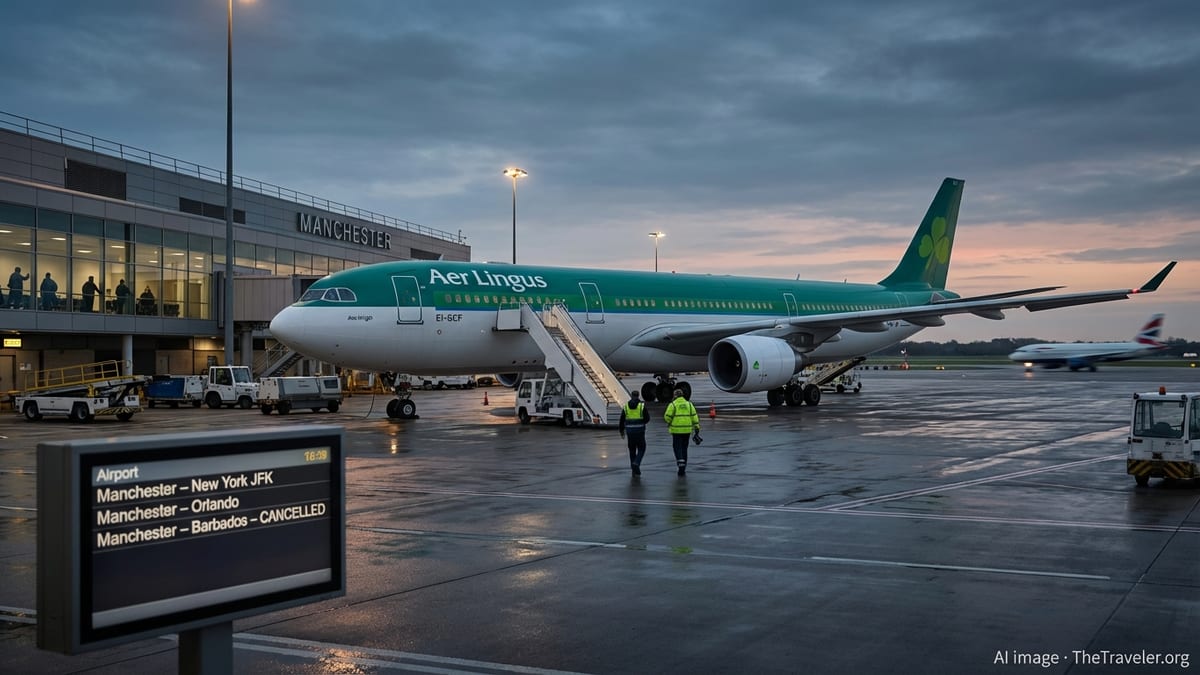
Early-morning departures hit by rolling delays
Live departure boards for Manchester Airport this morning show a cluster of services leaving later than scheduled, particularly on short‑haul routes to major European hubs. Several early flights to destinations such as Amsterdam, Paris and Frankfurt are listed with departure times pushed back, typically by 30 to 90 minutes, as airlines work through congestion left over from earlier rotations.
Publicly available flight-tracking data indicates that the first wave of departures experienced minor delays that then cascaded into longer waits for passengers booked on subsequent services using the same aircraft. In several cases, aircraft operating overnight sectors arrived behind schedule into Manchester, reducing the turnaround time available before they were due to depart again.
The impact is most visible in the airport’s busiest morning window, when business and leisure traffic combine and runway demand is at its highest. While the majority of flights are still operating, the pattern of revised departure times suggests that airlines are prioritising maintaining the overall schedule rather than cancelling large numbers of services outright.
Travellers heading out today are being advised via airline channels and airport updates to arrive on time and monitor their flight status closely, as estimated departure times continue to adjust through the morning.
Mid‑day cancellations focus on short‑haul European routes
Alongside the delays, a smaller but noticeable number of flights have been cancelled from Manchester Airport today, concentrated around late morning and early afternoon departures. The affected services are predominantly short‑haul routes within Europe, including popular summer destinations served by low‑cost and leisure carriers.
Airline updates and booking systems show cancellations on some services to Spanish and Mediterranean resorts, with carriers consolidating passengers onto later flights where possible. This approach, common during busy summer periods, allows airlines to manage aircraft utilisation when earlier rotation delays make it difficult to operate every planned leg.
Travel industry monitoring sites indicate that passengers on cancelled flights are being rebooked onto alternative services or offered refunds in line with standard conditions of carriage. However, the timing of many cancellations, coming only a few hours before scheduled departure in some cases, is likely to mean disruption to onward travel plans, particularly for those with fixed accommodation or cruise connections.
There are also signs of pressure on inbound flights feeding into Manchester from other congested European airports. Where aircraft and crew are out of position due to earlier hold‑ups abroad, some return legs to Manchester have been removed from the schedule entirely, contributing to the cancellation tally for the day.
Weather and wider network disruption add to pressure
Although conditions over Manchester are reported to be generally flyable today, unsettled weather across parts of the UK and near continent is contributing to the overall pattern of delays. Summer showers and low cloud in some regions have led to air traffic flow restrictions, limiting the rate at which aircraft can depart or arrive at busy hubs and sending knock‑on effects through the network.
Operations experts note that even modest weather‑related spacing measures at one or two major European airports can quickly ripple outward, affecting airports such as Manchester that rely heavily on connecting traffic and tight turnarounds. When combined with peak holiday demand, the margin for recovering from earlier disruption becomes narrower as the day progresses.
In addition, continuing strain on rail services across the North West, highlighted in recent public transport reports, is creating a secondary challenge for passengers attempting to reach the airport. Disruption on key lines into central Manchester has led to longer journey times and overcrowded replacement services, prompting travel operators to recommend leaving extra time to get to the terminal.
The combination of airside and landside pressures means that, while runways at Manchester Airport remain open, the broader transport environment is less resilient to minor incidents, increasing the likelihood that localised disruption will translate into longer delays and, in some cases, tactical cancellations.
Airlines adjust schedules and rebook affected passengers
Airlines using Manchester are responding to today’s disruption by adjusting schedules where possible, including swapping aircraft types, combining lightly loaded services and re‑timing certain flights to avoid the busiest periods. Online timetable updates show a pattern of small schedule changes across multiple carriers, suggesting a coordinated effort to stabilise operations through the rest of the day.
Passengers whose flights have been delayed are being offered rebooking options when connections are at risk, while those facing cancellations are generally being moved onto later departures or, where routes are not served frequently, onto services from alternative UK airports. Consumer advice groups stress the importance of checking booking confirmations carefully, as some passengers may find their new itineraries involve longer layovers or additional stops.
Given the summer holiday season, family groups and package holiday customers are particularly affected by schedule changes. Tour operators are working within the constraints of available capacity to keep groups together on the same replacement flights, though some travellers may experience adjustments to their arrival times at resorts or a reshuffling of transfer arrangements on the ground.
Travel commentators note that today’s pattern of disruption at Manchester reflects broader pressures across the European aviation system this summer, with tight staffing levels, high demand and intermittent weather issues combining to erode punctuality even on days without a single dominant incident.
What passengers flying today should do next
For travellers booked to fly from Manchester Airport later today, the most consistent advice from airlines and travel providers is to treat the published schedule as subject to change and to rely on real‑time channels for updates. Checking in online, confirming contact details in booking profiles and enabling app notifications can help ensure any last‑minute time changes or gate moves are received promptly.
Passengers already at the airport are encouraged to follow departure board information and listen for announcements regarding boarding, as aircraft may be boarded earlier than expected once operational windows open. For those with long delays, airlines may provide refreshment vouchers or access to rebooking options, though availability can vary depending on the cause of the disruption and the carrier involved.
Travellers connecting on to further flights, particularly those with separate tickets, are being urged by consumer advocates to build in extra time or consider more flexible arrangements in case of late arrival into their next hub. Where connections are on a single ticket, airline customer service teams are generally responsible for arranging new onward flights when missed connections occur due to earlier delays.
With the busy summer schedule continuing, regular users of Manchester Airport suggest keeping an eye on morning performance over the coming days as an indicator of how smoothly operations are running. If today’s disruption can be contained without escalating into widespread cancellations, airlines and airport staff are expected to focus on restoring punctuality ahead of another full weekend of holiday traffic.