


More news on this day
Thunderstorms disrupted operations at Denver International Airport, where flight-tracking data showed more than 650 delays as airlines and air traffic managers worked through weather-related slowdowns that can cascade across a major U.S. hub.
Get the latest news straight to your inbox!
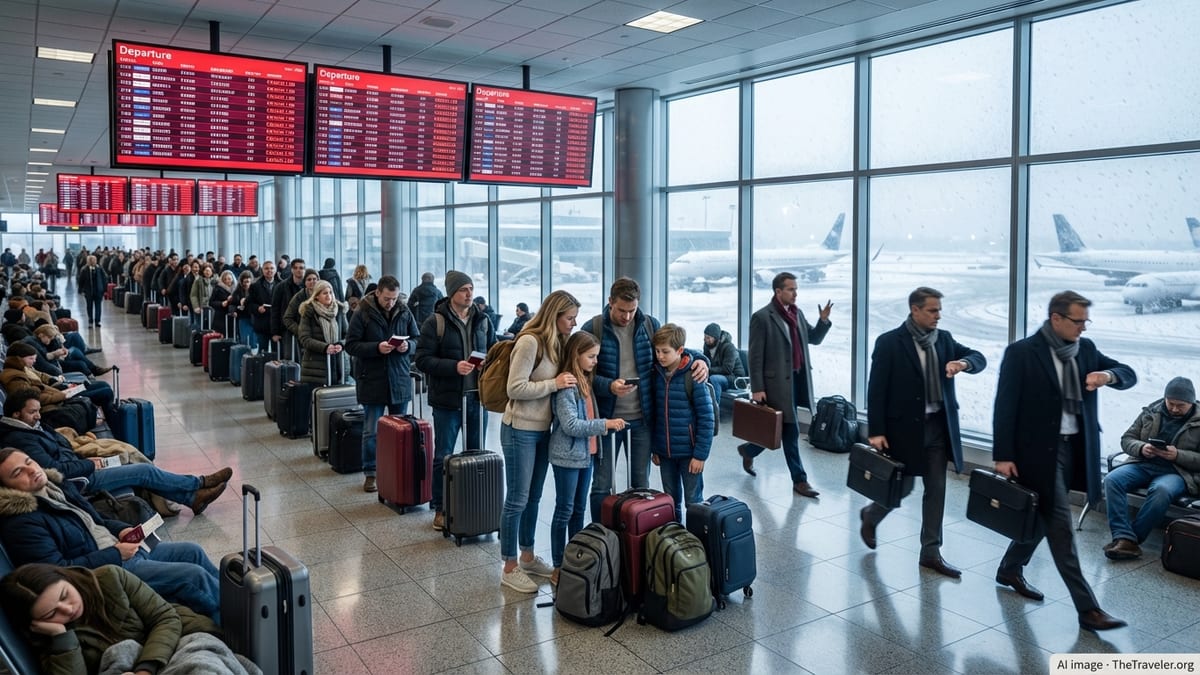
What travelers saw at DEN as storms moved through
Flight delays built through the day as thunderstorm activity around the Denver area reduced the airport’s capacity for arrivals and departures. Large hubs such as DEN are particularly vulnerable to convective weather because even short periods of lightning, heavy rain, or gusty winds can interrupt ramp activity, slow taxi operations, and force airborne spacing changes that ripple into later flight banks.
DEN’s role as a major connection point amplified the disruption. When inbound aircraft arrive late, the same planes and crews are often scheduled to depart again on tight turn times, so delays can spread to later departures even after the worst weather passes.
Publicly available airport weather observations and forecasts indicated changing conditions through Monday, Sept. 21, 2026, with continued chances of showers in the broader period. For travelers, that typically translates into variable departure times, gate changes, and missed connections, especially during peak afternoon and evening schedules.
How the FAA manages thunderstorm slowdowns
When thunderstorms reduce arrival or departure capacity, the Federal Aviation Administration can use traffic-management programs to meter the flow of aircraft into the affected airspace. Published FAA guidance describes tools such as ground delay programs, which hold aircraft at their departure airports to prevent too many flights from arriving at once when an airport cannot safely handle normal volume.
In addition to these programs, temporary pauses can occur when lightning or severe weather affects ramp operations. Even if the runways remain available, restricting ground handling can slow boarding, fueling, and baggage loading, which then backs up gate availability and departure sequencing.
Travelers sometimes see the impacts as rolling delays rather than an outright shutdown: a flight might push back late due to a late inbound aircraft, sit for additional time waiting for a departure slot, and then encounter longer routing or spacing around storm cells en route.
Why DEN disruptions can spread beyond Colorado
Denver International Airport is one of the country’s busiest airports and a central transfer point for domestic routes. That means a concentrated wave of delays at DEN can affect aircraft and crews scheduled to operate onward flights across the U.S., sometimes reaching cities far from the original weather event.
Airlines operating large schedules at DEN can see a greater share of the total disruptions simply because they have more flights moving through the airport. Regional operations can also be sensitive to weather slowdowns, since shorter routes often have less schedule padding and aircraft are frequently assigned to multiple legs per day.
Even when conditions improve locally, recovery can take time. Aircraft and crews may be out of position, and gate availability can tighten if arrivals remain bunched. That can lead to delays continuing into the late evening, and in some cases into the next morning’s first departures.
What passengers can do now: practical steps for rebooking and connections
Travelers impacted by DEN delays are generally best served by checking their flight status frequently before heading to the airport, then rechecking after arriving, since gate assignments and departure times can change quickly during irregular operations. Many airlines allow free rebooking through their apps when a flight is significantly delayed, and earlier changes can improve the odds of securing a seat on a less-disrupted routing.
For connecting itineraries, the most important detail is whether an incoming flight is likely to arrive after the minimum connection time, especially for tight domestic-to-domestic transfers. If a missed connection looks likely, changing to an earlier flight, switching to a different connecting city, or opting for a nonstop on another day can be more reliable than waiting for the same itinerary to recover.
At the airport, lines at customer service counters can grow during widespread disruptions, so using mobile tools can save time. Travelers with checked bags should also watch for baggage recheck requirements if rerouted on a partner airline, since bag transfer rules can vary depending on the ticket and the new routing.
Airport access and terminal navigation during busy periods
Delays often coincide with heavy terminal crowding because passengers arrive early, flights stack up at gates, and rebooked travelers remain in the building longer than planned. During busy travel windows, Denver International Airport has advised passengers to build extra time for security and to anticipate peak checkpoint periods in the early morning and late afternoon.
Ongoing terminal-area construction can also affect how quickly passengers move between airline areas. DEN has previously highlighted that certain terminal connections can require detours at times, which matters more when travelers are trying to make rebooked departures on short notice.
With thunderstorms capable of returning in waves, travelers scheduled to fly through Denver in the next day should plan for the possibility of continued schedule adjustments, particularly in the late afternoon and evening when convective weather patterns frequently produce the greatest operational uncertainty.