


More news on this day
Travel advisories for France have been tightened as days of nationwide protests, looting and arson prompt curfews in several cities and renewed warnings about civil unrest in one of the world’s most visited destinations.
Get the latest news straight to your inbox!
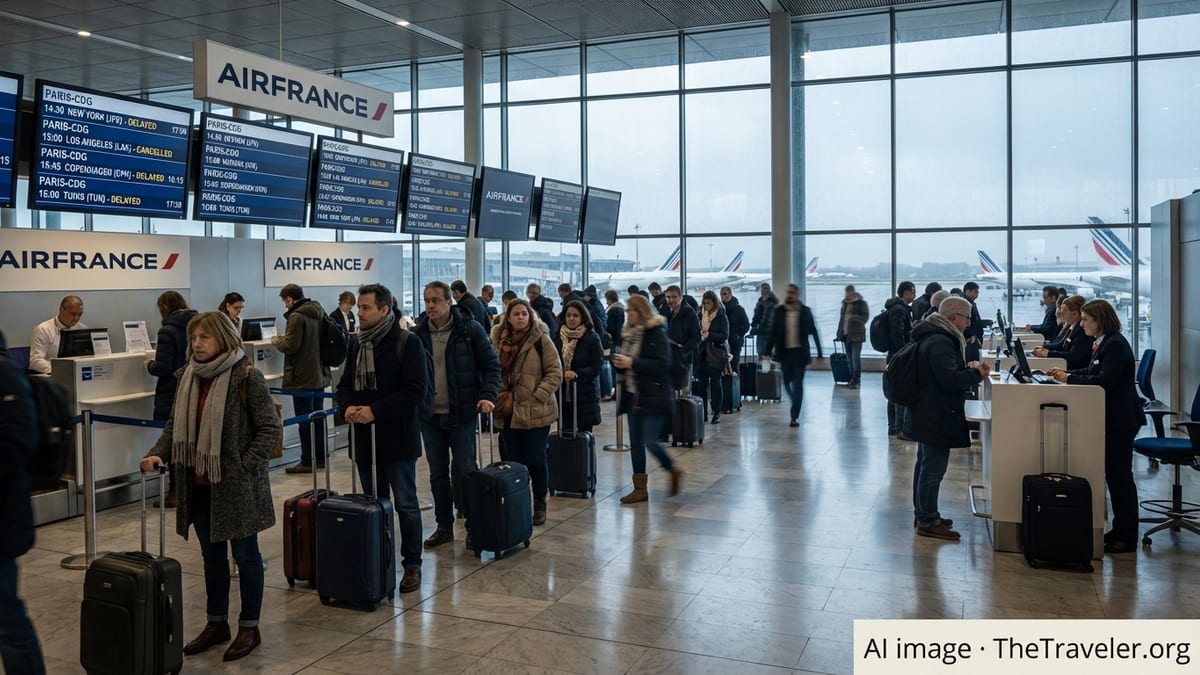
Amber alerts and updated advice for travelers
Several governments have updated their travel advice for France after unrest linked to rising living costs and student protests escalated into some of the most serious street violence the country has seen in years. The United Kingdom now highlights the risk of sudden local curfews in its France travel advice, following decisions by French authorities to restrict movement at night in parts of Paris, Lyon and other cities after clashes and looting.
Australia’s Smartraveller service describes large-scale protests and demonstrations that swept across France on 17 October and warns that further gatherings are expected, particularly in major urban centers. Its advice notes that protests can turn violent with little warning and urges visitors to avoid demonstration areas, monitor local media and follow instructions from local services when disruptions occur.
Canada’s official travel advisory for France continues to flag the risk from both terrorism and civil unrest, pointing to a pattern in which otherwise peaceful marches can be accompanied by vandalism and confrontations at the margins. Guidance there stresses that radical groups and vandals have previously used large demonstrations as cover to target property, including government buildings and commercial streets that are also frequented by visitors.
For U.S. citizens, France remains at Level 2 on the Department of State’s global advisory scale, meaning travelers are asked to exercise increased caution due to risks linked to terrorism and unrest. While the overall level has not changed in response to the latest protests, the unrest is cited by security briefings as a reminder that demonstrations are a recurring feature of public life and can quickly disrupt transport, shopping districts and tourist areas.
Protests widen from fuel costs to nationwide unrest
The current wave of unrest grew out of demonstrations that began in mid-September over fuel prices and the broader cost-of-living crisis. A resurgence of the yellow vest movement helped channel frustrations over energy costs, inflation and perceived social inequality, culminating in a nationwide call to protest on 17 October.
Student organizations, already mobilized over poor conditions in secondary schools and universities, joined those marches, turning a series of sector-specific grievances into a broader challenge over living standards and the state of public services. Publicly available information from multiple outlets describes high school blockades, class boycotts and coordinated marches in Paris and other cities, often starting near education facilities before converging on central squares.
What began as largely organized demonstrations has, on several occasions, spilled over into hours of rioting. Reports from national and international media describe cars set alight, windows smashed and local government buildings targeted, including a historic town hall engulfed in flames and damage to a major city’s tourism office. Police and gendarmes have responded with large deployments, using tear gas and crowd control tactics to clear streets late into the night.
The political backdrop is adding to tensions. The unrest comes as France heads toward a presidential election year, and coverage indicates that rival parties are trading blame for both the violence and the underlying economic strains. The government has accused far-left groups of exploiting student anger, while opposition figures argue that years of austerity and rising prices have eroded confidence in national institutions.
Curfews, transport disruption and impact on trips
The most immediate impact for travelers has been in city centers where French authorities have ordered evening and overnight curfews “for as long as necessary.” In Paris, this includes some districts that are heavily visited by tourists and that host major venues, while in Lyon and other large cities, central neighborhoods have seen renewed restrictions following nights of clashes.
Curfews and protest days have combined to disrupt urban transport. Tram and bus lines have been curtailed or diverted around gathering points, and local rail services, including some suburban trains, have experienced delays when marches move along key arteries. In previous protest waves, road access to Paris Charles de Gaulle and Orly airports has been slowed by slow-driving convoys and spontaneous roadblocks, and travel specialists monitoring the current situation are warning of similar risks on announced protest days.
Long-distance rail has remained broadly operational, but travelers have faced congestion around major hubs such as Paris Gare du Nord, Gare de Lyon and Marseille Saint-Charles when marches or clashes occur nearby. On days of heightened tension, authorities have closed metro stations close to demonstration routes, forcing passengers to walk further or reroute their journeys at short notice.
The tourism industry is voicing concern about the cumulative effect on France’s reputation. French media report that more than 3,000 businesses have been affected by damage or looting since the mid-October peak, including retail chains and restaurants that rely heavily on visitor spending. Industry federations such as ADN Tourisme warn that vivid images of burned-out vehicles and boarded shopfronts in central Paris, Lyon and Nice are leading some international visitors to reconsider or postpone trips.
Risk levels vary by location and timing
Despite the heightened alert tone in some travel advisories, most of France remains open and functioning, and many key attractions continue to operate largely as normal. Museums, monuments and theme parks around Paris and in regions such as Provence and the Loire Valley have kept standard opening hours on non-protest days, and in several cities, unrest has been concentrated in specific districts rather than across entire metropolitan areas.
The geography of the protests is uneven. Major gatherings have focused on symbolic locations, including large public squares in Paris such as Place de la République, Place de la Bastille and Place d’Italie, as well as central boulevards in cities like Marseille, Toulouse and Lille. Smaller towns have seen marches near town halls and prefecture buildings, but reports indicate that many rural areas and tourist-favored countryside regions have experienced little direct disruption.
Timing also matters. Most organized marches are announced in advance by unions and student groups for particular weekdays or Saturdays, often in the afternoon and early evening. On those days, travelers can expect a heavier police presence, transport changes and temporary closures of some shops along the routes. Overnight violence, when it occurs, tends to flare after demonstrations break up, with fires and clashes concentrated in a few neighborhoods that are sometimes far from hotel zones popular with international tourists.
The risk to individual travelers is therefore closely tied to whether they inadvertently enter protest zones or remain in affected city centers late at night. Travel advisories consistently recommend giving marches a wide berth, even when they appear peaceful, because of the potential for sudden escalation or for police crowd-control measures to affect bystanders.
Practical guidance for visitors planning or already in France
For travelers who have already booked trips, current guidance from national foreign ministries stops short of advising against travel to France as a whole. Instead, it emphasizes preparation and situational awareness. Visitors are encouraged to register with their embassy’s traveler enrollment services where available, enabling them to receive security updates and contact information in case of a major incident.
Checking local information has become especially important. Travelers are advised to review their airline and rail operator notifications on the days before departure, in case access roads to airports or key train stations are affected by marches or roadblocks. Within cities, transport authorities and municipal police publish real-time updates on metro, tram and bus diversions, which can help visitors replan routes around demonstration areas.
Accommodation choices can also mitigate risk and inconvenience. Travel media and advisory services suggest that those particularly concerned about unrest might avoid hotels on or immediately adjacent to known protest corridors, especially large squares and avenues regularly used for marches. Staying in quieter neighborhoods with multiple transport options can reduce the likelihood of being caught behind police cordons or blocked roads.
Basic precautions are widely recommended. These include allowing extra time when traveling to and from airports on protest days, carrying identification, keeping valuables out of sight in crowded areas and avoiding attempts to photograph or film confrontations at close range. Travelers who encounter an unannounced protest are advised to turn away, move to side streets and seek alternative routes rather than waiting it out in the crowd.
Uncertainty remains about how long the current unrest will persist. French tourism bodies argue that most visits proceed without incident and that the country’s infrastructure and services remain resilient, but they also acknowledge that the coming weeks are likely to bring further protest days and localized disruption. For now, the amber-style alerts underline a message that travel to France continues, but with a renewed emphasis on vigilance, flexibility and informed planning.