


More news on this day
Fresh US travel advisories for Mexico and shifting rules at the southern border are colliding with the reality of entrenched asylum routes through Latin America, creating a widening gap between what is formally discouraged and what continues to unfold on the ground.
Get the latest news straight to your inbox!
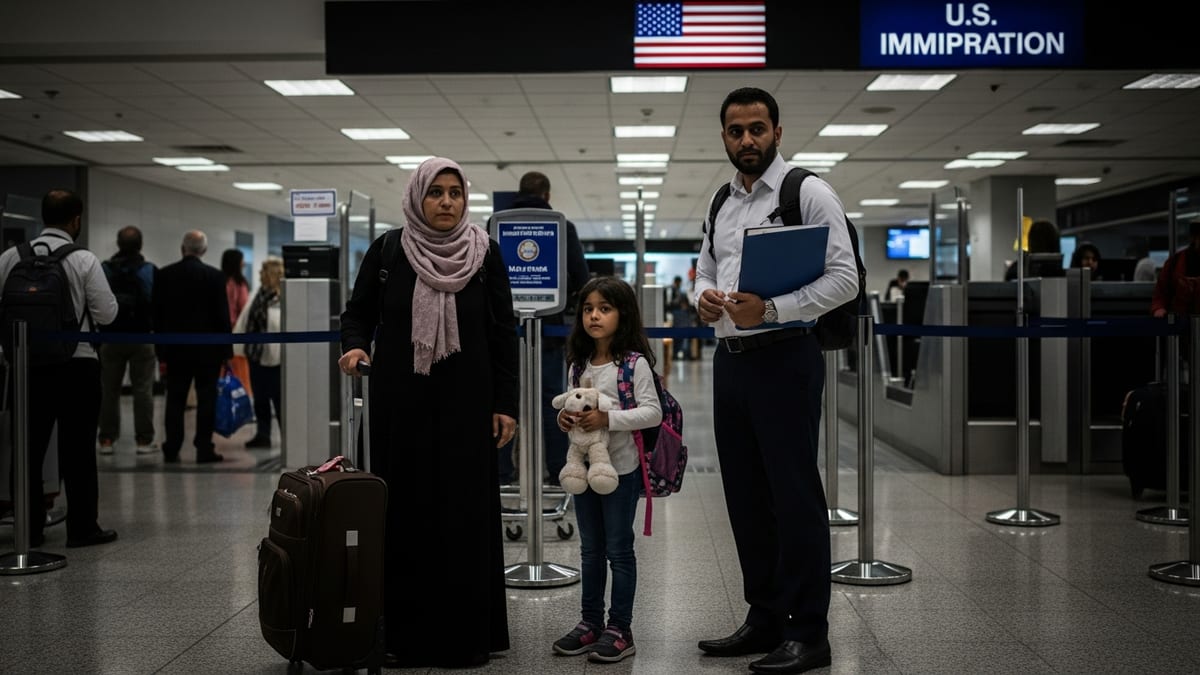
Heightened Advisories Along a Still‑Active Corridor
The United States maintains a detailed, state‑by‑state travel advisory for Mexico that highlights widespread crime, kidnapping risks and, in some regions, explicit warnings not to travel. The current advisory, updated in August 2026, urges US citizens to reconsider or avoid travel altogether in several northern and Pacific states that lie directly along common overland pathways to the US border. It also lists specific highways and routes that US government employees are restricted from using, indicating persistent concern about cartel violence along some of the same corridors migrants traverse.
Despite these warnings, the basic geography of movement toward the US has not changed. Publicly available information shows that many asylum seekers continue to pass through Mexican border states such as Tamaulipas, Chihuahua and Baja California on their way to ports of entry opposite Texas, New Mexico, Arizona and California. Reports indicate that US security alerts, including temporary restrictions on government staff travel around cities such as Monterrey and Mazatlán earlier in 2026, have not closed these routes to non‑official travelers, even as they underscore the risks.
For ordinary US visitors, the advisories function as a caution about tourism and business travel. For migrants already committed to leaving home, the same maps and warnings describe a landscape of danger that many still decide to cross, highlighting the contrast between recommended behavior for citizens and the survival calculations of people seeking protection.
From the Darién Gap to the Rio Grande
Further south, data from Panamanian authorities and international agencies show how one of the most notorious transit points, the Darién Gap between Colombia and Panama, has shifted but not disappeared from the migration map. More than 520,000 people crossed this jungle corridor in 2023, according to official tallies cited by UN and humanitarian reporting, making it one of the world’s busiest and deadliest land routes for people trying to reach North America.
Since mid‑2025 and into 2026, Panama’s published figures indicate a sharp drop in crossings, following tighter enforcement, new deportation policies and increased cooperation with the United States and neighboring countries. Recent coverage by Panamanian media and international outlets describes monthly totals in the low hundreds for 2026, a dramatic fall compared with the previous surge years. However, even reduced flows mean that thousands of people are still attempting the journey through dense forest and rivers, often relying on smuggling networks that exploit the lack of regular travel options.
Once out of the Darién, migrants continue north through Central America and into Mexico, where the same regions flagged in US travel advisories play host to freight trains, informal bus routes and temporary encampments. Intelligence and diplomatic assessments released in 2026 note a marked decline in encounters at the US‑Mexico border since early 2025, attributed to stricter regional enforcement and perceived changes in US rules. Yet the persistence of movement along the corridor underlines how on‑the‑ground asylum routes do not end when official travel guidance grows more restrictive.
Digital Gatekeeping at US Ports of Entry
At the border itself, the introduction and expansion of the CBP One mobile application has created a new layer of control that affects how, and whether, people can present asylum claims at official crossings. US government documents and court filings describe the app as the main channel for scheduling appointments at selected ports of entry, listing locations in Arizona, Texas and California where individuals can register in advance before approaching inspection points.
Advocacy reports and legal challenges published since 2024 argue that this digital system, combined with rules that limit access to asylum for those who cross between ports of entry, has effectively turned a smartphone app into a gatekeeper for international protection. Online guidance and user accounts show that appointment slots remain scarce, with wait times of weeks or months in border cities on the Mexican side. Rights groups contend that people without reliable internet access, compatible phones or digital literacy face higher barriers, pushing some to attempt irregular crossings despite official warnings.
The emphasis on controlled, app‑mediated entry contrasts with the broader message carried by US travel advisories, which warn citizens away from precisely the areas where asylum seekers must wait. This juxtaposition leaves border communities hosting groups who are encouraged by formal policy to remain in place until an appointment appears on their screens, even as the surrounding environment is described in official notices as too dangerous for US travelers.
Regional Crackdowns and Shifting Numbers
Alongside digital measures at the border, regional governments have launched visible enforcement campaigns that influence both migration statistics and the practical realities of travel. Panama’s current administration has reported a steep fall in Darién crossings after expanding patrols, closing informal camps and organizing repatriation flights, steps described in government communiqués and international reporting as part of a strategy supported by US funding and training.
Mexico, for its part, has publicized joint statements with the United States highlighting what both governments characterize as a historic reduction, on the order of 90 percent, in irregular encounters at the US southern border between late 2024 and mid‑2026. Mexican authorities credit more intensive checks on freight trains and highways, as well as operations against smuggling groups. These efforts coexist with continued obligations under Mexican law and international conventions to receive asylum claims, creating a layered environment where people in transit face both enforcement and limited avenues for formal protection.
Intelligence assessments released in Washington add a further note of caution, suggesting that migrant flows remain highly sensitive to perceived shifts in US policy. Analysts warn that sudden changes in enforcement or public messaging could trigger new surges along routes that recent crackdowns have partially quieted, including the Darién Gap and key Mexican transit corridors. For travelers and observers, this volatility means that today’s reduced numbers do not guarantee that the same routes will stay quiet tomorrow.
Travel Guidance Versus Ground Realities
The intersection of US travel alerts and asylum routes exposes a fundamental tension in how risk is communicated. Travel advisories are aimed at citizens with the option to postpone or cancel trips, emphasizing avoidance of violence‑affected areas and detailed precautions for road travel. In contrast, many asylum seekers passing through those same areas describe, in public testimonies collected by humanitarian organizations and the press, an absence of real alternatives in their countries of origin, from economic collapse to generalized insecurity.
Public information from border agencies and humanitarian groups indicates that, in practice, the people most exposed to the dangers highlighted in US advisories are often those with the fewest choices about whether to be there. Restrictions on official travel by US personnel, such as recent bans on consular staff using certain highways or leaving designated urban areas in northern Mexico, underscore the perceived gravity of security threats. Yet these measures do not apply to migrants, who must still navigate the same roads to reach CBP One appointment locations or informal crossing points.
The result is a layered risk map in which formal travelers are urged to steer clear, while asylum seekers continue to move through, often at night, on foot or aboard overcrowded vehicles. As US policy continues to rely on travel warnings, regional enforcement and digital screening to shape movement toward its border, the disjunction between advisory language and lived routes is likely to remain a defining feature of the hemisphere’s migration landscape.