


More news on this day
An American Airlines Boeing 737-800 operating as Flight 2258 from St. Louis Lambert International Airport to Chicago O’Hare returned to its departure airport shortly after takeoff, according to publicly available flight tracking data and airport information reviewed on June 11, 2026.
Get the latest news straight to your inbox!
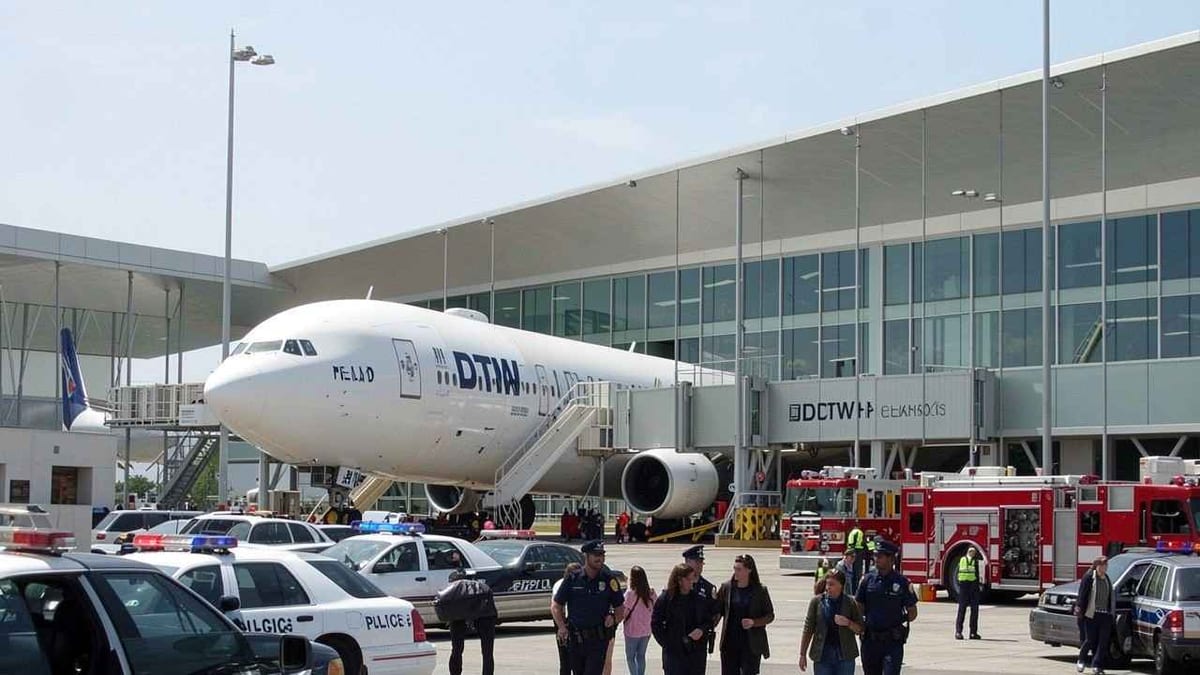
Flight Returns to Lambert Shortly After Departure
Flight tracking services indicate that American Airlines Flight 2258 departed St. Louis Lambert International Airport bound for Chicago O’Hare International Airport before entering a brief climb and turning back toward Lambert. Data shows the Boeing 737-800 leveled off at a relatively low cruising altitude compared with the typical profile for the short hop between the two Midwestern cities, then began a descent to return to St. Louis.
Publicly accessible track logs suggest that the entire flight lasted under an hour from takeoff to landing, significantly shorter than the scheduled sector time between St. Louis and Chicago. Ground tracks depict a tight loop north or northeast of Lambert, consistent with a precautionary return rather than a diversion to an alternate airport.
Available airline customer information notes that when flights are diverted or returned to their origin, carriers generally work to rebook travelers on later departures, offer meal or hotel assistance in some circumstances, and provide updates through airport displays and mobile notifications. Passengers on Flight 2258 were expected to continue to Chicago on a later service or by alternative arrangements arranged by the airline at the airport.
American Airlines operates multiple daily flights in the St. Louis to Chicago corridor, which is one of the most heavily traveled short-haul business and connecting routes in the central United States. The airline’s schedule on this pairing often uses Boeing 737-800 aircraft, a workhorse of its domestic fleet.
Operational Context for Diversions and Returns
Public airline customer service documentation explains that flights may return to their origin or divert to another airport for a range of operational reasons, including technical issues, weather, airspace constraints, or onboard medical situations. In such cases, airlines typically prioritize getting the aircraft on the ground at an airport with suitable facilities and maintenance or medical support, even on relatively short routes such as St. Louis to Chicago.
American Airlines’ publicly posted customer service plan states in general terms that when a flight is diverted and cannot continue the same day, the carrier may provide amenities such as meals or hotel accommodation, depending on the cause and circumstances of the disruption. The plan also indicates that travelers are rebooked on the next available flight in the same cabin where possible, or given the option to adjust itineraries if connections are affected.
Industry data from flight status providers describes diversions and returns as a small but regular feature of commercial aviation. Short sectors in the central United States, including routes into Chicago O’Hare, are particularly susceptible to congestion, weather systems, and ground delay programs that can compress schedules and lead to operational decisions such as returning to origin airports to avoid extended airborne holding.
At Lambert, a mix of legacy mainline carriers and regional operators serves domestic destinations, with Chicago being among the most frequent routes. The presence of multiple carriers on the corridor generally gives disrupted travelers several rerouting options, either on a later departure from the same airline or via other hubs.
St. Louis Lambert and Chicago O’Hare as Key Midwestern Hubs
St. Louis Lambert International Airport is the busiest airport in Missouri and a significant node in the central U.S. air transport network. Federal aviation information describes a complex runway system that handles a mix of commercial, cargo, and general aviation traffic. The airport is located northwest of downtown St. Louis and supports frequent shuttle-style flights to major hubs such as Chicago.
Chicago O’Hare International Airport functions as one of the largest and most complex hubs in North America, with high volumes of arrivals and departures on narrowbody aircraft, including Boeing 737-800s. According to published schedule and route data, American Airlines relies on O’Hare as a major connecting point for domestic and international services, with short-haul spokes like St. Louis feeding into longer-haul operations.
On busy hub-to-spoke routes, airlines often schedule several daily frequencies to give travelers flexibility and to build in resilience when irregular operations occur. The St. Louis to Chicago sector is one such market, allowing passengers from Missouri and surrounding states to connect onward through O’Hare to destinations across the United States and overseas.
In this context, a return to Lambert of a single flight, while disruptive for those on board, is typically absorbed by the broader schedule through rebooking and use of alternative departures. Flight 2258’s passengers likely had options on subsequent flights the same day, subject to available seat capacity and timing.
Boeing 737-800 Role on the Route
The Boeing 737-800 is a widely used single-aisle aircraft in American Airlines’ fleet, regularly deployed on domestic routes such as St. Louis to Chicago. Aviation fleet registries show that the airline operates dozens of 737-800s across its network, using the type on both short shuttle segments and longer cross-country flights.
The aircraft type has a typical seating capacity in a mixed-class configuration of around 160 to 172 passengers, depending on cabin layout. For short-haul flights, the 737-800’s range and performance give crews flexibility to manage weather deviations or holding patterns while still carrying sufficient fuel reserves for returns or diversions when required by procedures or regulations.
Industry safety records and regulatory oversight place strict requirements on how airlines manage any indication of technical irregularities. Standard practice calls for crews to return to the departure airport or divert to a suitable alternate if there is any concern about aircraft systems or performance. Such precautionary actions, while sometimes alarming for passengers in the moment, are part of an established safety culture in commercial aviation.
When a flight such as American Airlines 2258 returns to its origin, maintenance inspections and checks are typically carried out before the aircraft is cleared for subsequent service. In some instances, airlines may substitute another aircraft to keep the schedule moving while the original jet is examined by technicians.
Impact on Travelers and Broader Operations
For passengers, an unscheduled return can lead to missed connections, changes to hotel or ground transport plans, and added travel time. Airline customer information encourages travelers to monitor their flight status through official websites, mobile applications, and airport display boards, particularly when storms or air traffic programs are affecting major hubs such as Chicago O’Hare.
On a tightly timed short-haul flight like St. Louis to Chicago, even a modest delay can cascade through the rest of a travel day. Business travelers may miss meetings, and leisure passengers may find onward connections affected. Airlines typically advise customers to build in time buffers when connecting through busy hubs, especially during peak travel seasons or in periods of unsettled weather.
Operationally, a return to origin requires coordination between flight crews, dispatch, maintenance, and airport teams. Aircraft utilization plans may be adjusted and crew duty times carefully managed to stay within regulatory limits. For an airline with a large 737-800 fleet, there may be some flexibility to swap aircraft and crews to minimize the knock-on impact on later departures.
While Flight 2258’s diversion back to Lambert disrupted a single service on the St. Louis to Chicago corridor, publicly available information suggests that such events remain relatively infrequent compared with the thousands of flights that operate each day between Midwestern hubs without incident.