


More news on this day
American Airlines and Dallas Fort Worth International Airport have switched on nine new gates in Terminal C, an early centerpiece of a $12 billion expansion that aims to shield travelers from the cascading delays and gate chaos that often define peak travel at one of the world’s busiest hubs.
Get the latest news straight to your inbox!
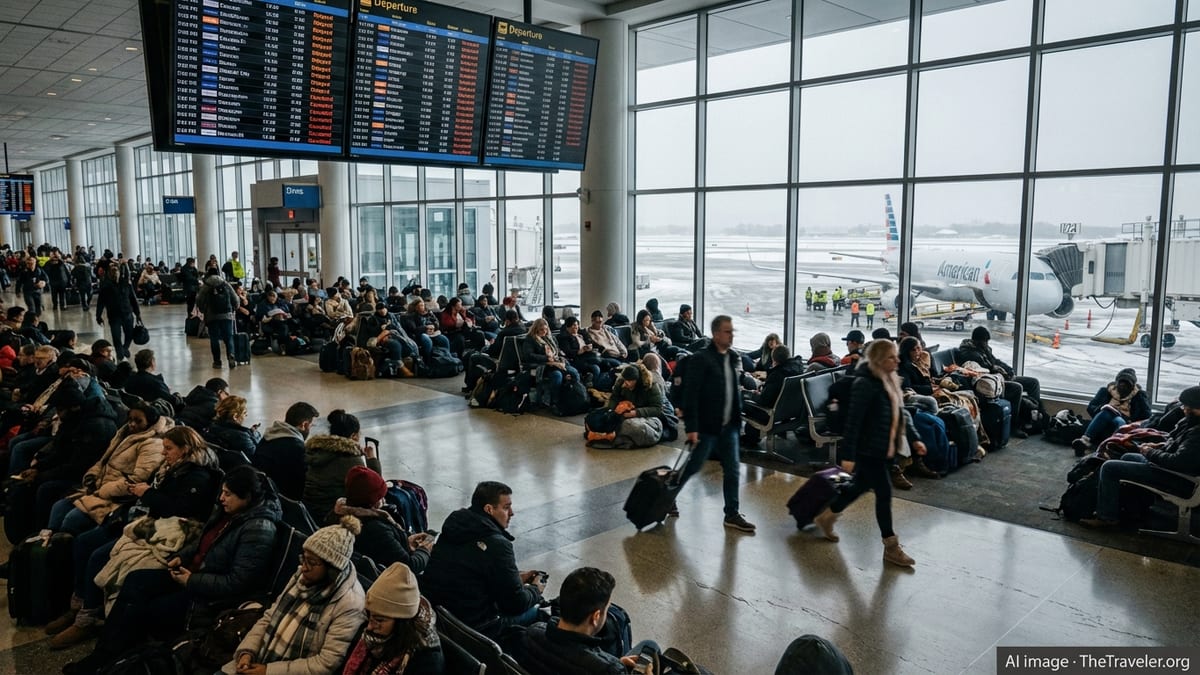
A $12 Billion Bet on Reliability at the World’s Fourth-Busiest Hub
Dallas Fort Worth International ranks among the world’s busiest airports by passenger volume, and American Airlines treats it as the center of its global network. Publicly available information from the airport and airline shows that the Terminal C pier now open is the first completed element of DFW Forward, a capital program valued at about 12 billion dollars that is reshaping terminals, roadways and support infrastructure across the property.
Within that broader plan, roughly 3 billion dollars is earmarked for overhauling aging Terminal C, long viewed by frequent flyers as one of the airport’s most congested and disruption-prone concourses. The new pier adds about 115,000 square feet of space, rebuilding five legacy gates and adding four entirely new ones, creating a nine-gate mini-concourse that is designed from the ground up for high-volume operations.
Reports from aviation outlets indicate that the new gates are already handling around 60 flights a day as the 2026 summer schedule ramps up. By pulling some of the busiest departures and arrivals into a purpose-built, high-capacity annex, American gains headroom to absorb schedule shocks elsewhere in the terminal and reduce the ripple effects that have historically led to last-minute gate changes across the airport.
Airport planning materials frame the DFW Forward program as a response to both surging demand and looming global events, including major sports tournaments later in the decade that are expected to push passenger volumes to new records. The Terminal C pier is being positioned as a proof point for how the airport and its largest airline customer intend to keep that growth from overwhelming the operation.
Nine New Gates Built as a Shock Absorber for Travel Disruptions
The new Terminal C pier is arranged in a compact, linear configuration that gives American additional parking positions without scattering operations across the airfield. Industry coverage notes that the design effectively creates a dedicated pocket of capacity where aircraft can be swapped, flights can be retimed and disrupted departures can be reassigned with fewer knock-on effects for the rest of the hub.
Gate flexibility has become a critical issue at DFW, where travelers have frequently reported multiple gate changes for a single connection as the airline juggles aircraft and crews to keep on-time performance intact. The extra nine positions at C are intended to relieve that pressure by giving schedulers more room to maneuver when weather, maintenance or late arrivals threaten to cascade into broader delays.
Publicly available planning documents from DFW describe the new gates as part of a wider effort to increase average daily gate turns while reducing customer pain points such as long walks between reassigned flights. Concentrating additional capacity in American’s busiest terminal is expected to make it easier to keep connecting banks intact rather than fragmenting them across multiple concourses at the last minute.
The pier is also located to support future projects, including a rebuilt Terminal C headhouse and eventual integration with a larger network of improved roadways and terminal exits. That positioning is designed to ensure that the gates continue to function as a pressure valve for the operation as later phases of construction come online.
High-Tech Boarding and Modular Design Aim to Speed Recovery
Alongside the extra capacity, American is using the Terminal C pier to roll out electronic boarding gates at scale, introducing touchless, automated document checks at each of the nine positions. According to published coverage of the project, the system builds on a successful trial elsewhere in the network and is intended to shorten boarding times, standardize the process across flights and reduce last-minute queuing issues that can delay departures.
The new technology fits into a broader push to make DFW a faster-recovering hub after irregular operations. When severe weather or airspace constraints disrupt schedules, the airline can now rely on standardized, automated boarding at the new pier to move passengers more quickly once flights are cleared to depart, helping to chip away at the backlog of delayed departures.
The physical structure of the pier was also engineered with disruption in mind. Airport updates describe how large prefabricated modules for the concourse were assembled offsite and then moved into place across closed runways, minimizing interference with daily operations during construction. That modular approach allowed DFW and American to deliver nine new gates while keeping most existing capacity online, an important consideration at a hub that already runs with high gate utilization.
Inside the concourse, floor-to-ceiling windows, expanded seating, plentiful power outlets and upgraded concessions are meant to keep waiting passengers more comfortable during inevitable delays. While such amenities cannot prevent disruptions, airport planners point to them as part of a strategy to make irregular operations more tolerable and to keep travelers distributed more evenly throughout the space.
Preparing for Peak Summers and a Global Sports Surge
The timing of the new gates is not accidental. DFW expects summer 2026 travel demand to outpace last year, according to public-facing airport materials that point to several consecutive seasons of record-breaking volumes. The nine-gate pier comes online just as airlines, including American, schedule dense banks of flights to serve both leisure travelers and a growing base of business traffic.
DFW is also one of the U.S. host airports preparing to welcome international visitors for major soccer events tied to the 2026 World Cup. Airport and airline communications describe the Terminal C pier as an early example of the upgraded experience they intend to showcase when global fan traffic peaks later in the decade, with more intuitive layouts and modern finishes designed to reduce confusion for infrequent travelers.
By incrementally adding capacity at its largest hub now, American is attempting to get ahead of that demand rather than chasing it. More gates allow for additional flights, but they also create options to stage reserve aircraft, pre-position widebodies or run recovery flights when disruptions leave passengers stranded, all of which become more important during event-driven spikes in traffic.
Local reports indicate that the pier will also act as a template for further work at Terminals A, C and the future Terminal F, where additional gates and new facilities are planned under the same capital program. Lessons from the construction and early operation of the new C gates are expected to inform how those later phases are executed while the airport remains in full daily use.
From Maligned Terminal to Testbed for the Next DFW
For years, Terminal C has been a sore spot for many American Airlines customers, who have criticized the concourse’s dated design, narrow gate areas and propensity for long walks triggered by gate changes. The new pier signals an attempt to turn that reputation around by anchoring a full rebuild of the terminal in a space that showcases what the rest of the concourse could eventually become.
Industry analysis suggests that if Terminal C were counted as a standalone airport, it would rank among American’s largest operations by daily departures, underscoring why the airline is making it an early focus of its DFW investments. Upgrading such a critical piece of the hub is seen as essential to improving the overall reliability of the network, since issues at C have historically had outsized effects on connections across the system.
By opening nine new, technology-rich gates ahead of the rest of the renovation, American and DFW are effectively trialing the next generation of the airport in a controlled environment. Performance data from the pier, including boarding times, gate utilization and disruption recovery metrics, is likely to shape decisions about how aggressively similar concepts are rolled out elsewhere on the property.
For travelers, the immediate impact will be measured in fewer extreme gate hikes, more predictable connections and a smoother experience when summer storms or operational hiccups hit North Texas. As the wider 12 billion dollar DFW Forward program advances, the Terminal C pier offers an early indication of how infrastructure, technology and layout changes might be combined to keep one of the world’s busiest hubs moving when conditions are at their worst.