


More news on this day
Ben-Gurion Airport is facing mounting pressure during peak summer travel, with publicly available flight-tracking data and operational reports indicating that departure delays can climb toward 90 minutes during the busiest afternoon periods.
Get the latest news straight to your inbox!
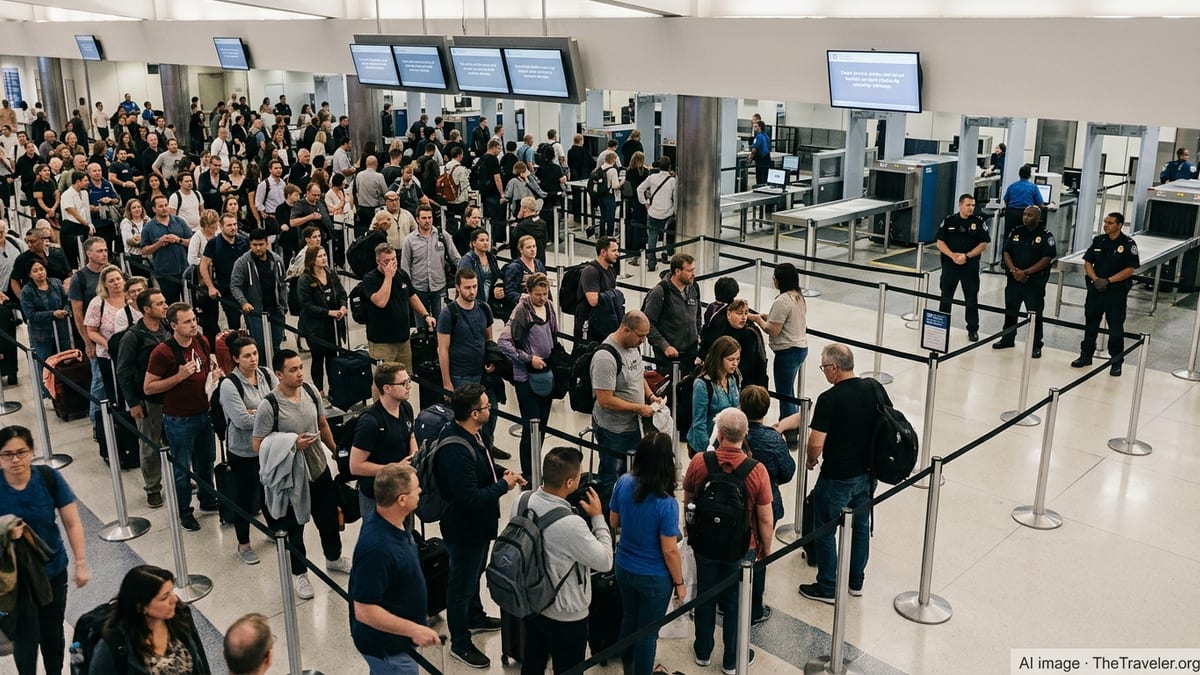
Summer congestion pushes punctuality to the limit
Ben-Gurion Airport, Israel’s primary international gateway, typically experiences its heaviest passenger volumes between late June and August as outbound tourism, visiting friends and relatives traffic, and inbound tour groups all converge on the schedule. In recent summers this surge has combined with tighter security procedures and operational constraints to create a recurring pattern of knock-on delays.
Recent analyses of flight-tracking data for late July indicate that only around one in three departures left on time during some of the busiest weeks, with average delays of roughly 40 minutes across all flights. At peak hours in the early afternoon, when banks of departures are scheduled in quick succession, reports from local media and data platforms show average waiting times at the gate rising further, approaching an hour and a half on the worst affected days.
While these long waits are not universal across the timetable, the gap between scheduled and actual off-block times has become noticeable enough that regional travel outlets now routinely advise passengers to build additional slack into their plans when flying out of Tel Aviv in midsummer. The result is a travel experience that can feel significantly less predictable, especially for those connecting onward in Europe or North America on tight itineraries.
Published coverage also points to wider regional factors that feed into the picture. Across Europe, network performance reports for the 2024 high season show that average air traffic management delays increased sharply compared with the previous year, reflecting weather disruptions and sector capacity limits. Ben-Gurion’s outbound flights that rely on overflight slots and connections at busy European hubs are exposed to these broader constraints, compounding local congestion.
Operational bottlenecks inside the terminal
Within the airport itself, a combination of staffing, baggage-handling capacity, and ramp operations has emerged as a recurring pressure point when demand spikes. Past summer seasons have seen widely reported hold-ups in luggage unloading and sorting, with some travelers describing waits of an hour or more at carousels as ground crews struggled to keep pace with dense waves of arrivals.
The security and check in process at Ben-Gurion, which is known for being more intensive than at many other airports, can also add variability during peak hours. Although processing times can be relatively quick in off-peak periods, queues grow rapidly when multiple widebody departures are scheduled within a narrow time window, particularly during weekend and late-night operations favored by leisure carriers.
Publicly available information from aviation authorities and network managers suggests that the airfield itself operates close to its declared capacity during the core summer months. When even minor operational issues occur, such as late-arriving inbound aircraft, equipment outages or short spells of adverse weather, the lack of slack in the system makes it more likely that departure slots will be pushed back in sequence.
These bottlenecks do not affect every traveler equally. Passengers with early-morning departures often report smoother experiences, while those booked on midday and early-afternoon flights from Terminal 3, when runway and apron utilization are highest, face a much greater risk of extended waits at the gate.
How Ben-Gurion fits into the wider delay landscape
The pressures at Ben-Gurion mirror a broader trend seen across many busy hubs in Europe and the Mediterranean. Network-wide assessments for the 2024 summer season highlight a rise in all-causes delay, driven by a mix of weather volatility, staffing challenges, and infrastructure constraints. For passengers, this often translates into a combination of ground holds at origin airports and missed connection risks at intermediate hubs.
In this context, delays of 60 to 90 minutes at Ben-Gurion during peak summer banks are not an isolated phenomenon but part of a continental system that is operating close to its limits during holiday periods. Once peak-day queues build up, airlines and ground handlers have limited room to recover before the next wave of traffic, particularly when turnaround times are already compressed to make aircraft utilization viable.
Historical data and past news coverage from Tel Aviv also show that Ben-Gurion’s operations can be affected by unique regional security considerations. Temporary airspace restrictions, precautionary pauses in arrivals or departures, and short-notice changes to routings have, in previous years, contributed to sudden bursts of disruption that then take hours to clear. When such events coincide with the seasonal travel peak, they can tip an already stretched schedule into widespread delay.
For travelers, this means that Ben-Gurion’s summer performance cannot be viewed in isolation from the broader Middle East and European operating environment. Even if local conditions are stable, route-level issues such as congested air traffic control sectors or storms along key corridors can ripple back into the departure board in Tel Aviv.
Implications for airlines and passengers
Extended delays of up to 90 minutes have direct and indirect costs for airlines using Ben-Gurion. Additional fuel burn for long ground operations, crew scheduling constraints, and compensation or rebooking obligations on disrupted itineraries all affect operating margins in what is already a low-yield leisure-heavy season for many carriers.
From the passenger perspective, the primary impact is on reliability and connection risk. Travelers connecting in Europe on itineraries that allow less than two hours between flights may find that a prolonged departure delay from Tel Aviv leaves them with little margin for additional disruption en route. Missed onward flights, reissued boarding passes, and overnight stays at hubs can quickly turn a routine holiday journey into a multi-day ordeal.
Travel advisories from airlines and consumer groups increasingly recommend that passengers departing Ben-Gurion in high season arrive at the terminal earlier than usual and allow generous buffers for onward connections. Some frequent travelers to and from Israel now routinely opt for longer layovers or choose earlier departure times from Tel Aviv to reduce the chance that afternoon congestion will eat into their onward margin.
At the same time, not every flight is severely affected, and statistics for the full day still show a meaningful share of services departing within 15 to 30 minutes of schedule. The challenge for travelers is that the risk is concentrated in specific time bands and dates, which can be hard to predict at the time of booking.
What travelers can realistically expect this summer
Based on recent summers and the early-season pattern of 2024, passengers using Ben-Gurion during the busiest weeks of the holiday period can reasonably anticipate that delays of 30 to 60 minutes will be common on peak days, with occasional spikes approaching 90 minutes in the most congested afternoon hours. These figures reflect averages and do not account for extraordinary events, such as airspace closures or severe weather, which can produce far more significant disruption.
Travel industry coverage suggests that airport and airline operators are trying to smooth schedules and add staffing where possible, but the combination of strong demand and wider network constraints limits how much improvement can be delivered in the short term. Infrastructure upgrades and procedural changes tend to be multi-year efforts, while demand has rebounded much faster than many planners expected in the wake of previous downturns.
For now, the practical takeaway for travelers is to treat the scheduled departure time from Ben-Gurion in midsummer as an estimate rather than a guarantee, especially on popular European and North American routes. Building in extra time before and after flights, securing flexible tickets where budgets allow, and monitoring flight status closely in the 24 hours before departure can help reduce the stress of navigating an airport where peak-season delays are increasingly measured in tens of minutes rather than a few.
As the summer progresses, further operational data will clarify whether this year’s delay profile at Ben-Gurion marks a new normal or a temporary spike in a system struggling to balance record demand with finite capacity.