


More news on this day
American Airlines is positioning its premium lounges as game-day sanctuaries for football fans, rolling out expanded lounge experiences and tailored services to offer respite from the mounting chaos of packed airports and high-stakes travel this season.
Get the latest news straight to your inbox!
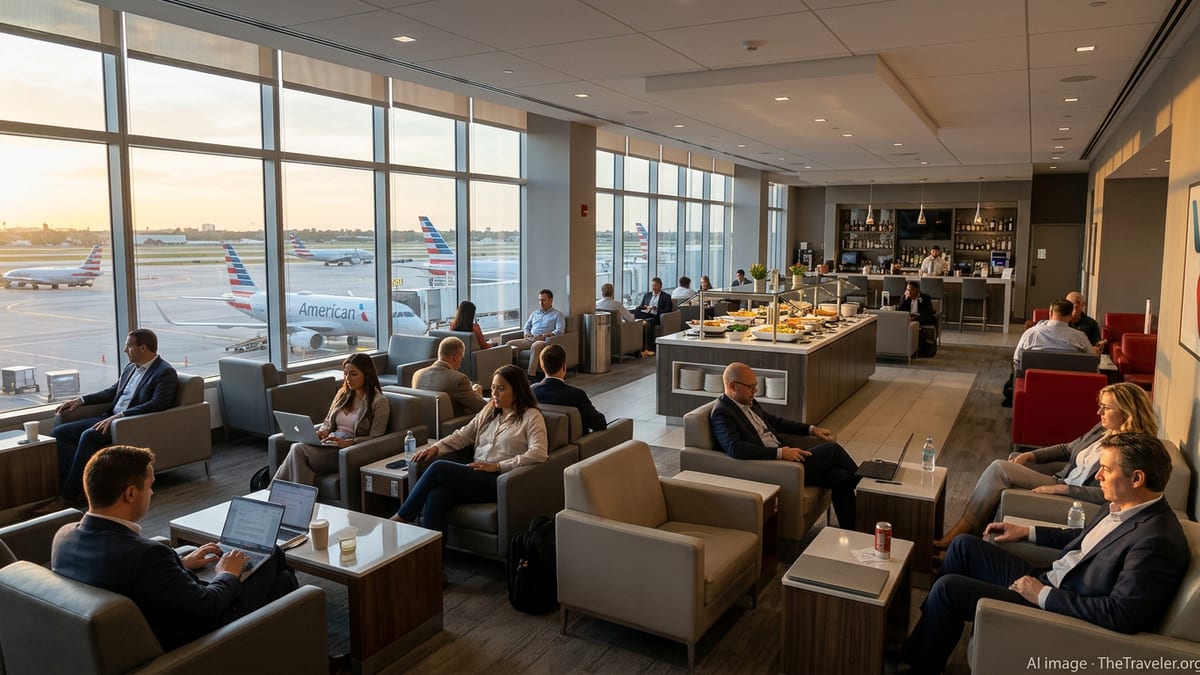
Lounges Reframed as Game-Day Safe Havens
American Airlines is leaning on its Flagship and Admirals Club lounges to shield football fans from the most stressful edges of game-day travel. Publicly available information from the airline’s latest lounge and schedule announcements indicates that these spaces are being framed as calm, curated retreats at the center of some of the busiest travel days of the year.
The company’s messaging around major football events emphasizes quiet zones, workspace areas and spa-style facilities that contrast sharply with crowded concourses and long security lines. Premium lounges are being promoted as places where fans can reset between flights, regroup after delays and follow pregame coverage away from congested gate areas.
Industry observers note that this strategy builds on a broader shift across global carriers, with premium ground experiences increasingly marketed as a key differentiator on high-demand sports travel days, not just as a perk for frequent flyers.
Game-Day Upgrades in Key Football Markets
Recent coverage of American’s football-linked initiatives highlights a focus on cities closely tied to headline events. In San Francisco, for example, the Admirals Club lounge in Harvey Milk Terminal has been showcased as a game-week retreat, with a design and service pattern that positions it as a premium buffer before and after one of the biggest football contests of the year.
Reports also point to American’s broader push around major tournaments and championships, including its role in upcoming global football events and partnerships with national programs. Lounges feature prominently in that narrative, with match-themed food and beverage offerings, televisions tuned to live coverage and flexible seating aimed at groups of traveling fans.
The airline’s schedule expansions for football season add another layer, with more flights and additional seats into key host and college towns. By pairing extra capacity with elevated lounge access at hub and gateway airports, American is effectively creating a corridor of premium spaces designed to catch fans at multiple points on their journeys.
How the “Lounge Sanctuary” Strategy Works
American’s official lounge descriptions outline a network of spaces configured for exactly the pressures associated with game-day travel. Flagship Lounges and Admirals Club locations typically offer zones for quiet relaxation, bar and dining areas, workstations with ample power outlets, and restrooms and showers that mirror spa facilities rather than standard airport amenities.
For football fans, this translates into a controlled environment where it is possible to watch early kickoffs, charge devices, adjust last-minute plans or simply decompress after crowded flights. Seating layouts in newer lounges, such as those recently introduced in major East Coast and West Coast gateways, emphasize personal space and sightlines to screens, acknowledging that many guests arrive specifically to track live sports while in transit.
The airline’s recent investments in refreshed food and beverage programs further support the sanctuary pitch. Seasonal menus and regionally inspired dishes are being rotated into lounges across the network, and event weeks often bring themed snacks and specialty cocktails, giving fans a sense of occasion that begins long before they reach the stadium.
Access Rules and the Premium Fan Experience
American’s published lounge access rules show that these sanctuaries remain primarily a premium proposition. Entry generally hinges on cabin class, elite status, membership or co-branded credit card access, with some locations also selling day or single-visit passes subject to capacity.
This access structure effectively sorts football travelers into tiers. Fans in premium cabins or holding qualifying memberships can move directly from crowded terminals into quieter, well-equipped lounges. Others may need to rely on paid passes or credit card benefits, where available, to tap into the sanctuary experience on especially hectic game weekends.
Analysts suggest that by reinforcing the value of lounge access during periods of elevated disruption risk, American is also strengthening the appeal of its loyalty program and premium co-branded cards. For frequent football travelers following their teams through multiple away games, guaranteed entry into a familiar lounge network can be as important as a nonstop flight.
Shielding Fans From Chaos While Building Loyalty
American’s expanded football schedule, combined with its visible investment in lounge design, food and tailored fan experiences, indicates a coordinated attempt to recast premium spaces as more than generic business facilities. For fans navigating tight connections, weather-related delays or sold-out flights, the promise of a quiet armchair, reliable Wi-Fi and a clear view of the broadcast carries tangible value.
Travel analysts point out that major sports seasons often magnify the best and worst of airline operations. Crowded airports, overburdened infrastructure and volatile schedules heighten traveler anxiety. By centering its narrative on premium lounges as game-day sanctuaries, American is betting that curated calm and predictable comfort can turn some of that anxiety into loyalty, repeat bookings and deeper engagement with its broader portfolio of premium services.
As the football calendar intensifies, the effectiveness of this strategy will be measured not only in passenger numbers, but in how many fans decide that the path to the stadium now runs through the quietest corner of the terminal.