


More news on this day
US airline stocks are gaining momentum as Delta Air Lines and United Airlines sharpen their focus on premium cabins, loyalty revenue and high-yield travelers, positioning themselves as relative winners amid renewed travel chaos across major US hubs.
Get the latest news straight to your inbox!
Stocks Rally As Investors Flock Back To Airline Leaders
Recent market commentary indicates that US airline stocks have moved back into favor with some investors, helped by moderating fuel prices and robust demand for air travel heading into the peak summer season. Analysts point to Delta and United as key bellwethers for the sector, noting that both carriers combine sizable international networks with increasingly sophisticated premium products that can capture higher-spending passengers.
Research published in June suggests that airline shares are once again being viewed as tactical opportunities, with a particular focus on balance sheet strength, free cash flow durability and pricing power. Within that framework, Delta is frequently cited as a core quality holding, while United is described as a higher-growth play on international and corporate travel appetite. Both are benefiting from investors’ renewed appetite for aviation exposure after several volatile years.
Earlier analysis of 2026 earnings expectations reported that Delta entered this year’s results season with solid revenue trends but lingering cost pressures, while United was forecast to show meaningful year-on-year improvement in profitability supported by its scale and premium exposure. Those expectations have underpinned a narrative in which the strongest US network carriers are using premium revenue and loyalty income to smooth out swings created by fuel prices and operational shocks.
At the same time, coverage from market-focused outlets highlights that not all airlines are sharing equally in the recent stock-market upswing. Carriers more exposed to purely price-sensitive traffic and with weaker balance sheets remain vulnerable to oil volatility and competitive pressure. Against that backdrop, Delta and United stand out for their ability to lean on premium products, co-branded credit cards and corporate relationships to attract investors even as operational challenges persist.
Premium Cabins Become Front-Line Defense Against Chaos
Publicly available financial and strategic documents show that both Delta and United have been steadily reallocating capacity and capital toward premium cabins over several years, a trend that has continued into 2026. Delta has highlighted growth in higher-yield products such as Delta One, Premium Select and domestic First Class, while also signaling that parts of its main cabin are not delivering the same returns. Investors and aviation analysts interpret this as a deliberate shift toward a model where a larger share of revenue comes from passengers willing to pay for extra space, service and flexibility.
United’s long-term “United Next” strategy similarly centers on replacing smaller regional jets with larger mainline aircraft configured with more premium seats and modernized interiors. Prior commentary from industry outlets notes that this approach is intended to reduce unit costs while supporting a richer mix of business, international and loyalty-driven travelers. As the fleet transition advances, premium cabin revenue has grown faster than some other segments, reinforcing management’s focus on higher-spend customers.
Investment research published earlier this year highlighted that Bank of America and other institutions view premium revenue growth and loyalty economics as central to their positive stance on leading US airline stocks. Delta’s earnings forecasts, for example, have been linked to its ability to expand premium and co-branded credit card income, while United’s valuation case leans heavily on its premium cabin exposure and the depth of its MileagePlus ecosystem. This emphasis suggests that for both carriers, plush seats and upgraded service are no longer just brand enhancers but critical parts of the financial engine.
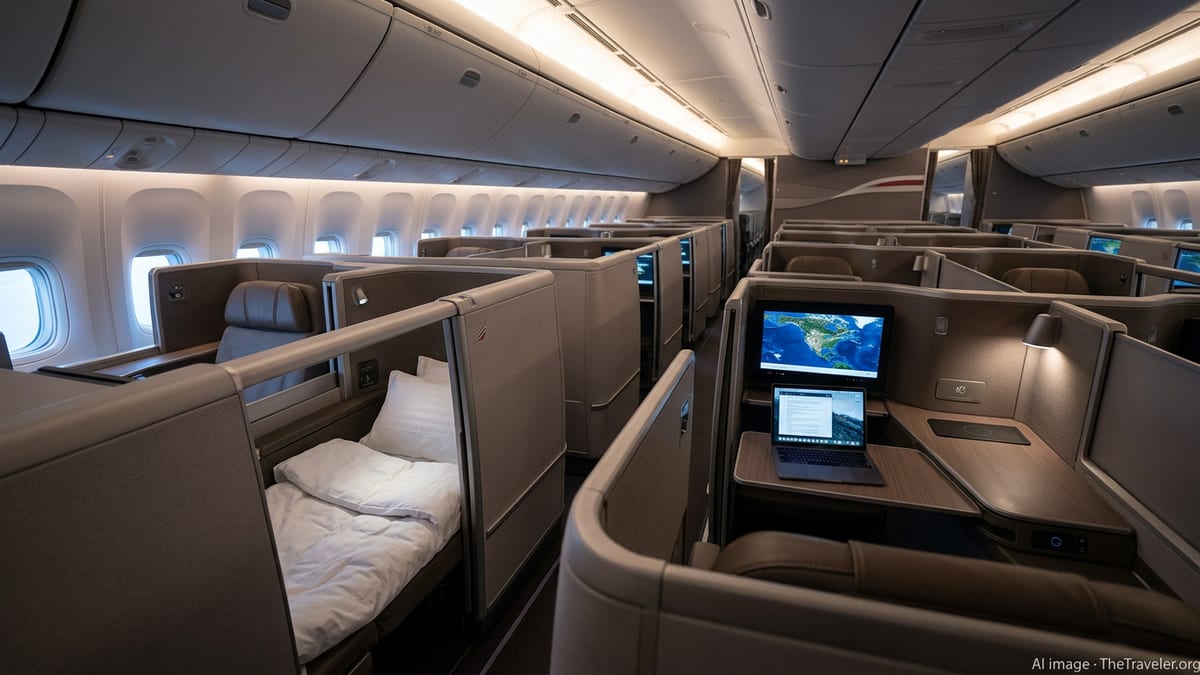
For travelers, the expansion of premium offerings manifests in more lie-flat business seats on long-haul routes, a wider rollout of premium economy cabins and refreshed domestic First Class products. While not every aircraft or route has been upgraded, the steady march toward denser premium sections means that Delta and United can increasingly target passengers who are willing to pay more in exchange for perceived stability, comfort and priority treatment when things go wrong.
Summer Disruptions Put Airline Strategies To The Test
The renewed investor enthusiasm arrives just as the US air travel system enters another turbulent summer. Recent coverage on travel-industry sites describes waves of delays and cancellations across multiple major airports in early June, with thousands of flights affected over just a few days. Weather, airspace constraints and staffing considerations in areas such as crews and ground handling have combined to stretch airline operations as demand surges.
Reports from tracking services and travel publications indicate that disruption has not been isolated to any one airline, with both large network carriers and low-cost operators facing operational stress at different times. Data referenced by business travel outlets shows that cancellation rates in early 2026 remained elevated compared with some pre-pandemic years, even as total demand climbed. For passengers, that has meant longer queues, missed connections and increased reliance on self-service tools to rebook or seek refunds.
Travel-focused reporting from within TheTraveler.org network has documented heavy disruption at several key hubs in recent days, with Boston Logan and major Midwest and West Coast airports experiencing substantial numbers of delayed departures as summer traffic has ramped up. While the absolute number of canceled flights on some days has remained modest relative to the size of the system, the combination of late arrivals and high passenger volumes has made conditions feel chaotic for many travelers.
In this environment, airline strategies around premium service and customer segmentation take on added importance. Higher-status loyalty members and premium-cabin passengers often receive earlier access to rebooking channels, dedicated phone lines and priority queues at service desks. Publicly available airline policies and consumer guidance suggest that these differentiated options can materially change how quickly travelers recover from disruption, reinforcing the commercial logic of directing investment toward higher-yield customers.
Investors Reward Carriers That Monetize Reliability And Loyalty
The recent climb in Delta and United share prices appears closely tied to how effectively the two carriers are monetizing reliability, loyalty and premium comfort at a time when systemwide performance remains uneven. Market analysis from several financial outlets emphasizes that unit revenue trends, loyalty-program profitability and ancillary streams such as co-branded credit card deals are increasingly central to airline valuations, sometimes even more so than simple capacity growth.
In assessments of US airline stocks published over the last several months, Delta has often been described as a “premium value” option. Its longstanding partnership with a major card issuer, coupled with strong brand recognition among business travelers, allows it to generate a material share of earnings from activities not directly tied to the day’s on-time performance. United, meanwhile, is frequently highlighted as a beneficiary of robust international demand and corporate travel, with growth in its premium cabin and loyalty revenue offsetting exposure to macroeconomic swings.
For investors weighing sector exposure, the contrast between carriers that can lean on premium defenses and those that compete mostly on price has become sharper. Commentaries note that airlines with weaker loyalty economics or less-developed premium offerings may find it harder to maintain pricing power if disruptions intensify or economic conditions soften. Delta and United, by comparison, are viewed as better equipped to pass through higher costs or absorb operational shocks thanks to their base of high-yield customers.
Some market observers caution that the premium pivot is not without risk. If service lapses or disruption management fail to meet elevated passenger expectations, there is potential for backlash from travelers paying higher fares. Social media posts and consumer forums periodically surface complaints about perceived gaps between premium pricing and on-the-ground experience. For now, however, the balance of analyst commentary suggests that investors see the premium strategy as additive, particularly when paired with ongoing cost control and fleet renewal efforts.
What Premium Defenses Mean For Everyday Travelers
For most travelers flying in standard economy, the intensifying focus on premium cabins can be a double-edged sword. On the one hand, heavy investment in new aircraft, upgraded interiors and more resilient operations can improve the overall experience, even for those in the back of the plane. Enhanced aircraft reliability, better onboard connectivity and more efficient boarding processes can reduce some of the friction that makes irregular operations feel chaotic.
On the other hand, the financial imperative to prioritize high-yield passengers may leave some economy customers feeling sidelined when disruptions occur. Consumer advocates note that during major delay events, access to live agents, available seats on alternative flights and compensation discussions may tilt toward those in premium cabins or holding elite status. As airlines continue to refine their segmentation strategies, the gap between the experience of top-tier customers and occasional flyers could widen.
Publicly available guidance from regulators and industry bodies underscores that, regardless of cabin, all passengers retain certain rights regarding rebooking and refunds when flights are significantly delayed or canceled. However, the ease with which those rights can be exercised often depends on digital literacy, familiarity with airline apps and, increasingly, the ability to engage loyalty channels that are optimized for frequent travelers.
Against this backdrop, Delta and United’s expanding premium defenses serve a dual purpose. They act as shock absorbers for earnings by locking in revenue from travelers less sensitive to price, and they provide a toolkit of service differentiators that can be deployed during periods of disruption. As the 2026 summer travel season intensifies, how effectively those defenses translate into smoother journeys for all customers will remain a central question for both investors and passengers watching the boards at crowded US terminals.