


More news on this day
An American Airlines flight operating from Dallas to Tucson on August 6 diverted to Albuquerque International Sunport, interrupting its planned route after the Boeing 737-800 made an unscheduled landing in New Mexico before continuing the journey.
Get the latest news straight to your inbox!
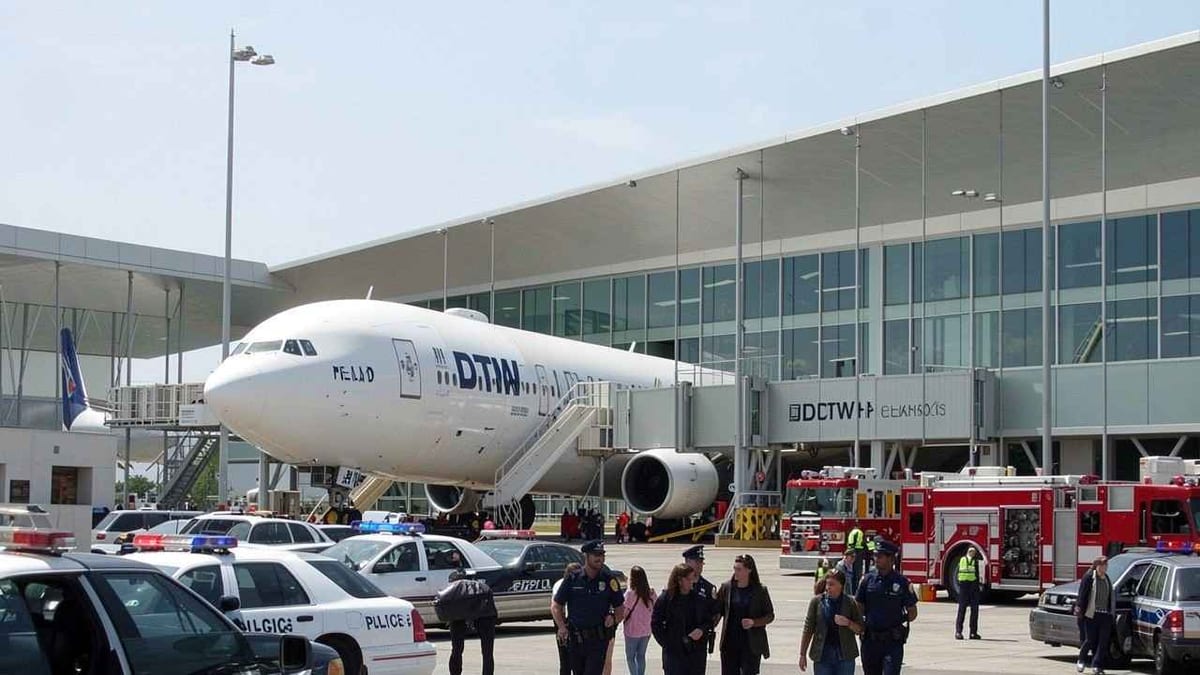
Unplanned Stop on Dallas–Tucson Route
American Airlines Flight AAL1580, a scheduled service between Dallas Fort Worth International Airport and Tucson International Airport, altered course on August 6 and landed at Albuquerque International Sunport. Publicly available flight-tracking information shows the aircraft, a Boeing 737-823, departing Dallas, heading west toward Arizona and then diverting north of its usual track to descend into Albuquerque.
The diversion occurred partway through the approximately two-hour sector across the U.S. Southwest. Data from online tracking services indicate the aircraft remained in Albuquerque for a period consistent with an intermediate technical or operational stop, rather than a full termination of the flight.
Records suggest the flight later departed Albuquerque and continued west, allowing passengers to resume their journey toward southern Arizona. The aircraft type, a Boeing 737-800 series, is one of the main narrowbody workhorses in American Airlines’ domestic network, frequently used on routes linking large hub airports with regional destinations.
American Airlines had not issued a detailed public breakdown of events surrounding the diversion by the time reports were compiled, leaving the precise triggering factor unclear, beyond the fact that the flight did not operate nonstop as originally scheduled.
What a Midroute Diversion Typically Involves
When a commercial flight such as AAL1580 diverts, the decision is generally influenced by operational or safety-related considerations. These can include medical situations in the cabin, technical concerns indicated by cockpit instruments, weather conditions along the planned route or congestion around the destination airport. Industry practice places the safe continuation of the flight ahead of schedule considerations, even when it results in inconvenience for travelers.
In many such events, the aircraft lands at the nearest suitable airport, which can offer a sufficiently long runway, appropriate ground services and the capacity to receive an unplanned arrival. Albuquerque International Sunport, located along a major east–west flight corridor in the Southwest, often serves as a diversion point for flights traversing the region, particularly for services moving between Texas hubs and destinations in Arizona, Nevada and California.
Once on the ground, airline operations teams typically assess whether the original aircraft can continue the journey or needs further inspection or maintenance. If the issue is resolved quickly, crews may refuel and proceed with the same aircraft. If more involved work is required, the flight might be rescheduled, repositioned or canceled, with passengers accommodated on other services where possible.
For passengers, diversions can lead to missed connections and extended travel times, especially when they are connecting through major hubs to smaller regional cities. Travelers on point-to-point services such as Dallas to Tucson typically experience additional time on board and at the diversion airport while ground staff coordinate the onward operation.
Passenger Experience and Operational Ripple Effects
Unplanned stops like the one involving AAL1580 can cause cascading disruptions across an airline’s network. A single aircraft’s late arrival into a destination airport may delay its subsequent departures, requiring schedule adjustments and, at times, aircraft swaps. This can affect not only those on the diverted flight but also travelers awaiting the same jet later in the day.
Publicly available accounts shared on social platforms in similar diversion cases often highlight uncertainty and frustration among passengers, who may experience limited real-time information while onboard. Cabin crews typically provide updates as they receive them, while ground teams work in the background to confirm fuel availability, crew duty-time limits and maintenance needs before authorizing onward travel.
For many travelers, diversions are a reminder of how quickly conditions in commercial aviation can change. Even on short domestic routes, a combination of weather, air-traffic control constraints and technical checks can prompt sudden rerouting decisions that are not visible in advance to ticketed customers.
At the same time, diversions illustrate the layered safety protocols built into modern airline operations. The additional landing and takeoff increase complexity, but they also allow flight crews and maintenance staff an opportunity to verify that the aircraft is fit to continue, rather than pressing ahead with a nonstop leg if any doubts arise.
Albuquerque’s Role in Southwest Air Traffic
Albuquerque International Sunport plays a strategic role in the Southwestern U.S. aviation network, positioned within reach of major hubs such as Dallas Fort Worth, Phoenix and Denver. Although it is not a primary hub for American Airlines, its long runways and available facilities make it a practical diversion option for a variety of carriers operating in the region.
The airport regularly receives flights that divert from their planned destinations due to storms in Texas, reduced visibility in desert locations, or route-management decisions as traffic levels fluctuate. When this occurs, aircraft may park temporarily for refueling, weather avoidance or technical checks before resuming their original journeys or being reassigned.
The August 6 diversion of Flight AAL1580 fits within that pattern of Albuquerque functioning as a relief valve in the regional air network. The Sunport’s capacity to handle a Boeing 737-800 and provide rapid turnaround support is one reason it often features as an alternate airport in airline flight planning across the Southwest.
For local observers, diverted jets are a visible sign of wider activity and disruption elsewhere in the system, as airlines respond to rapidly changing operational conditions over a broad geographic area.
Context of Diversions in U.S. Domestic Operations
Flight-tracking data and historical statistics show that diversions are a regular, though relatively infrequent, feature of domestic aviation in the United States. Across large carriers, a small proportion of flights each day experience route changes or unscheduled stops, often tied to convective weather in the central states, mechanical inspections or medical events onboard.
American Airlines, as one of the country’s largest carriers by capacity and destinations served, routinely builds alternates and contingency plans into its schedules. The Dallas Fort Worth hub is a particular focal point of summer weather disruptions, with thunderstorms and air-traffic congestion sometimes prompting re-routing and extra fuel stops on connecting services.
Events such as the August 6 diversion of the Dallas–Tucson flight highlight how these contingency options function in practice. While they can be disruptive for passengers in the short term, they are also central to how airlines manage safety and reliability over thousands of daily departures.
As the busy late-summer travel period continues, flights across the Southwest remain sensitive to operational factors that can prompt midroute changes similar to those experienced by travelers on AAL1580, underscoring the complex and dynamic nature of modern air travel.