


More news on this day
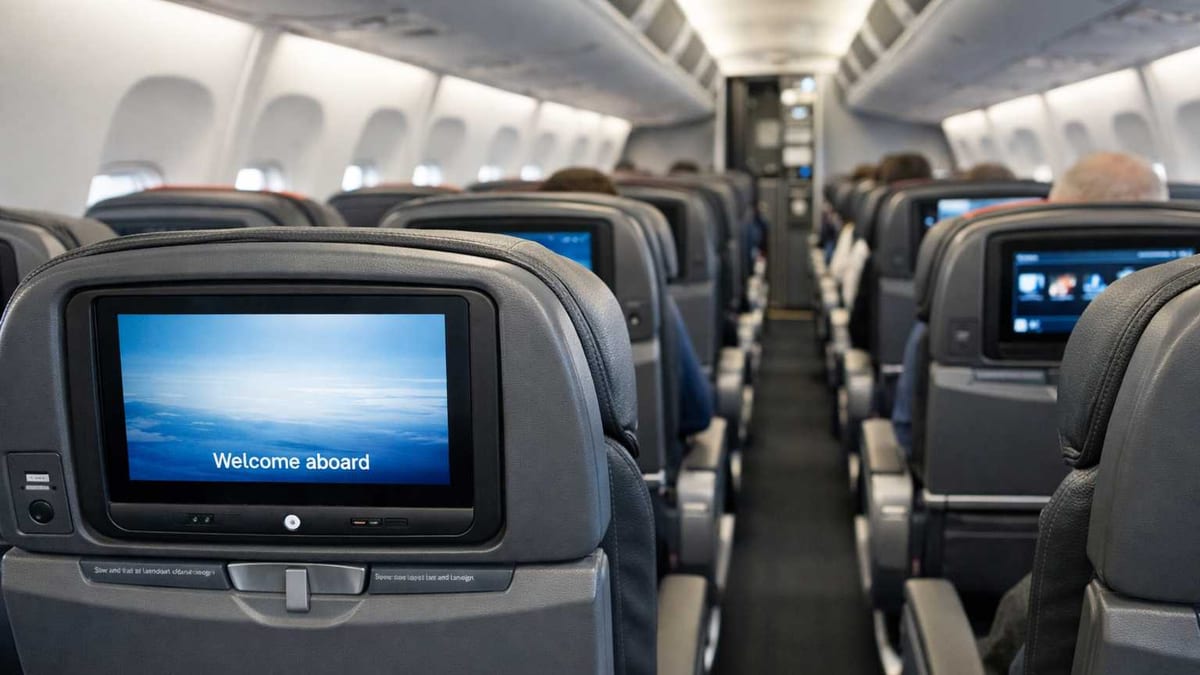
American Airlines is set to bring back seatback entertainment screens and add more premium seats across much of its narrowbody fleet, outlining a multi‑year cabin overhaul that the carrier is positioning as central to closing a multibillion‑dollar profit gap with rivals Delta Air Lines and United Airlines.
Get the latest news straight to your inbox!
Reversing Course on Seatback Entertainment
American had spent much of the past decade moving away from built‑in inflight entertainment on domestic aircraft, removing many screens in favor of a lighter, lower‑cost cabin and a bring‑your‑own‑device streaming model. Publicly available information shows that this strategy was justified internally by fuel savings and the ubiquity of personal smartphones and tablets.
The new plan marks a clear reversal. The airline has outlined a program to install modern seatback screens on upcoming Boeing and Airbus narrowbody deliveries, with retrofit work to extend the technology across large portions of the existing fleet over several years. Company materials describe a “next‑generation platform” with 4K displays, Bluetooth headphone pairing, and USB‑C power at every seat, features designed to match or exceed the systems already common at Delta and United.
Industry coverage indicates that the rollout will begin with future 737 MAX and A321neo aircraft and then fan out through cabin refresh programs. The gradual approach reflects the complexity of taking aircraft out of service for modifications, as well as the capital required to add wiring, hardware, and power to seats that were originally delivered without built‑in screens.
American is also framing the entertainment revamp as part of a broader digital strategy. The new screens are expected to integrate with the carrier’s app, personalized content recommendations, and real‑time flight information, creating additional opportunities to market onboard services and co‑branded financial products directly to passengers.
Premium Seats at the Center of the Revenue Strategy
Alongside the return of seatback entertainment, American is planning a significant increase in premium seating across its narrowbody fleet. Investor presentations and earnings call transcripts highlight a focus on raising the share of higher‑yield seats, from domestic First Class to extra‑legroom Main Cabin Extra, as a key lever to lift unit revenue.
The airline has signaled that new narrowbody deliveries will feature more First Class seats than earlier configurations, while retrofits on existing jets will skew layouts further toward premium rows and extra‑legroom options. On long‑haul aircraft, the company has already begun rolling out new Flagship Suite premium cabins with upgraded seatback entertainment and enhanced amenities, and management has emphasized that lie‑flat and premium economy capacity is growing faster than standard economy.
Analysts note that this mirrors a broader industry trend. Delta and United have spent the past several years reshaping their fleets so that a much larger share of seats generate premium fares, even as they maintain basic economy offerings at the lowest price points. American’s latest moves suggest it is aiming to narrow the gap in premium density and capture a larger slice of high‑spend corporate and leisure demand.
For travelers, the changes will likely mean more opportunities to book or upgrade into domestic First Class and extra‑legroom seats, but also more pressure on standard economy cabin space as airlines devote a greater portion of the cabin to higher‑yield products.
Targeting a Multibillion‑Dollar Profit Gap
American’s cabin initiatives are unfolding against a backdrop of financial pressure. According to recent financial disclosures and public remarks from senior executives, the airline is working to close a profit gap estimated at more than 3 billion dollars annually relative to its two largest U.S. network competitors.
Management has outlined four broad pillars to improve performance, with elevating the customer experience and growing premium revenue at the center of the plan. Increasing the number of premium seats, modernizing cabins and lounges, and enhancing onboard services are recurring themes in investor materials, which present these investments as a route to higher revenue per available seat mile and improved customer loyalty.
At the same time, American is contending with higher fuel and labor costs, a still‑constrained widebody fleet, and intense competition on key domestic and transatlantic routes. Publicly available commentary from industry analysts suggests that simply matching rivals on cabin features will not be sufficient to close the profit gap, but could be an important prerequisite for commanding similar fare premiums.
By tying the return of seatback screens directly to a broader premium push, American is signaling that it now sees inflight entertainment not as a discretionary amenity but as part of a larger revenue strategy, particularly when combined with advertising, partner promotions, and loyalty program integration.
Competitive Pressures and Customer Perception
For years, American’s decision to strip seatback screens from many domestic aircraft contrasted sharply with the strategies of Delta and United, both of which have promoted “screens at every seat” as a core element of their brand positioning. Public discussion in frequent‑flyer communities has often framed American’s cabins as less premium, even when Wi‑Fi streaming options were available.
Published coverage and forum commentary indicate that this perception has mattered on longer domestic flights, where built‑in entertainment and power at every seat have become a baseline expectation for many travelers. Some customers argue that they rarely use the screens and prefer to rely on personal devices, while others say that the presence of modern seatback systems signals investment and quality, regardless of how often they are used.
American’s new program appears aimed at addressing that reputational gap. By pairing new entertainment hardware with additional premium seats, refreshed interiors, and expanded lounge projects in major hubs, the airline is seeking to reposition itself as a “premium global carrier” rather than a cost‑focused operator. The move also aligns with a wider industry shift toward monetizing inflight connectivity and entertainment through targeted advertising and commerce, making the seatback screen a potential profit center rather than just a cost.
How quickly customer perceptions will shift remains uncertain. Implementation will stretch over several years, meaning travelers will encounter a mix of older cabins without built‑in screens and newer interiors with the updated technology. Consistency across the fleet, long a point of criticism for American, will be a critical factor in whether the investment translates into the higher fares and stronger loyalty the airline is seeking.
Balancing Passenger Experience With Cost and Complexity
Reintroducing seatback entertainment and reconfiguring cabins are capital‑intensive projects that add weight and maintenance complexity to aircraft. When American first removed many of its domestic screens, the airline highlighted the fuel savings and reduced repair costs from a simpler cabin, alongside the rise of personal devices and onboard streaming.
The new strategy suggests that the balance of costs and benefits has shifted. Advances in screen technology have reduced weight, while new revenue streams, from onboard advertising to co‑branded offers, can help offset installation and maintenance expenses. At the same time, competition for premium travelers has intensified, pushing airlines to invest in cabin features that differentiate their products.
For American, the challenge will be executing the retrofit program without disrupting its schedule or eroding customer satisfaction during the transition. Industry observers note that large‑scale cabin overhauls often take longer than planned, and that mixed interiors can create confusion for passengers who expect a consistent product.
Still, the decision to restore seatback screens and expand premium seating underscores how central the onboard experience has become to airline profitability. As American works to narrow its profit gap with Delta and United, the cabins passengers see and feel on board may prove as important as any changes made in the route network or back office.