


More news on this day
Israel is launching repatriation flights from the United Arab Emirates on Friday to bring home passengers stranded after a FlyDubai cockpit attack led to the suspension of regular air links between the two countries.
Get the latest news straight to your inbox!
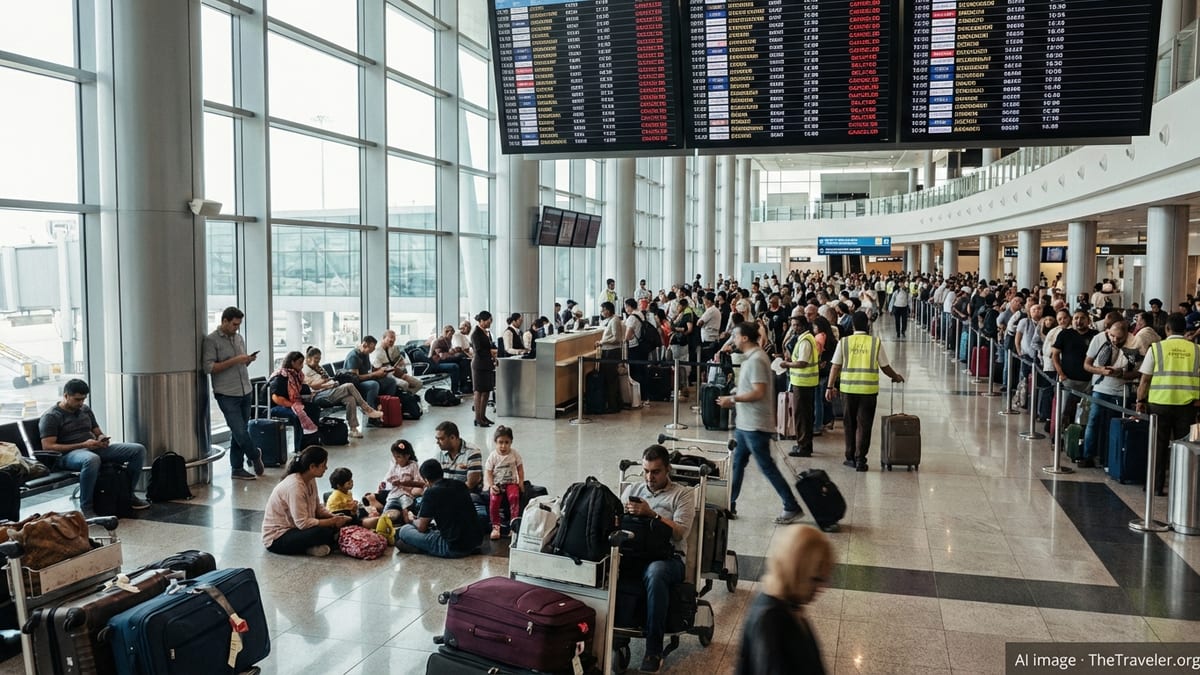
Rescue operation begins after dramatic midair incident
The emergency airlift follows an attempted hijacking of FlyDubai Flight FZ1073 on Wednesday, September 30, 2026, on a scheduled service from Dubai to Tel Aviv. According to published coverage, the copilot allegedly stabbed the captain inside the cockpit, triggering a steep, uncontrolled descent before passengers intervened and the aircraft diverted for an emergency landing in Saudi Arabia.
Reports indicate that all 182 people on board, including eight crew members, were eventually transported onward to Israel on a separate aircraft. The incident, however, set off a wider aviation fallout across the corridor between Israel and the Gulf, with FlyDubai suspending all services to and from Tel Aviv while investigations continue.
Publicly available information shows that authorities in the United Arab Emirates have opened an inquiry into possible terrorist motives behind the attack. In Israel, the event is being viewed within a broader regional security context, adding new strain to air travel already unsettled by the ongoing U.S.-Iran conflict and heightened threat assessments across the Middle East.
Images published by major international outlets show returning passengers arriving at Tel Aviv’s Ben Gurion Airport with visible bloodstains and bandages, underscoring the severity of the in-flight struggle and the emotional impact on those who were onboard.
Israeli airlines step in on UAE routes
With FlyDubai’s direct links to Tel Aviv suspended, Israeli carriers have begun organizing special one-way flights to repatriate citizens and residents stuck in the UAE. According to coverage by Israeli and international media, national carrier El Al initially announced rescue services but subsequently scaled back its plans, while leisure operators Arkia and Israir moved ahead with dedicated operations from Dubai.
The flights are focused on passengers whose original itineraries between Israel and the UAE have been disrupted by the sudden halt in commercial traffic. Published reports describe the services as one-way segments back to Tel Aviv rather than a full resumption of regular two-way schedules, underscoring the temporary and emergency nature of the operation.
Travel-industry executives cited in local coverage estimate that every full day of suspended commercial flights can leave well over a thousand Israelis stuck in the Gulf. Given the dense tourism, business and transit ties that have developed since the Israel–UAE normalization agreements, the abrupt shutdown has quickly created a backlog of travelers seeking seats on limited rescue flights.
Repatriation services are being coordinated around the existing security and operational protocols at Ben Gurion Airport, which already hosts some of the world’s most intensive passenger screening and aircraft protection measures. Analysts note that Israeli carriers operate under different security arrangements than foreign airlines, a factor that may have influenced the decision to rely on domestic operators for the bulk of the rescue effort.
Stranded travelers face uncertainty in Dubai and Abu Dhabi
For travelers currently in the UAE, the new flights offer a critical but still narrow route home. Publicly available information indicates that bookings are being managed primarily through airline customer-service channels and travel agencies, with priority generally given to passengers whose original tickets were canceled after the FlyDubai attack and subsequent suspensions.
There is no publicly confirmed unified passenger list for the repatriation effort, and capacity remains limited compared with normal traffic volumes between the two countries. Travel agents cited in regional media have warned that some passengers may face several days of delay while seats are allocated, particularly as carriers balance stranded tourists, business travelers and those transiting onward to other destinations.
Accommodation and incidental costs for affected passengers appear to vary widely. Some travelers are reported to be relying on airline-arranged hotel stays, while others have arranged their own lodging in Dubai and Abu Dhabi while waiting for confirmation of a seat on a rescue flight. Without standard commercial schedules to fall back on, many are operating with day-to-day updates rather than firm long-range timetables.
Travel advisories issued since the incident have encouraged passengers to stay in close contact with their airlines or booking platforms and to avoid heading to airports in the UAE without confirmed flight details. The emphasis on confirmed reservations reflects lessons from previous regional disruptions, when crowds of unbooked travelers at terminals complicated both security and logistics.
Ongoing investigation heightens aviation security concerns
The FlyDubai cockpit attack is already prompting fresh scrutiny of aviation security standards, particularly regarding pilot screening and in-flight safeguards. Aviation analysts quoted in international coverage note that while airport checkpoints and cabin security have tightened significantly since earlier eras of hijacking, incidents originating inside the cockpit remain among the most difficult to predict.
Publicly available information indicates that both UAE and Israeli investigators are examining whether any prior warning signs were missed in the copilot’s background or recent behavior. The inquiry is expected to cover medical and psychological fitness-to-fly assessments, security vetting, and internal reporting systems that are meant to allow colleagues to flag concerns.
The incident has also revived discussion of cockpit door protocols, including how and when the door can be unlocked from inside, what procedures cabin crew must follow if pilots become incapacitated, and how passengers can safely assist without causing further risk to the aircraft. Experts point out that the steep descent of Flight FZ1073, followed by its recovery and safe diversion, will provide a detailed case study for future training and design considerations.
More broadly, the event adds to a series of security shocks affecting Middle Eastern aviation at a time when carriers in the region play an outsized role in global connectivity. Analysts suggest that any long-lasting changes to pilot recruitment policies, flight-deck monitoring or route approvals between certain countries could have ripple effects on airline scheduling and ticket availability far beyond the Israel–UAE corridor.
What the disruption means for future Israel–UAE travel
The emergency airlift highlights how quickly a single security incident can disrupt the new travel patterns that emerged after Israel and the UAE normalized relations in 2020. Before this week’s events, the route between Tel Aviv and Dubai had developed into a busy short-haul link connecting business travelers, tourists and those using Gulf hubs as gateways to Asia, Africa and the Pacific.
Repatriation flights now serve as a temporary bridge while both countries weigh when and how to restore regular commercial services. Industry observers say the timing will depend heavily on the outcome of security investigations, potential new conditions imposed on airlines and any additional regional developments that could affect risk calculations for flights involving Israel.
For prospective travelers, publicly available information suggests that bookings on Israel–UAE routes may remain volatile in the near term, with short-notice schedule changes and heightened security measures likely to continue even after basic connectivity is restored. Travel planners are advising passengers to monitor airline announcements closely and to consider flexible tickets or alternative routings through third countries where feasible.
Despite the immediate uncertainty, many aviation analysts view the current disruption as a stress test rather than a reversal of the broader trend toward deeper economic and tourism ties between Israel and the Gulf. How swiftly and transparently the repatriation effort and associated security reviews are carried out may shape traveler confidence in this key regional corridor for months to come.