


More news on this day
Severe thunderstorms and airspace constraints have repeatedly pushed Chicago O’Hare International Airport into the global spotlight for flight disruptions this summer, culminating in days with hundreds of cancellations and more than a thousand delays. Within this turbulent backdrop, analysis of recent disruption data and publicly available customer-support commitments suggests that American Airlines has, in several key respects, set a higher bar for how large carriers can manage operations and stranded passengers during major system shocks.
Get the latest news straight to your inbox!
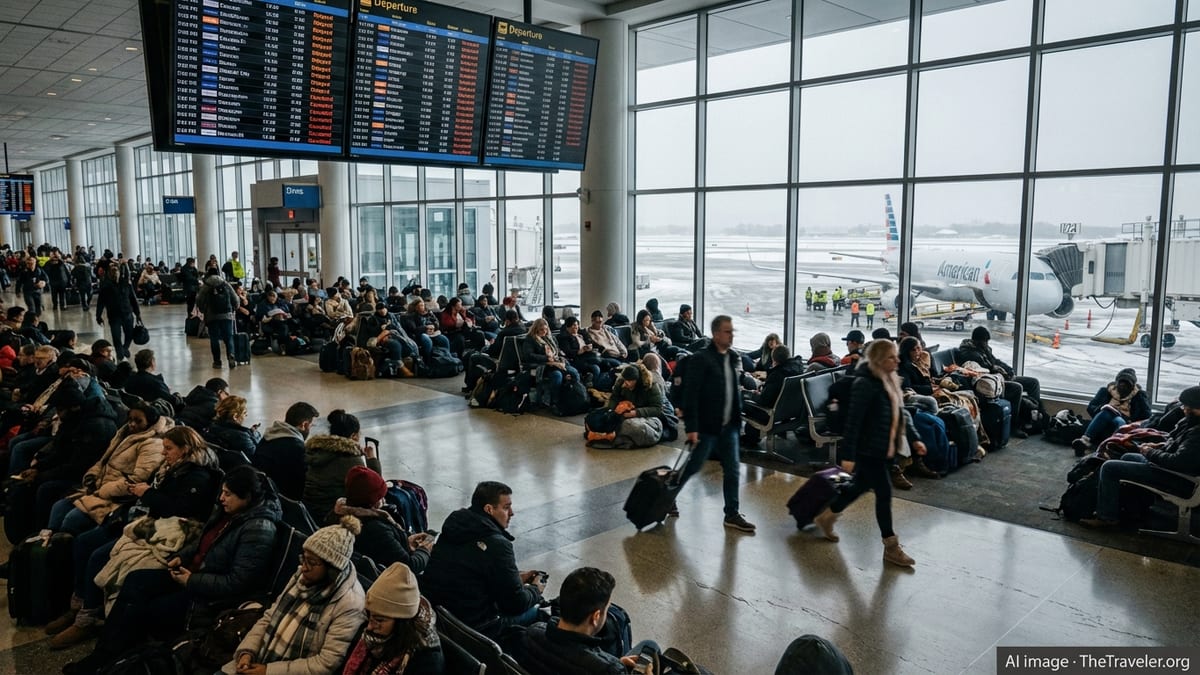
Storms, Ground Stops and a Summer of Disruption at O’Hare
Chicago O’Hare, a primary hub for both American Airlines and United Airlines, has faced some of the most intense disruption in the United States over the past two travel seasons, driven by convective weather, air-traffic constraints and heavy scheduling by multiple carriers. Industry reporting and airport statistics consistently rank O’Hare among the country’s most delay-prone major airports, with large peaks in cancellations when thunderstorms stall over the region or the Federal Aviation Administration (FAA) imposes ground stops that sharply limit arrivals and departures.
One of the most striking recent examples came on August 30, 2026, when FAA ground stops linked to thunderstorms and airspace congestion produced 1,611 delays at O’Hare in a single day, more than at any other airport worldwide according to airline industry coverage. On that day, United Airlines, which operates the largest hub at O’Hare, recorded the highest number of cancellations among U.S. carriers, and nearly half of its schedule at the airport was delayed. ([aerocrewnews.com](https://aerocrewnews.com/2026/08/31/united-leads-u-s-cancellations-after-faa-ground-stops-hammer-ohare/?utm_source=openai))
Earlier in the summer, a separate disruption wave on June 18, 2026 generated 207 cancellations and 1,218 delays across carriers at O’Hare, affecting regional operators such as SkyWest, Republic and Envoy along with mainline brands including American, Delta and United. ([airhelp.co.uk](https://www.airhelp.co.uk/flight-disruptions/chicago-ohare-cancellations-delays-18062026/?utm_source=openai)) These episodes underline how quickly operations can unravel when storms hit a tightly scheduled hub served by several global airlines.
Performance dashboards aggregating 2026 operations show that while all major carriers at O’Hare experienced elevated delay minutes, the airport’s disruption profile has been shaped heavily by the behavior of its two largest tenants, American and United. United has generally carried the highest flight volumes, but both airlines have faced similar operational pressures from weather and airspace constraints, making their response strategies a focus for travelers and analysts. ([delayatlas.com](https://delayatlas.com/airports/ord?utm_source=openai))
How American Uses Preemptive Cancellations and Rebooking Tools
In large-scale disruption events, airlines increasingly rely on proactive cancellations and automated rebooking to prevent even wider gridlock. Discussions among travelers and aviation observers during recent O’Hare ground stops describe American Airlines canceling certain flights in advance when severe weather is forecast, then rerouting passengers through alternate hubs or later departures. This approach, while frustrating for affected customers, often prevents travelers from becoming stranded at O’Hare itself and frees limited capacity for flights that are more likely to operate. ([reddit.com](https://www.reddit.com/r/americanairlines/comments/194udog?utm_source=openai))
American’s own public guidance on disrupted flights emphasizes that passengers should use the airline’s mobile app, website and airport kiosks to secure new itineraries when delays or cancellations occur, with push notifications to alert travelers of changes in real time. ([aa.com](https://www.aa.com/web/i18n/customer-service/contact-american/delayed-or-canceled-flights.html?utm_source=openai)) In practice, this means that when storms close in on Chicago and FAA restrictions begin to cascade, many customers are able to confirm alternate plans digitally without joining long lines at service desks.
The U.S. Department of Transportation’s airline cancellation and delay dashboard highlights another dimension of American’s approach. On this government-managed comparison tool, American is listed as committing to rebook passengers on its own flights at no additional cost when disruptions are within the airline’s control, alongside practices such as meal vouchers and hotel accommodation under clearly defined circumstances. ([transportation.gov](https://www.transportation.gov/airconsumer/airline-cancellation-delay-dashboard?utm_source=openai)) When combined with preemptive schedule adjustments and digital rebooking tools, these commitments create a more predictable framework for passengers navigating a chaotic day at O’Hare.
Operational analysts note that this kind of structured response can have system-wide benefits. By canceling some flights early, airlines reduce last-minute gate conflicts, crew-time violations and baggage mishandling that otherwise ripple through the network. At an airport as complex as O’Hare, where multiple airlines are competing for runway slots and gate space during peak storms, the willingness to trim schedules ahead of time can mitigate the risk of all carriers becoming overwhelmed at once. ([nomadlawyer.org](https://www.nomadlawyer.org/chicago-ohare-airport-flight-disruptions-july-2026?utm_source=openai))
Comparisons With Competitors in a Crowded Hub
American’s strategy during recent disruption cycles has unfolded against an intensely competitive backdrop at O’Hare. Publicly available reporting on airline dynamics at the airport describes an ongoing contest for gates and market share between American and hometown rival United, with both carriers eager to defend or expand their positions. ([chicagomag.com](https://www.chicagomag.com/chicago-magazine/march-2026/the-battle-of-ohare/?utm_source=openai)) That rivalry has at times spilled into public debates over scheduling levels and congestion, particularly during high-demand summer periods.
During the August 30, 2026 ground-stop event, industry coverage pointed to United as having the highest number of cancellations among U.S. carriers and the largest share of delays within its O’Hare schedule. ([aerocrewnews.com](https://aerocrewnews.com/2026/08/31/united-leads-u-s-cancellations-after-faa-ground-stops-hammer-ohare/?utm_source=openai)) While American also saw significant disruption as storms and airspace constraints rippled across the Midwest, operational tracking and anecdotal accounts suggest that a larger portion of its affected customers were rerouted via advance cancellations and app-based rebooking rather than being left to navigate the terminal with little information.
Earlier in the year, American’s concerns about crowded schedules at O’Hare were visible in its communications about FAA-led meetings on hub congestion. Reports describe the airline arguing that overscheduling by competitors contributed to delays and cancellations at the airport, while positioning its own adjustments as part of a broader effort to align capacity with what the airspace and runway system could reliably handle. ([airlinegeeks.com](https://airlinegeeks.com/2026/03/04/american-blames-united-for-scheduling-problems-at-chicago-ohare/?utm_source=openai)) In that context, American’s mix of preemptive cuts and robust customer-support tools during summer storms can be seen as an attempt to model a more sustainable approach in a constrained hub.
Independent performance data further illustrate that all airlines serving O’Hare face elevated operational risk, but also that strategies differ. Airport-level statistics for 2026 show comparable on-time percentages and cancellation rates for American and Delta, with United posting slightly higher on-time completion yet also absorbing high absolute numbers of delays due to its larger schedule. ([delayatlas.com](https://delayatlas.com/airports/ord?utm_source=openai)) Passenger-rights organizations additionally note that, regardless of which airline posts the worst numbers on a given day, clear policies on rebooking, care and compensation are increasingly the benchmarks by which travelers judge carriers during disruption.
What O’Hare Passengers Can Expect From American Going Forward
For travelers planning to pass through O’Hare in the coming months, recent disruption patterns underline the importance of both airline selection and preparation. Publicly available resources show that O’Hare remains one of the most delay-prone airports in the United States, and seasonal thunderstorms are likely to continue triggering ground stops and volume-related slowdowns during busy travel periods. ([img.airhelp.com](https://img.airhelp.com/Documents/Reports/disruption-2025/usa?utm_source=openai))
Within that environment, American appears focused on pairing proactive schedule management with clearer support commitments. Its customer-facing materials instruct passengers to enroll in flight-status notifications, monitor their trips in the app and use self-service options to rebook when irregular operations develop, reducing dependence on airport counters that quickly become overwhelmed when hundreds of flights are disrupted in a single day. ([aa.com](https://www.aa.com/web/i18n/customer-service/contact-american/delayed-or-canceled-flights.html?utm_source=openai))
For travelers, practical implications include checking weather forecasts and FAA advisories before heading to O’Hare, allowing extra connection time at the hub and familiarizing themselves with American’s policies on rebooking, refunds and care. Passenger advocacy groups stress that, even when compensation is not guaranteed due to weather-related causes, customers can often secure meal vouchers, hotel support or alternate flights if they understand what the airline has publicly pledged to provide during controllable disruptions. ([airhelp.co.uk](https://www.airhelp.co.uk/flight-disruptions/chicago-ohare-cancellations-delays-18062026/?utm_source=openai))
As O’Hare continues to grapple with heavy traffic and volatile summer weather, American’s combination of early schedule adjustments, app-driven rebooking and defined passenger-support commitments is emerging as a reference point for how large network carriers might better manage mass cancellations. The airline’s performance is not immune to the systemic challenges of one of the world’s busiest hubs, but recent disruption cycles suggest that its evolving playbook is setting expectations that competitors may increasingly be pressed to match.
U.S. DOT Airline Cancellation and Delay Dashboard
United leads U.S. cancellations after FAA ground stops at O’Hare