


More news on this day
Singapore Airlines is adding eight relief flights between Singapore and Jakarta on September 8 as Indonesia reopens its main air hub after a days-long shutdown triggered by ash from the eruption of Mount Anak Krakatau.
Get the latest news straight to your inbox!
Rapid Capacity Boost as Soekarno-Hatta Reopens
Publicly available information shows that Singapore Airlines is operating eight additional relief flights on the Singapore–Jakarta route on Tuesday, September 8, to help clear a backlog of passengers stranded by the volcanic ash disruption. The extra services are scheduled as Jakarta’s Soekarno-Hatta International Airport resumes operations following a full closure that began over the weekend.
According to published coverage, Indonesia’s Transport Ministry announced that Soekarno-Hatta and several other airports reopened early on September 8 after ash from Mount Anak Krakatau forced extensive suspensions of air traffic. Reports indicate that eight airports in western Indonesia halted operations as ash clouds drifted through key air corridors, triggering thousands of flight cancellations and delays.
Singapore Airlines had earlier cancelled or retimed multiple Jakarta services as the ash cloud spread across the Sunda Strait and into crowded airspace around the Indonesian capital. With the main hub now accepting flights again, the airline is using the additional relief services to supplement its normal schedule and to re-accommodate customers disrupted over several days.
Information from the airline’s travel advisory indicates that affected travelers are being progressively rebooked onto the next available services, including the dedicated relief flights, subject to seat availability. Customers departing either Jakarta or Singapore are being encouraged to monitor the carrier’s online flight status pages closely, as timings remain subject to operational and safety considerations.
Volcanic Ash From Mount Anak Krakatau Disrupts Regional Travel
The eruption of Mount Anak Krakatau in the Sunda Strait, located between Java and Sumatra, began intensifying in early September and quickly created a significant ash plume that moved into some of Indonesia’s busiest air routes. Media reports describe how ash was detected in the airspace around Jakarta and several regional hubs, compelling aviation authorities to suspend operations at eight airports as a safety measure.
Coverage from regional outlets notes that nearly 3,000 flights were affected over the course of the shutdown, stranding more than 300,000 passengers across the network. Soekarno-Hatta, Southeast Asia’s third-busiest airport by passenger numbers, was among the hardest hit, with domestic and international connections disrupted across multiple days.
While Anak Krakatau has a long history of intermittent activity, the current episode has drawn particular attention due to its impact on high-density air corridors linking Jakarta with other major cities in Asia and beyond. Imagery and aviation bulletins highlight ash drifting at cruising altitudes used by commercial jets, prompting route diversions and cancellations until conditions were reassessed as safe.
Reports indicate that by the morning of September 8, satellite and on-the-ground monitoring showed improved visibility and reduced ash concentration in key sectors of the Jakarta terminal area, allowing authorities to reopen airspace with ongoing surveillance. However, some airports outside the capital region remain closed or subject to restricted operations as assessments continue.
Passenger Backlog and Recovery Operations Across Carriers
With tens of thousands of travelers left in limbo, airlines across the region are mounting recovery operations to reduce the backlog. Singapore Airlines’ eight relief flights form part of a broader pattern of capacity additions and schedule adjustments by carriers serving Indonesia’s main gateways.
Published statements from several airlines show that many have resumed regular rotations to and from Jakarta while deploying extra sectors or larger aircraft where possible. Low-cost and full-service operators based in Indonesia and neighboring countries are similarly rolling out recovery plans, including options for rebooking, refunds, and travel credits for those still unable to travel as planned.
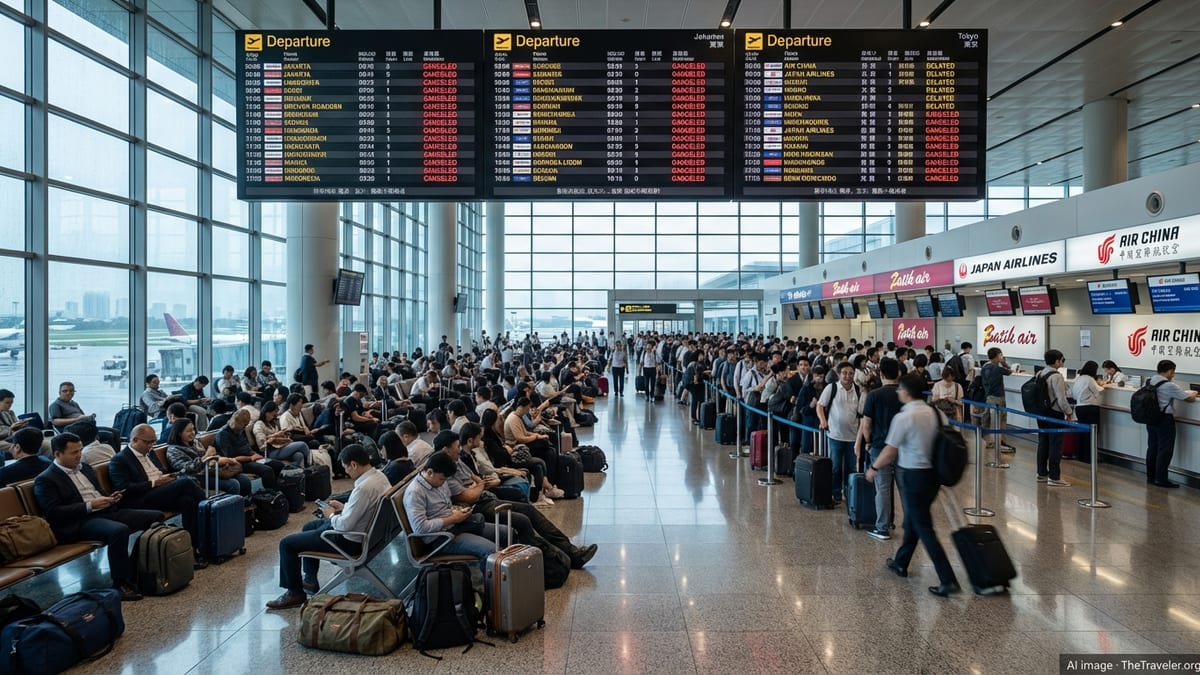
At Soekarno-Hatta, images and local reporting depict crowded terminals as passengers attempt to secure new flights following the reopening. Airport operators have been working to restart ground handling, security, and air traffic services in stages, prioritizing safety checks of runways and taxiways for any ash contamination before ramping up takeoff and landing slots.
Public advisories encourage travelers heading to or from Jakarta and other previously affected airports to stay in close contact with their airlines and to arrive early, as check-in and security queues may remain longer than usual during the recovery phase. With aircraft, crews, and passengers out of position after days of disruption, industry observers expect it may take several days before schedules fully stabilize.
What Travelers Between Singapore and Jakarta Should Expect
For travelers on the Singapore–Jakarta corridor, the additional Singapore Airlines relief flights are intended to provide more options on a route that saw widespread disruption as the volcanic ash crisis escalated. Flight status pages and scheduling data indicate that some services remain retimed from their original slots, while others are operating as extra frequencies dedicated to carrying previously stranded customers.
Travel advisories recommend that passengers holding tickets for travel on or around September 6 to 8 review the latest information on their booking platforms. Many carriers, including Singapore Airlines, are allowing eligible customers to rebook without additional change fees within specified travel windows, subject to seat availability in the same cabin.
Travelers connecting through Singapore’s Changi Airport may also experience knock-on effects as aircraft returning from Jakarta re-enter the network. Some connecting itineraries could face shortened or extended layovers while airlines work to synchronize disrupted schedules. Passengers are being advised to verify minimum connection times and to keep contact information updated so that carriers can send real-time notifications of any further adjustments.
Industry analysts note that the Singapore–Jakarta route is one of Southeast Asia’s busiest international city pairs, serving a mix of business, leisure, and migrant worker traffic. The temporary shutdown of Jakarta’s main gateway underscored the importance of contingency planning for both airlines and travelers on routes that operate at or near full capacity on many days of the year.
Ongoing Monitoring of Ash Conditions and Aviation Safety
Although operations at Soekarno-Hatta and several other Indonesian airports have resumed, aviation authorities and airlines are continuing to monitor Mount Anak Krakatau closely. Volcanic activity can change rapidly, and ash clouds may shift with prevailing winds, which can occasionally require sudden route or schedule adjustments even after airports reopen.
Information from meteorological agencies and volcanic ash advisory centers is being incorporated into flight planning to avoid areas with elevated ash concentrations. Airlines typically adjust flight levels, routing, or departure times when necessary to maintain safe separation from ash clouds, which can damage aircraft engines and systems if encountered in flight.
Travel industry observers suggest that passengers planning trips to or within Indonesia in the coming days should build some flexibility into their itineraries, including allowing additional connection time and considering travel insurance that covers weather and natural events. While current assessments support the reopening of major hubs such as Jakarta, the broader situation around Anak Krakatau remains dynamic.
For now, the restart of flights at Jakarta’s primary gateway and the deployment of relief services by carriers such as Singapore Airlines signal the beginning of a gradual recovery for one of Southeast Asia’s most important air travel markets, even as the region stays alert to further changes in volcanic activity.
Channel NewsAsia: SIA to add 8 relief flights between Singapore and Jakarta
Channel NewsAsia: Jakarta airport and others reopen after volcanic ash crisis
Singapore Airlines: Advisory on flights impacted by Mount Anak Krakatau
The Jakarta Post: Jakarta airport and others reopen after volcanic ash crisis