


More news on this day
American Airlines and Google have unveiled what publicly available information describes as the largest sustainable aviation fuel certificates agreement between an airline and a single corporate customer, committing to 35 million gallons of cleaner-burning fuel over three years and setting a new benchmark for how tech and travel giants can collaborate on aviation decarbonization.
Get the latest news straight to your inbox!
A Record Sustainable Aviation Fuel Pact
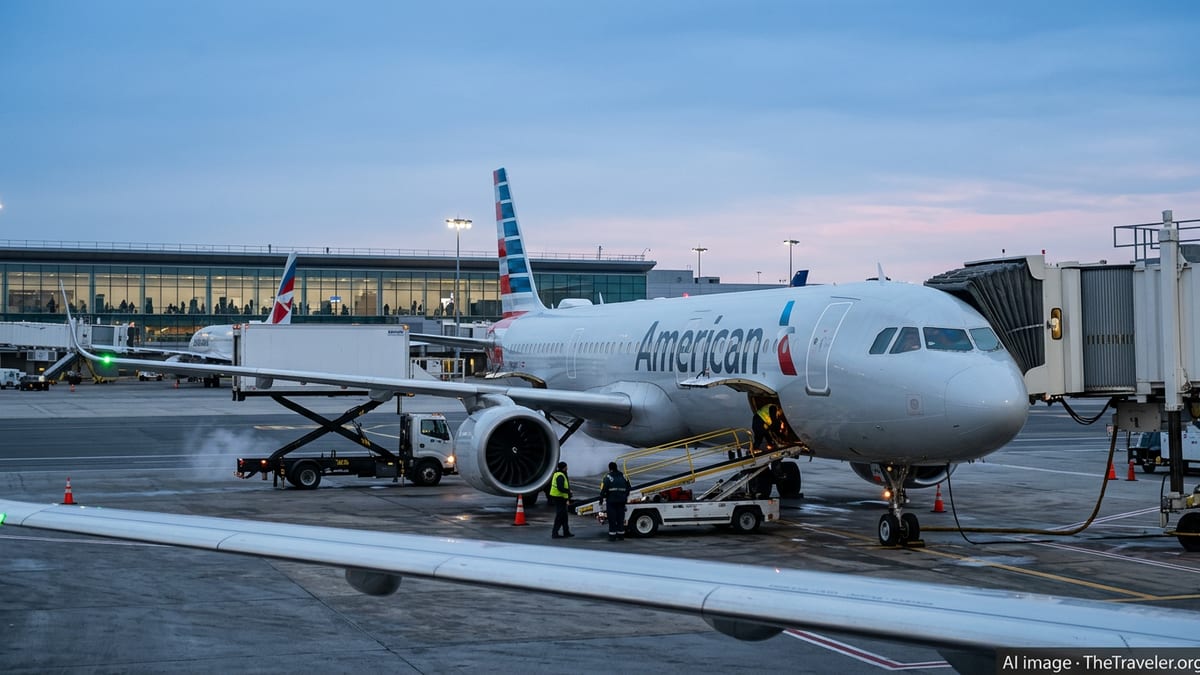
According to company statements and industry reporting, the agreement, announced from Fort Worth in early June 2026, will unlock 35 million gallons of sustainable aviation fuel, or SAF, to support American Airlines operations while enabling Google to claim the associated emissions reductions through certificates. The volume represents one of the most ambitious single corporate SAF commitments yet seen in commercial aviation.
Publicly available information indicates the deal is structured around sustainable aviation fuel certificates, often referred to as SAFc. Under this model, American will physically purchase and use SAF in its operations, while Google receives the emissions reduction attributes to address the climate impact of its employees’ business travel. This book-and-claim approach is increasingly viewed by airlines and large corporate buyers as a practical way to stimulate demand in a still-nascent market.
American describes the agreement as the largest publicly announced SAFc pact between an airline and a single corporate customer. The airline and the technology company state that, over the three-year term, the volumes involved are expected to avoid nearly 300,000 metric tons of carbon dioxide equivalent compared with conventional jet fuel, assuming lifecycle emissions savings in line with current industry methodologies.
The fuel under the new arrangement will be delivered into American’s network at Chicago O’Hare International Airport, one of the carrier’s major hubs. Reports indicate the SAF will be produced from waste-based feedstocks, including used cooking oil, providing a pathway to lower-carbon fuel that can be used as a drop-in replacement within existing airport infrastructure.
How the Deal Positions American Ahead of Rivals
The announcement builds on several years of SAF activity at American, but it significantly scales up the airline’s access to low-carbon fuel compared with recent usage levels. Sustainability disclosures for 2024 show American used roughly 2.9 million gallons of SAF in that year, a fraction of its overall fuel burn but already among the larger volumes reported by a U.S. carrier. The new 35-million-gallon commitment over three years would represent a step change if fully realized, multiplying the airline’s SAF use several times over relative to that baseline.
Industry comparisons suggest this places American among the front-runners in translating headline net zero targets into contracted supply. Major U.S. competitors have announced a series of individual offtake agreements and long-term SAF targets, but few have publicized a single corporate demand partnership on this scale tied explicitly to one customer’s business-travel emissions. The prominence of Google as a global technology brand further underscores the signaling effect to the wider market.
American has previously signed multi-year SAF purchase agreements with producers such as Gevo, adding up to hundreds of millions of gallons of prospective supply over time. Analysts note that those offtake deals are generally designed to secure future production capacity as new plants come online, whereas the latest American–Google pact is framed around both physical deliveries to a key hub and the monetization of environmental attributes through certificates.
When measured against total jet fuel consumption, even tens of millions of gallons remain modest. U.S. government data show that domestic airlines collectively burn well over a billion gallons of fuel each month in normal operating conditions. However, within the emerging SAF sector, American’s new commitment is described by industry observers as outsized, helping to push the airline toward the leading edge of deployment relative to many peers.
Chicago, Valero and the Policy Signal Behind the Fuel
A key feature of the agreement is its focus on Chicago O’Hare, where American will take delivery of the physical fuel through existing pipelines and storage systems. Public material on the deal links the expanded SAF access in Illinois to a state-level tax credit that has improved the economics of blending cleaner fuel at major airports, illustrating how supportive policy can unlock larger volumes.
To underpin the new supply, American has entered into a long-term offtake arrangement with Valero Marketing and Supply Company. Valero’s renewable fuels operations have recently added significant capacity for sustainable jet fuel production, and the tie-up with a top U.S. carrier is being interpreted by market watchers as a sign that earlier refinery investments are now translating into sizable commercial contracts.
The SAF itself will be produced from waste and residue feedstocks, such as used cooking oil and other non-virgin materials, according to available technical descriptions. These pathways are generally associated with substantial lifecycle emissions savings compared with traditional petroleum-based jet fuel, while also avoiding some of the land-use concerns that can arise with crop-based biofuels.
Industry analysts point out that Chicago’s status as a major hub for both American and other large carriers means SAF deployment there has an outsized signaling effect. By moving substantial volumes through O’Hare, American is demonstrating that lower-carbon fuel can be integrated at scale at complex, high-traffic airports rather than limited to niche or demonstration routes.
Google’s Role and the Rise of SAF Certificates
On the demand side, Google’s participation reflects a growing trend in which large corporate travel buyers are seeking credible ways to address emissions from employee flights. Rather than relying solely on traditional carbon offsets, companies are increasingly turning to SAF certificates that are linked to verifiable fuel production and use, even if it occurs on different routes than those flown by their own travelers.
Public explanations of the arrangement state that Google will claim the environmental benefits of the SAF through a registry designed for transparent book-and-claim accounting. This type of system allows fuel producers, airlines and corporate buyers to match SAF volumes and emissions reductions digitally, enabling companies that do not control aircraft or fuel supply chains to play a direct role in scaling up low-carbon aviation fuel.
The tech company has also collaborated with American on other climate-related initiatives, including trials using artificial intelligence tools to reroute flights in ways that avoid persistent contrails, which research suggests are a key contributor to aviation’s overall warming impact. Together, those projects indicate a broader partnership that spans both fuel-related and operational levers for reducing the climate footprint of flying.
Travel-management specialists say arrangements such as the American–Google pact could become a template for other large corporate buyers that want more direct visibility into the emissions impact of their business travel. As more companies disclose aviation-related emissions as part of their climate reporting, practical mechanisms for purchasing and accounting for SAF use are expected to draw increased interest.
What It Means for Travelers and the Wider SAF Market
For passengers, the new deal is unlikely to bring visible changes at the cabin level in the near term. SAF is engineered as a drop-in replacement for conventional jet fuel, meaning it can be blended and used without modifying aircraft or engines. Flights operating on routes supplied from Chicago may run partly on SAF blends without any obvious difference in scheduling or onboard experience.
The impact is instead felt in the emissions profile of the airline’s network and in the broader investment case for producers. By guaranteeing demand for 35 million gallons over three years, American and Google are providing a revenue signal that can help justify additional production capacity at facilities capable of making SAF from waste-based feedstocks. Industry roadmaps from governments and trade bodies have consistently highlighted such demand guarantees as critical to unlocking the billions of dollars in investment required.
Experts caution that even record agreements of this kind represent only an early step toward the levels of sustainable fuel needed to align aviation with global climate goals. Recent governmental progress reports note that SAF still accounts for well under one percent of total jet fuel consumption worldwide, and that supply must ramp up sharply over the next decade if airlines are to meet their net zero pledges.
Nonetheless, observers see the American–Google partnership as indicative of a shift from small pilot programs to contracts on a scale meaningful enough to influence refinery operations, state-level tax policy and corporate travel strategies. As other airlines and multinational companies watch how this high-profile collaboration plays out, the deal’s real legacy may lie in how it accelerates the normalization of sustainable aviation fuel as a standard part of commercial flying rather than a niche experiment.