


More news on this day
A small cluster of June 2026 flight cancellations involving Austrian Airlines and airBaltic at Vienna International Airport has rippled far beyond Austria’s capital, with schedule data and flight-tracking tools indicating knock-on disruption across more than 50 European and intercontinental routes as the summer travel rush intensifies.
Get the latest news straight to your inbox!
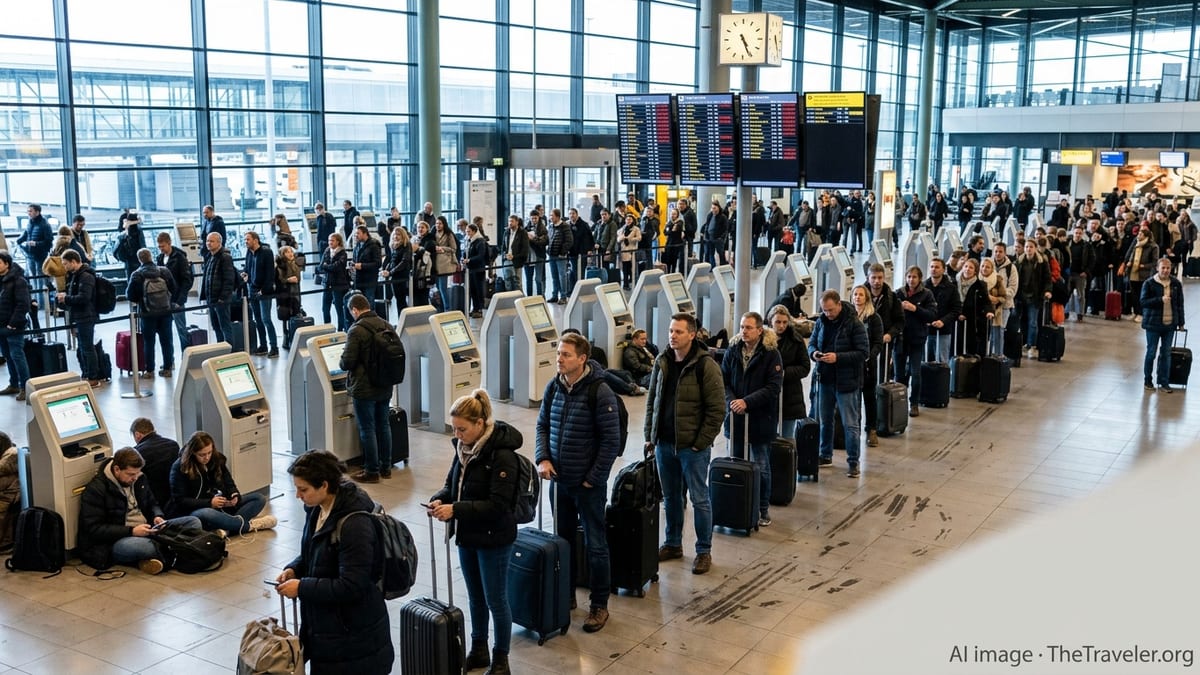
Four Scrubbed Departures Disrupt Vienna’s Hub Operations
Publicly available flight-status information for early June 2026 shows at least four cancellations involving Austrian Airlines and airBaltic departures at Vienna International Airport, affecting connections to major European hubs and regional capitals. These scrubbed flights, some of them scheduled within tightly banked departure waves, removed key aircraft and crew rotations that normally feed Vienna’s role as a transfer hub.
The cancellations include a mix of Austrian-operated services on high-frequency business routes and airBaltic-operated flights under its Vienna schedule. One example noted in online timetables is an Austrian service between Vienna and Zurich in the morning peak period, shown as canceled on 8 June, disrupting a corridor that typically channels onward traffic into Switzerland and beyond. Separately, airBaltic flights linking Vienna with Riga fall within the same early June window, with schedules indicating operations up to 8 June and isolated irregularities around that date.
Vienna International Airport is Austria’s largest aviation hub and the home base of Austrian Airlines, with numerous European cities served multiple times per day under closely timed “banks” of arrivals and departures. In that context, even a handful of canceled services inside a dense wave pattern can quickly displace passengers and aircraft, particularly when seat loads are already high at the start of the peak summer season.
June’s disruption comes as Vienna is already adjusting to a shifting airline mix. The withdrawal of some low-cost operations earlier in the year and the continued expansion of Austrian’s own network have concentrated more connecting activity onto the flag carrier and a smaller group of partners, heightening the impact when irregular operations occur.
Cascading Delays Across 50-plus European and Long-haul Routes
While four individual cancellations may appear modest in isolation, operational data and flight-tracking snapshots from the same period point to a far wider impact across the Vienna network. A pattern of compounding delays has been visible on departures to cities such as Frankfurt, Munich, Zurich and key Eastern European destinations, along with selected long-haul flights departing several hours behind schedule.
Reports compiled from public flight-status tools indicate that aircraft originally scheduled to operate the canceled or heavily delayed services often returned late to Vienna or were reallocated to protect other high-demand routes. This form of “aircraft swapping” is a common airline tactic to keep the core of the timetable moving, but it can push punctuality problems further along the rotation, especially when turn times are already tight.
Across a single day of disruption, those rolling delays can touch dozens of flights. In Vienna’s case, the early June irregularities appear to have translated into disruptions on well over 50 individual routes, as late-arriving aircraft and crews struggled to catch up to the published timetable. Short-haul flights are particularly prone to such issues, since each aircraft may be scheduled to operate multiple legs in quick succession.
Travelers connecting through Vienna on multi-leg itineraries are especially exposed. Missed connections can trigger same-day or overnight rebookings, with new routings through alliance hubs such as Frankfurt or Zurich, or via partner carriers, further dispersing the original disruption across the wider European network.
Passenger Impact at the Start of the Peak Summer Season
The timing of the cancellations and resulting delays is especially challenging for passengers. Early June effectively marks the build-up to Europe’s peak summer travel season, when load factors rise and spare capacity to absorb disrupted travelers becomes increasingly scarce. Even a small cluster of canceled departures can therefore translate into long lines at service desks and limited options for same-day rebooking.
Publicly available consumer-rights guidance notes that, under EU261 rules, travelers facing cancellations or significant delays on flights departing from Vienna may be entitled to assistance such as meals, hotel accommodation and rerouting, and in some circumstances financial compensation. Eligibility depends on the length of delay, the flight distance and the cause of the disruption, factors that typically vary on a flight-by-flight basis.
For many passengers, the more immediate impact is the uncertainty around onward connections and time-sensitive plans. Missed business meetings, lost vacation days and disrupted family visits are common consequences when tight connections unravel. Social media posts and traveler forums in recent months have highlighted similar experiences in Vienna, with some passengers describing sprinting between gates to make short connections and others reporting baggage arriving a day or two after they did when rotations fell behind schedule.
Consumer advocates frequently encourage travelers using large hubs such as Vienna to build in slightly longer connection times where possible, particularly during the busy summer period. While this approach cannot eliminate the risk of disruption, it can help absorb moderate delays and reduce the chance that a single late arrival cascades into a missed onward flight.
Operational Strain at Vienna’s Strategic Transfer Hub
The June irregularities also underscore the operational pressures facing Vienna as a strategic transfer point between Western Europe, Central and Eastern Europe and selected long-haul markets. Austrian Airlines operates the majority of traffic at the airport, and its tightly choreographed wave structure relies on aircraft, crews and ground services all remaining closely aligned with the schedule.
Infrastructure changes completed in recent years, including upgraded security screening and baggage systems, were designed to smooth passenger flows and improve resilience during periods of stress. However, the very nature of hub operations means that disruptions affecting a few key flights can still reverberate across the network. When knock-on effects from weather, technical checks, crew availability or air traffic control constraints intersect with high demand, the room for recovery inside the timetable narrows.
Airlines serving Vienna have been fine-tuning their summer 2026 schedules against this backdrop, with some carriers consolidating routes while others add capacity on established city pairs. Austrian itself continues to grow its reach, while regional partners such as airBaltic slot Vienna into broader networks that connect the Baltic region, Central Europe and beyond. This interconnected structure amplifies both the benefits of a well-run hub and the disruption when irregular operations strike.
Industry analysts reviewing publicly available data note that such episodes are not unique to Vienna and have been seen across European hubs where dense wave structures meet rising post-pandemic demand. For airlines, each incident becomes a test of contingency planning and recovery strategies; for airports, it renews attention on staffing levels, turnaround processes and real-time coordination between carriers, ground handlers and air traffic control.
What Travelers Can Do Amid Ongoing Irregular Operations
For travelers planning journeys through Vienna in June and the wider summer season, recent disruptions offer several practical lessons. Monitoring flight status regularly, both in airline apps and independent tracking tools, can provide early warning of schedule changes. When cancellations or significant delays emerge, promptly engaging with official rebooking channels often yields more options than waiting until reaching the airport.
Travel guidance commonly suggests that passengers with critical same-day connections or events consider slightly longer layovers at busy hubs and avoid routing the tightest connections through airports known for heavy transfer traffic. In Vienna’s case, many itineraries marketed by airlines already account for minimum connection times, but individual comfort levels may justify adding extra buffer, particularly when traveling with checked baggage or young children.
Travel insurance policies and credit card protections can also play a role, potentially covering additional expenses such as hotels and meals that fall outside the scope of mandatory airline support. However, coverage terms vary widely, and travelers are encouraged to review policy details well before departure so they understand what documentation they may need if flights are disrupted.
As Austrian Airlines, airBaltic and other carriers refine their summer 2026 operations, further schedule adjustments are possible. For now, the early June cancellations and the ensuing web of delays highlight how even a small number of irregular flights at a major transfer hub like Vienna can ripple outward across dozens of routes, complicating travel plans for passengers far beyond Austria’s borders.