


More news on this day
American Airlines is betting that U.S. demand for Europe will keep climbing into 2027, unveiling new summer-season flights from Philadelphia to Vienna, Porto and Reykjavik that highlight how secondary cities and next-generation narrowbody jets are reshaping the transatlantic map.
Get the latest news straight to your inbox!
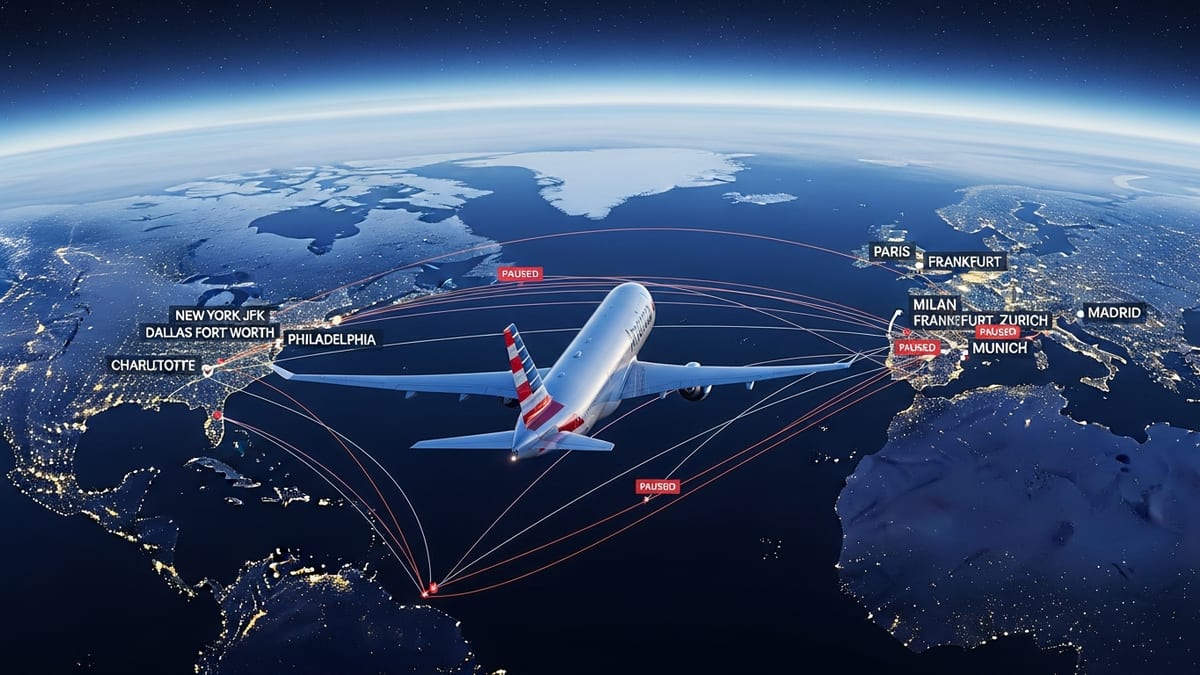
Details of American’s 2027 European additions
According to American’s route updates and booking pages, the carrier plans to launch nonstop summer service from Philadelphia International Airport to Porto, Portugal; Reykjavik, Iceland; and Vienna, Austria in 2027. Publicly available schedules indicate all three routes are designed as seasonal links tied to peak transatlantic demand from late spring into summer, operating once daily from American’s Philadelphia hub.
Business travel publications tracking the rollout report that Porto is scheduled to begin on March 28, 2027, followed by Vienna on May 6 and Reykjavik on May 27. Coverage also notes that the Reykjavik route will mark American’s first return to Iceland’s capital since 2019, underlining how strong leisure interest in the destination has become in the years since travel restrictions were lifted.
In its own route-marketing materials, American promotes the new flights under a broader “New Europe flights for 2027” banner, positioning Philadelphia as the launch point for all three destinations. The carrier highlights the ability for travelers from across the United States to connect through Philadelphia onto the new routes via its domestic network.
Information released through corporate channels and airport announcements further indicates that American will be the only U.S. airline operating nonstop service to Vienna, giving the carrier a distinct foothold in Austria’s capital as it expands a Central European portfolio that already includes Prague and Budapest.
Philadelphia’s growing role as a transatlantic gateway
The 2027 additions reinforce Philadelphia’s position as American’s primary connecting point for Europe. Airport communications describe more than 20 European destinations already accessible from Philadelphia on American and its partners, with Porto, Reykjavik and Vienna increasing that number and broadening geographic reach into Southern, Central and Northern Europe in a single move.
Local airport coverage notes that the new routes arrive as Philadelphia continues investing hundreds of millions of dollars in terminal upgrades and passenger facilities, including premium lounges. American’s own announcements emphasize the carrier’s recently opened Flagship-branded lounge at Philadelphia, presenting it as an important part of the experience for travelers using the new European flights.
For U.S. travelers outside the Northeast, the expansion offers additional one-stop options to Europe via Philadelphia, complementing American’s transatlantic flights from hubs such as Charlotte, Dallas–Fort Worth and New York–JFK. Travel industry analyses point out that by concentrating more European flying at Philadelphia, American can funnel demand from a wide domestic catchment onto a streamlined transatlantic bank of departures.
Regional commentary around the latest announcement also underscores the competitive dimension. Philadelphia has historically been a strong transatlantic gateway for rival alliances through carriers such as Lufthansa, and incentives offered by the city for new international routes are cited in local reporting as one factor encouraging American to keep adding European destinations from the airport.
How Vienna, Porto and Reykjavik fit changing U.S. demand
Travel analysts note that the choice of Vienna, Porto and Reykjavik reflects broader shifts in how Americans travel to Europe. All three cities sit slightly outside the traditional “big three” of London, Paris and Rome, yet have grown markedly in popularity for repeat visitors and travelers seeking more niche experiences.
Industry coverage describes Vienna as both a city-break destination and a gateway into Central Europe, with onward links by rail and air to cities including Budapest, Prague and Bratislava. For American, exclusive U.S. carrier status on the route could help capture passengers who might otherwise connect via European partners or rival hubs.
Porto’s appeal is closely tied to Northern Portugal’s wine country and coastal scenery. Reports from airline and tourism outlets highlight that American already serves Lisbon year-round, positioning Porto as a complementary option rather than a replacement. This pairing gives U.S. travelers more flexibility to arrive in one Portuguese city and depart from the other using open-jaw itineraries.
Reykjavik, meanwhile, has become a well-established launchpad for trips built around geothermal spas, outdoor adventure and Northern Lights tourism. Aviation and travel trade publications point out that the once-niche Iceland market now supports multiple U.S. and European carriers, and American’s decision to reenter the city aligns with renewed interest in shorter transatlantic trips to high-latitude destinations.
Narrowbody long-haul and the A321XLR strategy
A key ingredient in American’s 2027 European expansion is aircraft choice. Aviation industry reporting indicates that American intends to deploy Airbus A321XLR and A321neo aircraft on several of its new transatlantic routes from Philadelphia, including some of the flights to Vienna and Porto. These single-aisle jets offer long range with lower seat counts than widebody aircraft, making thinner, seasonal routes more economically viable.
Analysts quoted across aviation trade coverage describe the A321XLR as a tool for unlocking new “long and thin” markets between the United States and Europe, where demand is sufficient for daily service in summer but may not support larger twin-aisle jets. By using a narrowbody configured with lie-flat business-class seats and modern cabins, American can aim to keep unit costs in check while still marketing a premium product.
Industry data referenced in recent articles suggests that American’s wider A321XLR plan encompasses multiple European destinations beyond Vienna, Porto and Reykjavik, in some cases replacing or supplementing widebody flying on existing routes. The Philadelphia additions are therefore being interpreted as part of a broader fleet and network strategy that leans on flexible single-aisle aircraft to sustain growth in competitive transatlantic markets.
Commentary from route-planning experts also points out that single-aisle long-haul allows airlines to extend seasonal schedules at the edges of summer, starting service earlier in spring and continuing later into autumn when demand softens. The scheduled March start for Porto’s 2027 flying, ahead of peak summer, aligns with that pattern.
Competitive stakes in the transatlantic market
American’s announcement arrives amid a burst of transatlantic expansion from U.S. competitors. In the days surrounding the 2027 schedule reveal, United Airlines detailed its own slate of new European routes, heavily focused on Mediterranean and secondary cities such as Ibiza, Valencia, Marseille and Terceira. Travel and business media have framed the parallel announcements as part of an ongoing contest among major U.S. carriers to lock in share on emerging leisure-heavy European routes.
Corporate filings and alliance overviews show that American continues to rely on its joint business with British Airways, Iberia, Aer Lingus and Finnair to cover key European hubs, while using its own metal for point-to-point services from U.S. gateways like Philadelphia. The move into Vienna, Porto and Reykjavik adds three more non-hub destinations where American can build local recognition and feed partner networks on the European side.
Business travel outlets suggest that corporate demand alone is unlikely to sustain these new routes, especially in Reykjavik and Porto. Instead, analysts expect a continued tilt toward leisure and blended “bleisure” itineraries, with price-sensitive travelers booking far in advance for peak-season departures. For American and its rivals, the race now centers on calibrating capacity so that these niche European routes remain viable if economic conditions soften.
For U.S.-based travelers, the practical impact of American’s 2027 expansion will be more choice. Direct access to Vienna, Porto and Reykjavik from Philadelphia opens new one-stop possibilities from many U.S. cities, while reinforcing a broader industry trend toward serving a wider range of European destinations beyond the traditional capitals.
American Airlines: Summer gets sweeter with new global routes
American Airlines: New Europe flights for 2027
Business Travel News: American to add three new international destinations in summer 2027
The Points Guy: American Airlines adds 3 new European destinations