


Hugh Taylor Birch State Park is Fort Lauderdale’s green escape, a surprisingly wild slice of coastal forest tucked between the Atlantic Ocean and the Intracoastal Waterway. For visitors who want to trade high-rises and traffic for shaded loops, tropical hammock trails, and close-up wildlife encounters, this park offers some of the most rewarding walking, running, and biking options in South Florida, all within a few minutes of the beach.
Get the latest updates straight to your inbox!
Getting Oriented: A Shady Oasis in the Middle of Fort Lauderdale
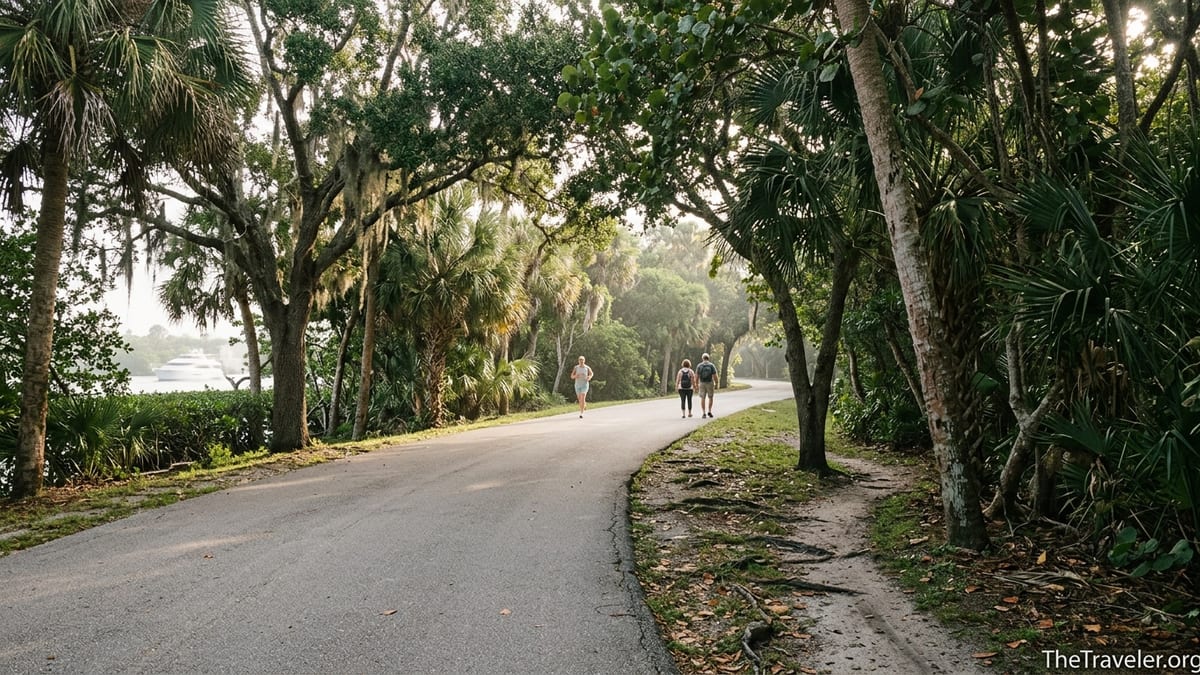
Hugh Taylor Birch State Park sits between A1A and the Intracoastal in Fort Lauderdale, and feels worlds away from the busy strip just outside its gates. The park protects rare maritime tropical hardwood hammock, mangrove forest, and a coastal dune lake, so most of the interior trails are shaded by a dense green canopy. On a typical humid South Florida afternoon, the difference in temperature between the open beach and the hammock trails can feel dramatic, which is one reason the park is so popular with local walkers and runners.
Florida state parks are generally open from 8 a.m. to sundown every day of the year, and Hugh Taylor Birch follows that schedule, which gives you a generous window to plan early-morning or late-afternoon outings when the light is soft and the heat more manageable. Day-use entry for a vehicle with up to eight people is typically a few dollars, and many locals use the park as a full-day base: they park once, walk the shaded trails, then cross over to the beach on foot for a swim before returning to the hammock for a cooler stroll back to the car.
The park covers roughly 180 acres, with about 60 to 80 acres of mature tropical hammock and more than 50 acres of mangrove estuary. That compact size makes it easy to sample multiple loops in a single visit. You can walk a shady nature trail, follow the paved loop road under the trees, then detour to the lagoon or picnic areas without needing to drive between trailheads. For first-timers, stopping briefly at the entrance station and asking for a trail map is worthwhile; rangers are used to orienting visitors who want the shadiest options.
The Two-Mile Loop Road: Walking, Running and Biking Under the Canopy
The backbone of Hugh Taylor Birch State Park is its approximate two-mile loop road, a paved drive that feels more like a shaded parkway than a city street. Visitors walk it, run it, push strollers, and ride bikes along it, often at the same time. Large live oaks, palms, and sea grapes arch over long stretches of pavement, creating a green tunnel effect. This is the route many local runners choose for regular workouts because it offers a predictable distance, reliable shade, and a softer microclimate than nearby sidewalks along A1A.
For walkers, one full circuit at a leisurely pace usually takes 35 to 45 minutes, depending on how often you stop to check out overlooks of the Intracoastal or read interpretive signs about the hammock. Runners often treat the loop as an informal track, combining a relaxed warm-up lap with one or two faster intervals. Casual cyclists and families with kids take advantage of the gentle grades and the almost entirely flat surface; standard city bikes or rental cruisers handle the loop easily, so you do not need a mountain bike or special gear.
In practical terms, this shaded loop is ideal on hot days when you want to stay moving but do not want to commit to a longer backcountry hike. A common pattern among locals is to arrive by 8 a.m., run or briskly walk two laps of the loop road for about four miles total, then cool down with a short detour into one of the narrower nature trails before the sun climbs overhead. Because the road is used by both cars and people, it is smart to stay to the edge, run facing traffic when possible, and keep headphones low so you can hear approaching vehicles and cyclists.
Coastal Hammock Trail & Mid Trail: Exploring the Tropical Hardwood Forest
The most distinctive walking in Hugh Taylor Birch State Park lies away from the road, inside the tropical hardwood hammock. The Coastal Hammock Trail in the southeastern corner of the park is a short, roughly quarter-mile interpretive loop through one of the last designated maritime tropical hardwood hammocks in Broward County. Underfoot, the trail is compacted soil and leaf litter, with occasional exposed roots; overhead, a canopy of sea grapes, gumbo limbo, stopper, and other native trees filters the light into a cool, green glow.
This loop is intentionally designed as a slow, educational walk rather than a workout. Interpretive signs along the route point out native plants and explain how the hammock ecosystem functions as a buffer between ocean and city. Families with curious kids often use this loop as an outdoor classroom, stopping at each sign, while retirees and casual walkers appreciate that it can be completed in about 20 minutes at a relaxed pace. Because of its short distance and good shade, this is an excellent option during the warmer middle of the day if you move slowly and bring water.
Mid Trail, another interior path, offers a slightly different experience. It passes through a mix of native vegetation and ornamental plants originally favored by Hugh Taylor Birch, giving you a sense of both the natural and cultivated history of the property. The park now augments this with an audio tour that you can follow from your phone, adding context about the geology, early 20th-century development of Fort Lauderdale, and the five natural communities preserved inside the park boundaries. Combined with sections of the loop road, Mid Trail creates an easy, shaded circuit that still leaves time for the beach or lagoon.
Neither the Coastal Hammock Trail nor Mid Trail are long enough on their own to be considered half-day hikes, but that is part of their appeal. Visitors unaccustomed to Florida’s summer humidity can sample the hammock for 30 to 40 minutes, reassess how they feel in the heat and shade, then decide whether to continue along other paths or return to the car. Trail surfaces are generally flat, but closed-toe shoes are better than sandals because of roots, pine needles, and the occasional patch of uneven limestone.
Wildlife Watching: From Gopher Tortoises to Migratory Birds
For such an urban park, Hugh Taylor Birch supports impressive wildlife. It is listed on the Great Florida Birding Trail and has a bird list of well over 200 species, including migratory warblers in spring and fall and occasional Caribbean vagrants. Early morning along the hammock edges is one of the best times to see and hear birds: you might spot an osprey fishing in the Intracoastal, a great blue heron in the lagoon, or gray catbirds, red-bellied woodpeckers, and northern cardinals moving through the understory.
On the ground, patient walkers often see gopher tortoises grazing near sunny openings and raccoons investigating picnic areas at quieter times of day. Interdunal wetlands and mangrove edges provide habitat for crabs and small fish, which in turn attract wading birds like snowy egrets and tricolored herons. In summer, you are likely to encounter a variety of lizards along the trails, from native anoles to larger invasive species. Most wildlife keeps its distance if you move calmly and give animals space. Feeding any animal, even friendly-looking raccoons or squirrels, is prohibited and can alter their natural behavior.
The park occasionally offers live animal presentations and ranger-led walks on Friday and Saturday mornings, which are good introductions for families or first-time visitors to South Florida ecosystems. On themed weekends, rangers might focus on the hardwood hammock one week, the coastal dune lake another, or the mangrove forest later in the month. Joining one of these walks is a low-pressure way to learn how to spot signs of wildlife on your own, such as tortoise burrow entrances in sandy soils or the distinctive tracks of shorebirds along the lagoon’s edge.
Because this is Florida, it is realistic to expect encounters with biting insects and, in some wetter periods, to be aware of the possibility of unseen alligators in or near interior waters. Swimming is not permitted in the lake or mangrove channels, and visitors are advised to keep a respectful distance from the water’s edge, especially at dawn and dusk, when wildlife is more active. Sticking to designated trails and keeping children close greatly reduces any risk while still allowing for memorable wildlife sightings.
Heat, Humidity and Mosquitoes: Managing Florida’s Elements
South Florida’s climate is both a blessing and a challenge. The same warmth that allows lush hammock vegetation year-round can quickly exhaust visitors unused to heat and humidity. From roughly May through October, temperatures frequently rise into the upper 80s and 90s Fahrenheit, and humidity can make it feel hotter. Even in cooler months, midday sun can be intense. The shaded loops at Hugh Taylor Birch significantly reduce direct sun exposure, but they do not eliminate the humidity, so planning around the climate is key.
Mosquitoes and no-see-ums are highly seasonal, with the worst outbreaks usually tied to the rainy season and recent weather. After a period of heavy afternoon thunderstorms, interior areas near mangroves and standing water can be buggy at dusk and early morning. Locals typically apply insect repellent containing DEET or picaridin before entering the hammock, especially in warmer months. Lightweight, breathable long sleeves and pants, similar to what you might wear on a summer canoe trip, can also make a big difference on more humid or buggy days.
Heat management is largely about timing, water, and realistic distance goals. A four-mile run in the park’s shaded loop feels very different at 8 a.m. in January than at 2 p.m. in July. Visitors coming from cooler climates often underestimate how quickly they can become dehydrated; carrying a refillable bottle and taking small sips every 10 to 15 minutes is far better than waiting until you feel thirsty. Sunglasses and a hat still help, even in the hammock, because you will likely spend some time in open areas near the Intracoastal, parking lots, or beach access points.
After storms, parts of the park, particularly low-lying sections around the lake, may be temporarily flooded or muddy. That is normal for coastal environments. Closed-toe footwear that you do not mind getting damp is more practical than fashion sneakers or beach flip-flops. If rain is in the forecast, it is wise to check conditions with the ranger station when you arrive; they can tell you which trails are driest and where mosquitoes have been heaviest in recent days.
Best Times of Day and Seasons for Walking, Running and Biking
For comfort, the best times of day to explore Hugh Taylor Birch State Park are just after opening in the morning and the two to three hours before sundown. In summer, many local runners and walkers aim to start between 8 and 9 a.m., when the air is still relatively cool compared to midday and bird activity is high. By late afternoon, breezes from the ocean and Intracoastal often pick up, making the shaded sections of the loop road and hammock trails feel more pleasant again.
Midday outings can work if you adjust expectations. Instead of a long run or multi-lap walk, consider a short exploratory loop on Coastal Hammock Trail or a slow stroll to the lagoon overlook followed by a picnic at one of the shaded tables. Families with young children often plan around nap schedules, using the cooler early morning for walking or biking and reserving the hottest hours for beach time, indoor breaks back at a nearby hotel, or shaded picnics under the trees.
In terms of seasons, winter and early spring are the most comfortable months for sustained activity. From roughly December through March, daytime highs are often in the 70s, humidity is lower, and mosquitoes are less intense, which makes longer runs and back-to-back loops far more enjoyable. Shoulder seasons like late October and April can be excellent too, though temperature and insect levels fluctuate from week to week. Summer offers longer daylight and incredibly lush vegetation, but demands earlier start times, lighter clothing, and a conservative pace.
Whatever the season, arriving with a simple plan helps. One practical approach is to commit to a single loop of the road first. Once you finish, reassess how you feel: if the temperature, humidity, and insects all feel manageable, you can add a second lap or detour onto a nature trail. If not, you have still had a rewarding shaded walk and can shift the rest of your day to slower activities like birding from a bench or taking a ranger-led interpretive walk if offered that day.
Practical Tips: Distance, Gear and Combining Trails with Beach Time
Because the park’s loop road is about two miles, it is easy to stack distance in predictable increments. One loop is a relaxed walk, two loops approximate a 5K run, and three loops get you close to 10 kilometers. Interior trails like Coastal Hammock and Mid Trail add variety but not huge distances, so you can think of them as scenic detours rather than major mileage. If you normally run 5 miles at home, consider starting with a single two-mile circuit plus a hammock detour on your first hot-weather day, then adjusting upward if that feels comfortable.
Gear can be simple: breathable athletic clothing, closed-toe shoes with reasonable tread, a refillable water bottle, sun protection, and insect repellent are the essentials. Runners might appreciate a lightweight waist belt or running vest to carry water without relying on park fountains. Cyclists using rental bikes from concessionaires along A1A or near the park often ride in casual clothes and sandals, but a basic bike helmet is still advisable, especially if you are unfamiliar with sharing a park road with vehicles.
One of the pleasures of Hugh Taylor Birch State Park is how easily you can combine shaded trails with ocean time. A common real-world itinerary looks like this: arrive by car mid-morning, pay the modest park entry fee, complete a lap of the loop road on foot or bike, then lock your bike or leave your car in place and walk out a beach access gate with your towel in hand. After a swim and a couple of hours on the sand, you return to the hammock’s shade for a short cool-down walk and perhaps a picnic before leaving at sundown.
Because the park is compact, it also works well as a late-afternoon reset during a busy Fort Lauderdale trip. Travelers staying in nearby beachfront hotels often hop on rental bikes, pedal a quick loop under the trees, watch the yachts slip along the Intracoastal, and return to their accommodations in time for dinner. For those relying on ride-hailing services, the main gate on Sunrise Boulevard is a straightforward pickup and drop-off point, and carrying a small daypack with dry clothes, a compact towel, and repellent makes transitions between park, beach, and city smooth.
The Takeaway
Hugh Taylor Birch State Park rewards visitors who slow down and adapt their plans to South Florida’s rhythms. Its shaded loop road, short hammock trails, and easy connections to the beach make it an unusually flexible destination for walkers, runners, and cyclists of varied fitness levels. Whether you want a quiet quarter-mile nature stroll among tropical hardwoods, a structured two-mile training loop beneath the canopy, or a full-day blend of birding, picnicking, and ocean swimming, the park can accommodate it.
Success here is less about chasing distance and more about reading the conditions: choosing early or late hours to avoid the harshest heat, bringing enough water and repellent, and respecting the wildlife that thrives in this pocket of preserved habitat. If you approach the park as a shaded, living classroom and a place to reset from the city, you are likely to leave with cooler skin, better photos, and a deeper appreciation for how much nature still survives in the heart of Fort Lauderdale.
FAQ
Q1. How long is the main loop at Hugh Taylor Birch State Park?
The paved loop road is approximately two miles long, making it ideal for a quick walk, a 5K-style run with one extra segment, or an easy bike ride.
Q2. Are the trails at Hugh Taylor Birch State Park shaded?
Yes. Much of the loop road and almost all interior nature trails pass under dense tree canopy, providing significant shade compared with nearby city streets and the open beach.
Q3. What is the best time of day to walk or run in the park?
Early morning after the park opens and late afternoon before sundown are generally the most comfortable, with lower temperatures, softer light, and more wildlife activity.
Q4. Can I bike on the trails at Hugh Taylor Birch State Park?
You can bike the paved loop road and other designated paved areas. The narrow interior hammock trails are best left to walking so the surface and vegetation remain protected.
Q5. How bad are mosquitoes in the park?
Mosquito levels vary by season and recent rainfall. During the warm, wet months they can be noticeable, especially near water at dawn and dusk, so repellent and light long sleeves are recommended.
Q6. Is Hugh Taylor Birch State Park suitable for families with children?
Yes. Short, flat nature trails, shaded picnic areas, playgrounds, and the easy loop road make it a practical choice for families, especially when combined with nearby beach time.
Q7. What kind of wildlife might I see on the shaded loops?
Common sightings include songbirds, wading birds, gopher tortoises, lizards, and raccoons. With patience, you may also spot raptors hunting over the Intracoastal or lagoon.
Q8. Do I need special hiking gear for the hammock trails?
No technical gear is required. Closed-toe walking shoes, breathable clothing, a hat, sunscreen, insect repellent, and a water bottle are usually sufficient for the short, flat trails.
Q9. Are there guided walks that explain the hammock and wildlife?
On many Fridays and Saturdays the park offers ranger-led interpretive walks that highlight the hardwood hammock, mangroves, and local history. Check at the entrance station for current schedules.
Q10. Can I visit both the park trails and the beach in one day?
Yes. Many visitors walk or bike the shaded loops in the morning, then use nearby access points to enjoy the beach and return to the hammock’s shade later in the day.