


More news on this day
American travelers are being urged to exercise increased caution in France as a new wave of nationwide protests, sporadic rioting and local curfews disrupt access to museums, transit links and popular visitor districts in Paris and other major cities.
Get the latest news straight to your inbox!
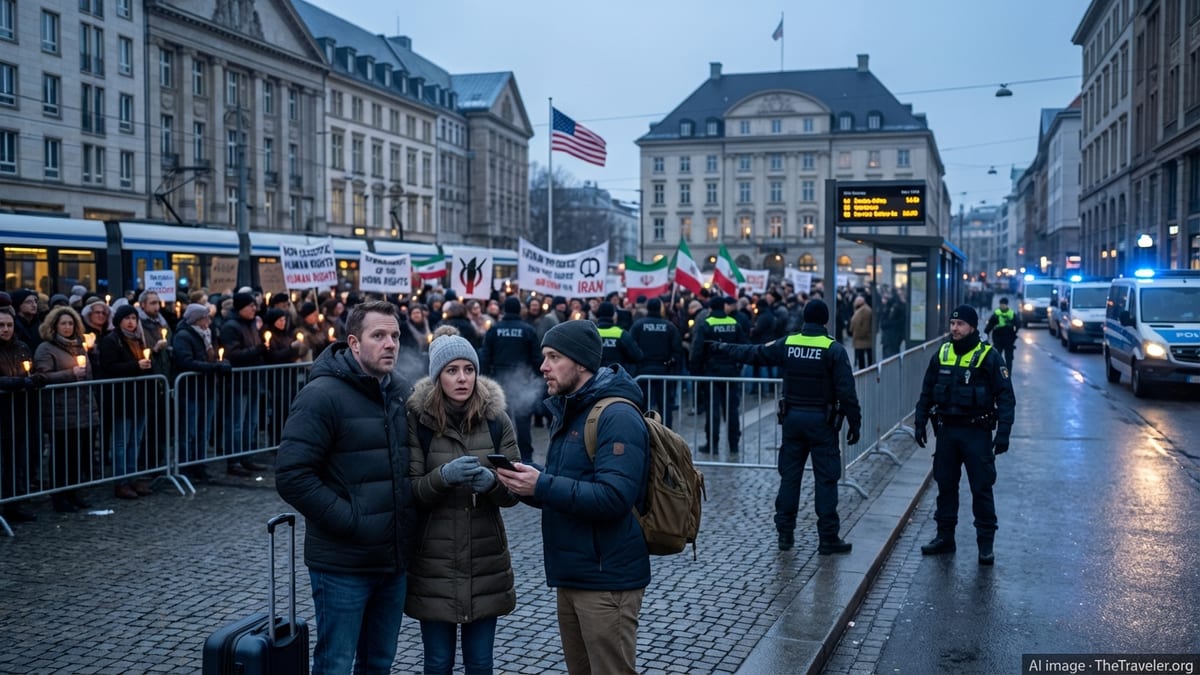
U.S. Travel Advisory Highlights Unrest and Disruption
The United States currently lists France at Level 2 on its travel advisory scale, meaning visitors are advised to exercise increased caution. Publicly available information on the advisory cites both the risk of terrorism and episodes of civil unrest, including protests and strikes that can disrupt transportation and public services.
A security alert issued in late October highlighted the potential for large, fast-moving demonstrations in Paris, noting that protest routes can change at short notice and that gatherings may spill beyond officially announced areas. Recent guidance has encouraged Americans to avoid protest sites, monitor local news before heading out each day, and factor possible road closures or metro shutdowns into their plans.
The advisory does not call for Americans to cancel trips to France, but it places added emphasis on situational awareness around major civic squares, government buildings and key transport nodes where marches and rallies tend to begin or end.
Large Demonstrations Across France Reach Tourist Areas
France has seen several major protest days in October 2026, with marches and rallies called primarily over the cost of living and funding for public services. Interior Ministry tallies reported more than 400,000 people taking part in coordinated protests nationwide on October 24, with roughly 110,000 in Paris alone, while independent coverage has cited even higher figures on some days.
Published reports describe demonstrations in Paris, Lyon, Marseille, Bordeaux, Strasbourg, Lille and Nice, among other cities. In many places gatherings remained noisy but peaceful during the day, while clashes between small groups and police, as well as isolated looting, were recorded after nightfall in certain districts.
Travel and tourism outlets note that protests have regularly passed close to or through areas that are familiar to visitors, including central Paris neighborhoods near République, Bastille and Nation, and major boulevards connecting them. Local curfews have been announced in parts of Paris, Lyon, Nice and Marseille on some evenings, primarily targeting specific districts rather than entire metropolitan areas.
Museums, Monuments and Transit Face Temporary Closures
The recent unrest has had a visible impact on some of France’s best known tourist attractions. Industry coverage indicates that on at least one protest day in October the Louvre closed after demonstrators blocked access to an entrance, while several metro stations near the Champs Élysées and other gathering points were temporarily shut on police request. Travelers posting publicly online have also reported short-notice closures of individual monuments, such as the Arc de Triomphe, during periods of heightened tension.
French and international media describe additional disruptions in other cities. In Lyon, local coverage noted that the tourism office near a central square was damaged by fire during cost-of-living protests. Tourism analysts report that curfews and sporadic rioting in parts of Marseille and Lille have led to the early closure of some shops, bars and restaurants on affected nights.
Transport has largely continued to function, but with interruptions on major protest days. Metro and tram stations near march routes in Paris have been closed for several hours at a time, and surface traffic has been diverted around rally points. Online travel forums tracking the situation in real time suggest that long-distance train services and airport connections have generally operated, although travelers have experienced delays linked both to protests and to adverse weather around the same period.
Tourism Industry Braces for Impact While Stays Largely Viable
France remains one of the world’s most visited countries, and tourism bodies have expressed concern about the potential hit to visitor numbers if images of burning vehicles and tear gas dominate perceptions abroad. Reporting by European business outlets cites representatives of regional tourism federations describing the unrest as “catastrophic” for city centers in destinations such as Paris, Nice and Lyon, although early booking data points to only a modest wave of cancellations so far.
Analysis by travel trade publications suggests that the timing of the protests has so far limited commercial damage. The October unrest has arrived after the peak summer season and ahead of the busiest period for winter holidays. Tour operators interviewed in industry coverage report that most trips have gone ahead, with programs adjusted to steer groups away from scheduled marches or to reorder sightseeing days when closures are announced.
Experts quoted in these reports stress that the vast majority of demonstrations are nonviolent and confined to specific times and places. For many visitors, the practical effect has been occasional timetable changes, earlier restaurant closures in certain neighborhoods, or the need to reroute walking tours and sightseeing plans on short notice.
What American Travelers Should Expect on the Ground
On-the-ground accounts compiled in travel media and public forums describe a mixed picture for visitors in late October. Many tourists have reported completing itineraries in Paris with only minor adjustments, while others encountered shuttered metro stations, canceled timed-entry tickets for individual attractions on protest days, or noisy night-time gatherings passing below hotel windows.
Advisories from both government and non-government sources consistently recommend avoiding large crowds, steering clear of confrontations between police and demonstrators, and leaving an area immediately if fireworks, projectiles or tear gas are deployed. Travelers are also encouraged to keep copies of identification handy, allow extra time when moving between airports or train stations and city centers, and stay in touch with airlines, rail operators and tour companies for any schedule changes.
With France still welcoming millions of visitors each year and most tourism infrastructure operating, current guidance for Americans centers on informed preparation rather than abandoning trips. That includes checking the latest U.S. State Department advisory before departure, reviewing local news each morning for protest announcements, and remaining flexible about which neighborhoods to visit and when, particularly in Paris and other large cities where rallies are expected to continue in the weeks ahead.