


More news on this day
Australians bound for France and wider Europe are being urged to review their plans as consecutive weekends of mass demonstrations, night-time curfews and outbreaks of violence continue to affect major French cities, including Paris, Marseille and Lyon.
Get the latest news straight to your inbox!
France rocked by nationwide unrest and curfews
France has entered a volatile period of civil unrest, with large demonstrations over the rising cost of living and education funding drawing hundreds of thousands of people into the streets across the country on 17 and 24 October 2026. While many rallies remained peaceful, reports indicate that evening clashes with police, street fires and looting have occurred in parts of Paris, Marseille, Lyon and several regional centres, prompting a major security response.
Publicly available coverage from French and international outlets describes a substantial deployment of security forces, including tens of thousands of police and gendarmes on recent protest days. In Paris and other cities, local authorities have announced partial curfews in specific neighbourhoods during late-night and early-morning hours after violence flared on the fringes of authorised marches.
Information compiled by European media and official travel advisories indicates that curfews have been applied around some of Paris’s central districts, including areas near Place de la République and Les Halles, as well as parts of Marseille, Lyon, Toulouse and Montpellier. These measures have been time-limited but may be extended or reintroduced at short notice if unrest continues.
For Australians planning trips that include evening dining, nightlife or late arrivals at accommodation, these curfews can affect access to certain streets, public transport options and the opening hours of bars, venues and some attractions. Travellers may be required to adjust itineraries or carry identification if stopped during restricted hours.
What Australia’s latest advice says about travelling to France
Australia’s Smartraveller advisory for France, updated in late October 2026, continues to rate the country at “Exercise a high degree of caution,” reflecting a combination of terrorism concerns, opportunistic crime and the current protest environment. The advisory notes that large-scale demonstrations have taken place across France in recent weeks and that further protests and civil unrest are possible.
The Australian guidance highlights the potential for protests to turn violent without warning and for security conditions to deteriorate quickly in specific locations. It recommends that travellers avoid protest sites, move away immediately if they encounter an unplanned gathering and follow local announcements. The advisory also stresses the importance of monitoring local news and official communication channels for any changes to curfews or restrictions affecting movement in cities.
Other countries’ travel advisories, including those issued by European partners, refer to significant recent unrest and caution that further outbreaks of violence in French cities cannot be ruled out. These sources describe a pattern in which daytime marches are largely calm, but isolated groups engage in confrontations after dark, particularly around symbolic central squares, government buildings and major commercial streets.
For Australians, these advisories translate into a need for higher situational awareness rather than a blanket recommendation to avoid France. Current information does not indicate that tourists are being directly targeted, but visitors can be caught up in clashes, tear gas deployments or sudden transport changes if they are near protest flashpoints.
Impact on flights, trains, attractions and accommodation
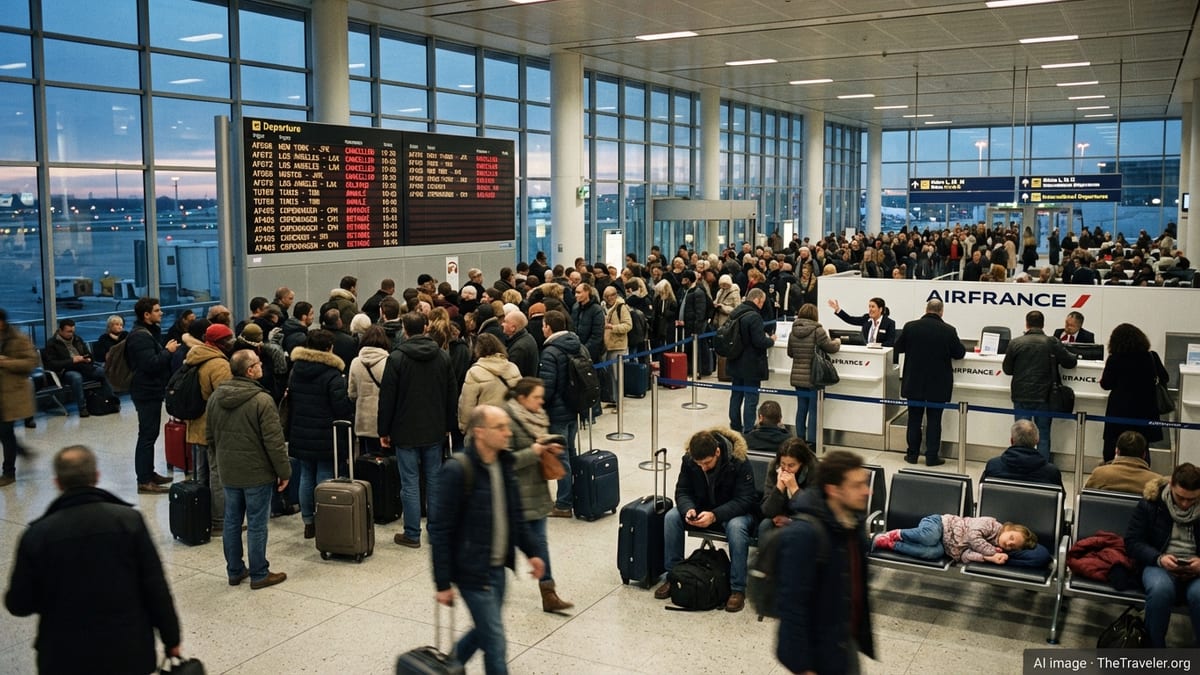
Despite the scale of the demonstrations, France’s main international airports and long-distance rail services are continuing to operate. However, local transport networks and event schedules have been repeatedly adjusted around planned protest days. Media reports from Paris describe closures of some metro exits, tram disruptions and diverted bus routes in central neighbourhoods while marches pass or police operations take place.
In recent days, some major events and attractions have altered their timetables. A high-profile football match in Paris, for example, has been rescheduled from Sunday evening to Monday night at the request of police, and at least one leading museum temporarily closed its doors on a protest day because of security concerns in the surrounding streets. Smaller galleries, independent shops and restaurants in affected districts have occasionally closed early or boarded windows in anticipation of unrest.
For visitors, this means that a packed sightseeing schedule may not be realistic on weekends when large demonstrations are announced. Travellers may encounter blocked streets, cordoned-off squares and heavier-than-usual police presence around hubs such as Place de la République, Bastille, Nation and other traditional gathering points. Booking flexible time slots where possible and confirming opening hours on the morning of a visit can help limit disruption.
Accommodation in central Paris, Marseille and Lyon is still accepting guests, but travellers staying close to protest hotspots may experience noise from marches, sirens and crowd-dispersal operations. Some hotels and short-stay rentals are advising guests to return before announced curfew hours and to carry a passport or valid photo ID when moving around the city.
Key safety steps for Australian travellers in protest-affected areas
Australian travellers heading to France are being encouraged to build extra resilience into their plans. This starts with registering travel plans with Smartraveller, checking the France advisory page immediately before departure and staying subscribed for email updates while in Europe. Because protest routes and timings can change quickly, a final check of local news on the morning of travel to or within France is strongly recommended.
Once on the ground, simple behavioural choices can significantly reduce risk. These include avoiding large gatherings even if they appear peaceful, steering clear of crowds wearing protective gear or carrying banners, and not stopping to film confrontations between police and protesters. Travellers should keep a low profile, secure valuables against pickpocketing in crowded locations and remain attentive at key transport nodes such as major train stations.
Planning backup options for internal journeys is also important. On declared protest days, allowing additional time to reach airports and intercity train terminals can offset delays from traffic diversions or closed metro stations. Keeping digital copies of tickets and accommodation confirmations, along with contact details for airlines and rail operators, makes it easier to rebook if schedules change.
Insurance is another critical consideration. Policies differ in how they address trip disruption or cancellation linked to civil unrest, curfews or government advisories. Travellers should verify, before departure, whether their cover extends to missed tours, extra accommodation costs or alternative transport arrangements if a protest or security operation affects their route.
Should Australians rethink broader Europe plans?
The current wave of unrest is primarily centred in France, but demonstrations linked to economic pressures and political dissatisfaction have also been reported in neighbouring European countries. Some of these have been comparatively small and peaceful, while others have led to clashes in certain cities. For Australians undertaking multi-country itineraries, it is therefore sensible to monitor the situation in each destination separately rather than assuming conditions are uniform across Europe.
Travel advisories from Australia and partner governments do not currently suggest cancelling standard tourism travel to France or Western Europe, but they do emphasise flexibility and preparedness. This may mean favouring fully refundable or changeable bookings, avoiding accommodation that directly overlooks central protest squares and allowing extra time between connections, particularly on weekends when large rallies are more common.
Travellers transiting through Paris or other French hubs on their way to elsewhere in Europe should consider scheduling longer layovers to accommodate possible inner-city transport disruption. Where feasible, daytime arrivals and departures can reduce exposure to late-night curfew zones and after-dark clashes, which recent coverage indicates are more likely to be associated with property damage and arrests.
Overall, for Australians planning European holidays in late 2026, France remains an accessible and heavily visited destination, but one that currently requires closer attention to local developments. With careful planning, flexible arrangements and real-time monitoring of both Australian and European travel advice, most trips can proceed while minimising exposure to the pockets of unrest that continue to affect parts of the country.