


More news on this day
Hundreds of passengers were left stranded at London Stansted on Sunday after a sudden power surge disrupted security, baggage handling and immigration systems, triggering hours of queues and widespread flight delays at one of the UK’s busiest airports.
Get the latest news straight to your inbox!
Power surge knocks out key airport systems
Published coverage indicates that the disruption began on Sunday 25 October 2026, when a power surge affected both London Stansted Airport and parts of the surrounding area. The electrical issue temporarily shut down or degraded core systems used for security screening, baggage processing and border checks, according to multiple news reports.
Stansted’s operator stated in public updates that a number of airport systems were “temporarily impacted” by the surge, leading to throughput at security and baggage areas operating below normal capacity. Reports from outlets including Sky News and the BBC indicate that the disruption was significant enough to slow passenger flows across both departures and arrivals for much of the day.
By Sunday evening, publicly available information from the airport suggested that all major systems had been brought back online, but several services, including elements of security and baggage handling, were still described as not running at full capacity. Airport statements described teams working to restore normal operations while managing the backlog of delayed passengers.
Queues snake through terminal as pictures spread online
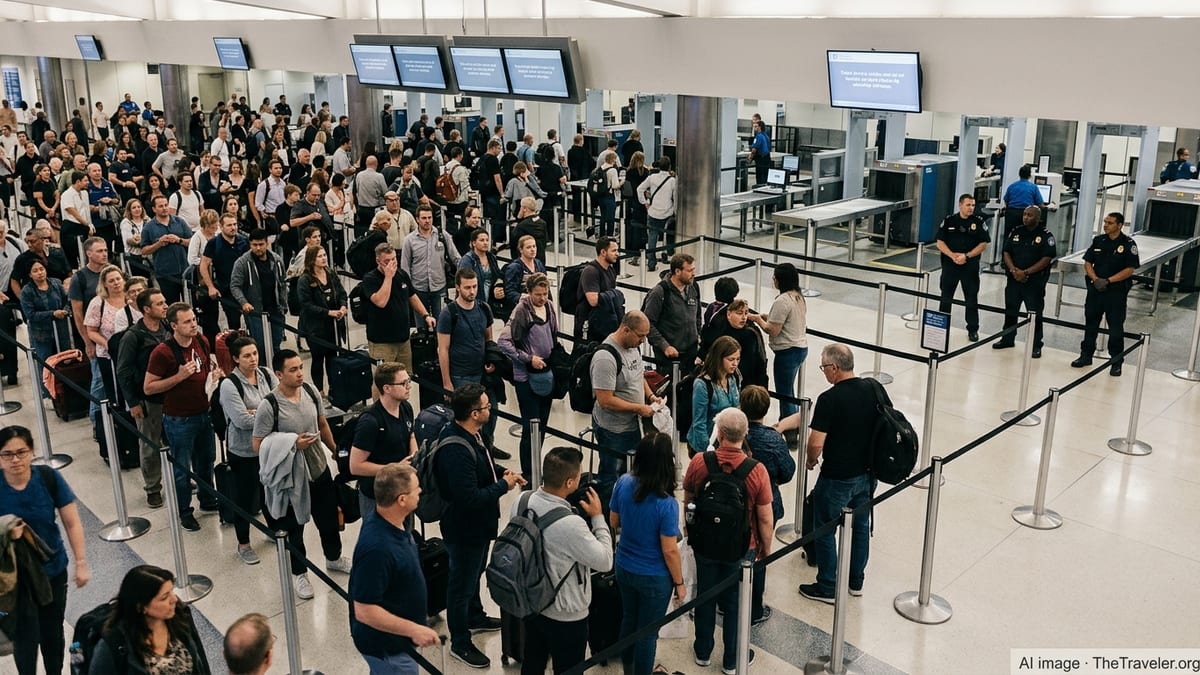
Images published by UK media and shared widely on social platforms show tightly packed queues stretching across Stansted’s main terminal. Photos taken near departure boards and security lanes appear to show hundreds of people waiting in dense zigzag lines, with queues spilling back into check in zones and public concourses.
Passengers posting online described long waits to clear both outbound security and inbound immigration, in some cases reporting delays of more than two hours. One account cited by several outlets referred to a “total systemic collapse,” reflecting frustration at the combination of stalled baggage belts, slowed screening lanes and restricted access to onward transport.
Additional pictures carried by regional broadcasters show lines to passport control backing up into the departure area, as arriving passengers encountered the same technical problems affecting border checks. Some travellers reported being held in corridors leading to immigration while staff worked to manage crowding and reroute flows around failed equipment.
Flight delays mount as operators manage backlog
Data from flight tracking services cited in UK news coverage indicates that around 250 flights were delayed at Stansted on Sunday, with at least a small number cancelled while the power related issues were addressed. The disruption affected a mix of short haul European services and domestic routes, reflecting Stansted’s role as a major base for low cost and leisure airlines.
Airlines using the airport appeared to respond by holding departures at the stand or delaying boarding until ground systems could reliably process passengers and baggage. Some travellers reported missed connections and late evening arrivals at European destinations as the knock on effects of the outage rippled through scheduled operations.
Publicly available information suggests that staffing levels remained in place during the incident, but with electronic systems down or degraded, processing capacity was sharply reduced. In some areas, such as baggage handling, manual workarounds were reported, slowing operations further and adding to the build up of luggage awaiting loading or collection.
Shuttle and rail issues deepen frustration for travellers
The power surge coincided with other transport difficulties that compounded delays for some passengers. BBC reporting referenced earlier problems on rail services serving Stansted, where damage to overhead power lines over the weekend had already led to cancellations and reduced frequencies on key routes to London.
Arriving travellers also faced disruption within the airport’s own landside transport system. Recent coverage highlighted an ongoing technical fault affecting the internal shuttle that normally transfers passengers between the terminal and certain gates, with a replacement bus service operating. During the power incident, some passengers described being held in connecting corridors for extended periods while alternative arrangements were put in place.
These issues meant that some travellers encountered queues even after landing, with waits at passport control, delays collecting bags and slower journeys from the airport into central London. As images of crowded corridors circulated online, criticism focused not only on the power surge itself but also on the perceived lack of resilience and backup options when multiple systems failed at once.
Airport response and what passengers should know
In its public messaging on Sunday, Stansted’s management acknowledged that the power surge had disrupted operations and apologised for the inconvenience. Statements emphasised that systems were progressively restored over the course of the afternoon and evening, and that teams were “working hard” to support passengers as normal service was re established.
For upcoming travellers, published advice from the airport and airlines continues to stress the importance of checking live flight information before setting out, particularly in the first 24 to 48 hours after the incident while schedules and aircraft rotations are realigned. Carriers have been directing customers to their apps and customer service channels for the latest departure and rebooking details.
Consumer information services note that compensation or reimbursement for delays will depend on the specific circumstances of each flight and the policies of individual airlines. Because the initial trigger was an external power problem, some carriers may treat the disruption as outside their direct control, but passengers are still generally entitled to assistance such as refreshments and, where necessary, accommodation when they are stranded for extended periods.
For now, the images of crowded halls and lengthy queues at Stansted provide a stark reminder of how quickly a single power surge can cascade through modern airport infrastructure, affecting not just flights but every stage of the passenger journey from check in to onward transport.