


More news on this day
Americans with upcoming international trips are being urged to reassess their plans after a series of recent U.S. government alerts pointed to heightened terrorism risks in several popular destinations, particularly across the Middle East and selected coastal hotspots.
Get the latest news straight to your inbox!
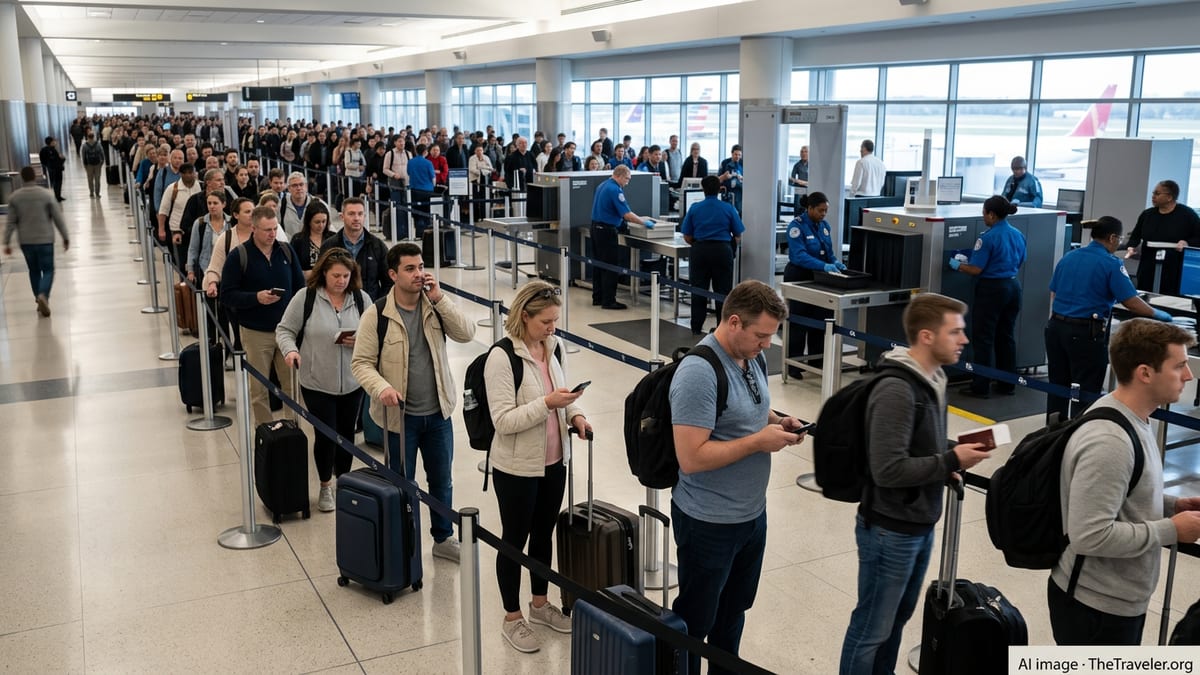
New alerts spotlight terrorism concerns in key regions
Publicly available advisories from the U.S. Department of State in late July and August 2026 describe an increasingly complex security environment, with particular concern focused on the broader Middle East. A worldwide caution notice issued on July 22 advises U.S. citizens to exercise increased vigilance globally, citing tensions linked to regional conflict and the potential for sudden escalation affecting air travel and major hubs.
Updated country-level advisories single out several destinations that regularly feature on American travel itineraries. Recent notices for Jordan, Saudi Arabia, Iraq, Syria and Lebanon highlight terrorism as a primary risk factor, alongside armed conflict in some areas. These advisories emphasize that attacks could target public places frequented by foreigners, including tourist sites, hotels, shopping areas and transport hubs.
Coverage from travel and consumer outlets notes that the latest alerts arrive as many Americans finalize late-summer vacations or begin booking fall and winter trips, raising the prospect of last-minute itinerary changes. Security analysts cited in public reports describe the threat landscape as fluid, with localized risks that may shift quickly between urban centers, border areas and popular resort zones.
Popular coastal destination flagged for potential attacks
Among the most eye-catching updates for leisure travelers is a recent warning concerning parts of Mozambique’s northern coastline, an area that has gained visibility for its Indian Ocean beaches and proximity to safari circuits. News reports summarizing the latest advisory state that U.S. officials see a credible risk of terrorist attacks in and around coastal communities and at tourist accommodations.
According to that publicly available information, American travelers are advised that potential attackers could strike public areas and tourist destinations with little or no warning, and that hostage-taking is a specific concern. Several districts and transport corridors in the wider region are described as carrying elevated danger due to the presence of extremist groups and ongoing security operations.
Risk-mapping tools produced by private security and insurance providers place much of northern Mozambique in a high to extreme category for security threats, reflecting not only terrorism but also the impact of periodic insurgent activity and limited emergency-response capacity. For travelers, this combination means that an incident affecting one coastal town or lodge can rapidly disrupt movement and logistics across a wider stretch of shoreline.
Middle East travel plans face renewed scrutiny
The Middle East remains a central focus of current warnings. A regional alert updated in early August advises Americans to reconsider nonessential travel to and through parts of the area, and recommends that those already present be prepared to depart if conditions deteriorate. The guidance points to the possibility of airspace closures, flight cancellations and sudden changes to airline schedules, which could leave travelers temporarily stranded or forced into costly re-routing.
Destination-specific advisories for countries such as Jordan and Saudi Arabia underline the risk of terrorism alongside drone and missile activity linked to the wider confrontation with Iran. In some locations, family members of U.S. government personnel have only recently been allowed to return, while in others there are detailed restrictions on official travel due to security concerns.
Lebanon and Syria, both long-standing trouble spots, remain categorized at the highest warning levels due to a mix of terrorism, armed conflict and kidnapping risk. Reports summarizing these advisories stress that attacks may target transportation corridors, border regions and areas where foreign visitors might transit, even if they are not staying for tourism.
Europe and other established destinations also affected
While much attention is on the Middle East and parts of Africa, recent reporting shows that some well-established destinations in Europe are also under closer watch. A mid-August analysis of travel guidance for Germany notes that Americans are being urged to exercise increased caution there due to ongoing terrorism concerns, including the risk of attacks in public places such as pedestrian zones, festivals and transportation nodes.
Separate coverage has highlighted updated advisories for specific enclaves and regions within Spain, where large inflows of migrants and local tensions are cited as potential triggers for unpredictable security situations. Although these notices stop short of advising against all travel, they ask visitors to be alert to crowded crossings, demonstrations and rapid changes in border controls.
Globally focused travel-advisory summaries indicate that terrorism is now a recurring risk marker across a broad swath of countries, from parts of Western Europe to the Middle East and selected destinations in Africa and Latin America. For many of these locations, the guidance is not to cancel all travel, but to recognize that attacks or security incidents may occur with limited warning and can cause wider disruption beyond the immediate target area.
What American travelers are advised to do next
Current U.S. government materials encourage travelers to begin any overseas planning by checking the official advisory level and recent alerts for their intended destination. Each notice outlines whether terrorism is a significant factor, along with other risks such as crime, civil unrest or limited consular support. Travelers are also pointed toward enrollment systems that can provide email or text updates if the security picture changes after arrival.
Independent security firms and travel insurers echo this approach, recommending that travelers pair official advisories with on-the-ground monitoring of local news, airport bulletins and airline communications. Some risk-assessment tools now grade destinations on a spectrum from low to extreme threat, using terrorism incidents, political instability and infrastructure resilience as core indicators.
For Americans still intending to visit higher-risk destinations, experts quoted across multiple outlets suggest practical steps such as maintaining flexible itineraries, knowing evacuation routes, and avoiding predictable routines in public places. Travelers are also encouraged to review policy details with their airline or insurer in case advisories tighten further and trigger changes, delays or cancellations close to departure.
Amid a season of shifting warnings, the overall message to American travelers is not necessarily to abandon plans altogether, but to recognize that terrorism-related risks are shaping advisories for some traditionally popular destinations. Those who do decide to go are being urged to track developments closely, prepare for potential disruption, and place security considerations at the center of their trip planning.
U.S. State Department Travel Advisories
U.S. State Department Worldwide Caution
Travel + Leisure coverage of Middle East alert