


More news on this day
Air travel across the Americas is entering 2026 with renewed momentum, as airlines, airports and lessors move in lockstep to reinforce capacity, modernize fleets and expand terminals in a bid to contain disruption while capturing a new wave of tourism growth.
Get the latest news straight to your inbox!
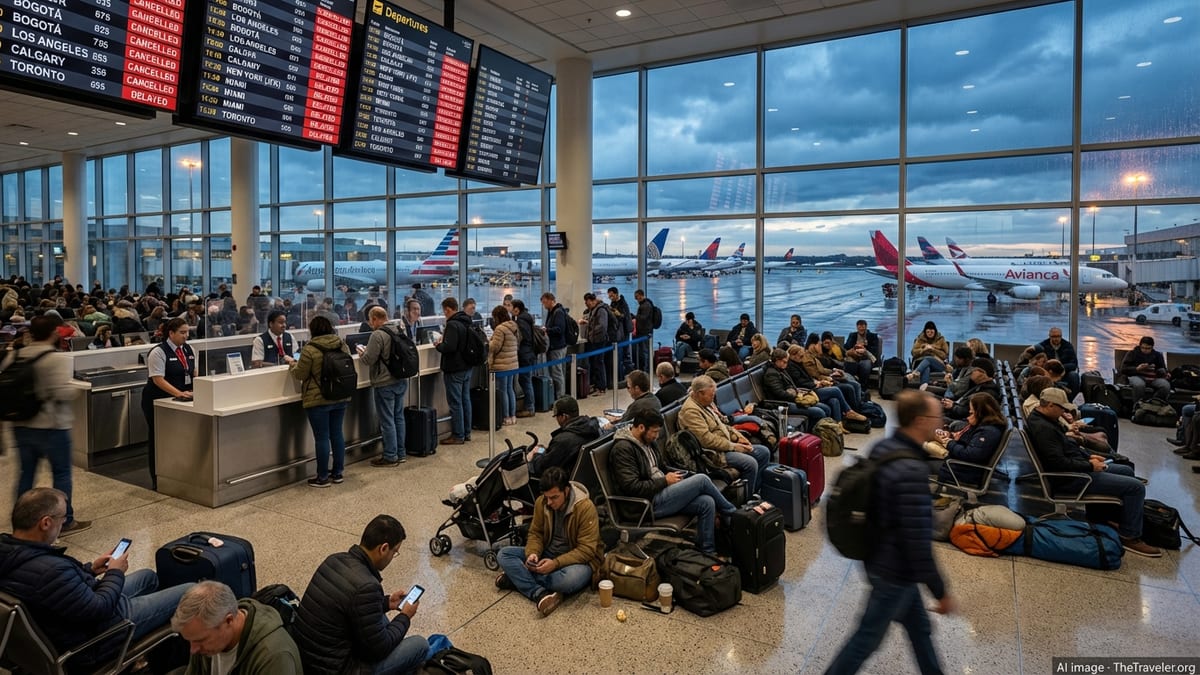
Traffic Rebounds While Region Grapples With Bottlenecks
Industry data published in recent weeks indicates that global passenger demand rose in early 2026, with the Americas participating in the broader rebound. According to publicly available chartbooks and regional outlooks, passenger traffic linked to the Americas has been growing in the low to mid single digits year on year, slightly below the global average but still firmly in positive territory. Load factors remain high, reflecting strong leisure and visiting friends and relatives demand into key North American, Latin American and Caribbean gateways.
IATA economic updates focused on the Americas suggest that the region has emerged from the acute turbulence of the pandemic recovery and subsequent operational crises, but continues to wrestle with structural constraints such as limited peak runway capacity, tight labor markets and air traffic management restrictions. Recent regional briefings describe 2026 as a year in which demand is outpacing the speed at which the system can be expanded, forcing aviation stakeholders to add capacity carefully while tightening operational discipline.
The legacy of high profile disruptions remains fresh. Publicly available accounts of events such as the 2024 CrowdStrike related outages in the United States and subsequent large scale cancellations have reinforced political and consumer pressure for more resilient aviation operations. Regulators have sharpened delay reporting frameworks and pushed carriers to invest in technology and contingency planning, turning reliability into a core differentiator as travel volumes rise.
Against this backdrop, analysts describe the Americas as building a de facto aviation fortress in 2026: a dense network of new aircraft, upgraded terminals and revised operational rules designed to make the system more resistant to shocks while absorbing steady growth.
Record Aircraft Pipelines Bolster Capacity and Resilience
On the fleet side, the supply of new aircraft into the Americas is gathering pace in 2026. Data compiled from manufacturer reports show that Airbus delivered nearly 800 commercial aircraft worldwide in 2025 and entered 2026 with a record order backlog, while Boeing and lessors such as Aviation Capital Group and AerCap have announced fresh orders for hundreds of fuel efficient narrowbody jets. Industry coverage notes that leasing platforms now hold substantial pipelines of 737 MAX and A320neo family aircraft scheduled for delivery between 2026 and the early 2030s, offering airlines in the Americas a clearer path to growth and replacement.
Individual carriers in the region are tapping into this pipeline. Coverage of Copa Airlines highlights an order for up to 60 additional Boeing 737 MAX aircraft, on top of 40 already pending delivery, positioning the Panamanian carrier to add more than 100 jets over eight years. Public statements associated with the order describe expectations that the airline’s passenger volumes will climb from around 20.9 million travelers in 2026 to more than 27 million by the end of the decade, underpinned by connecting flows through Panama City.
In the United States, major carriers continue to work through sizable order books, underpinning what the Federal Aviation Administration’s 2026 to 2046 aerospace forecast describes as a steady expansion of the commercial fleet over the next two decades. The forecast projects that the number of commercial aircraft serving the US market will rise substantially from the mid 2020s level, with narrowbody jets playing an outsized role as airlines pursue higher utilization and more point to point flying.
At the same time, fast growing challengers are contributing to what some analysts frame as an aviation fortress strategy. Aviation industry reports identify Breeze Airways as one of the fastest growing carriers in the Americas, with a planned 41 percent increase in flights for 2026 supported by a large Airbus A220 order book and new routes into the Caribbean and Mexico. That incremental capacity, while modest at the continental scale, helps relieve pressure on constrained hubs by offering alternative routings through secondary airports.
Airports Across the Americas Accelerate Expansion Plans
The surge in aircraft orders is being matched by a wave of airport investment across the Americas, particularly in tourism heavy markets. In Mexico, Grupo Aeroportuario del Pacífico has set out a multiyear master development plan that will expand infrastructure at a dozen terminals, including major upgrades at Guadalajara and Pacific beach destinations. Company statements reported in regional media tie part of this growth to the expected influx of travelers during the 2026 FIFA World Cup, as well as ongoing tourism demand into resorts such as Puerto Vallarta and Los Cabos.
Further south in the Caribbean basin, the Dominican Republic is preparing for a period of intense aviation investment. Specialized aviation outlets report that the country plans to channel around 700 million US dollars into airport infrastructure between 2025 and 2026, targeting upgrades at Las Américas International near Santo Domingo, the Cibao airport in Santiago, the privately operated Punta Cana hub and a planned new airport in the Pedernales tourism development zone. Authorities have also disclosed intentions to pursue numerous new or updated air services agreements, signaling a strategy to lock in connectivity as capacity comes on line.
Colombia’s Caribbean coast is seeing similar moves. A recent financing announcement from a regional development fund confirmed a sizable loan to modernize Cartagena’s Rafael Núñez International Airport, including renovation and expansion of more than 25,000 square meters of terminal space over the next two and a half years. The project is designed to handle millions of additional passengers annually, aligning with projections that the city will draw rising volumes of international leisure travelers and cruise related traffic.
New greenfield infrastructure is also on the map. In Central America, construction continues on El Salvador’s Airport of the Pacific, a facility intended to support both tourism and logistics in the country’s coastal region. Publicly available information from multilateral development institutions describes the project as a multi stage buildout, with initial gates capable of serving several aircraft simultaneously and scope for further expansion as demand matures.
Regulators Tighten Rules to Contain Disruption
Beyond concrete and metal, the fortress metaphor for the Americas aviation system in 2026 is being reinforced through policy. In the United States, the Department of Transportation has revised its approach to classifying and reporting delays and cancellations, with recent guidance emphasizing clearer attribution of causes and expanded consumer rights when disruptions are within airline control. Official documents outline refined delay categories and seek to reduce the scope of events that can be labeled as unavoidable, placing additional pressure on carriers to maintain adequate staffing and technological redundancy.
Air traffic management initiatives are also reshaping how capacity is used. Towards the end of 2025, the Federal Aviation Administration introduced temporary reductions in scheduled operations at several high impact airports in an effort to stabilize on time performance during peak periods. Public notices and industry analyses explain that these measures, although framed as short term, effectively forced airlines to remove some marginal flights from congested schedules, freeing up buffers that can help prevent small disturbances from cascading into widespread disruptions.
Academic work is adding nuance to this picture. A recent longitudinal study of security screening related delays in the US network, posted on a preprint server, concludes that the role of security bottlenecks in propagating delays has become more pronounced in the post pandemic era. The authors argue that what had once been an internalized buffer has evolved into a visible source of delay probability, supporting calls for investment in more efficient screening technologies and staffing models as traffic volumes grow.
In parallel, aviation authorities in Latin America and the Caribbean are revisiting slot rules, ground handling access and contingency planning requirements at key gateways. Regional aviation briefs describe moves to require airports to provide space for multiple ground handling companies and to formalize coordination protocols during irregular operations, steps that could limit the operational fragility exposed during previous storm seasons and technology outages.
Tourism Destinations Position for a High Stakes 2026
For tourism focused economies across the Americas, the race to build this aviation fortress has high stakes. Travel industry analyses emphasize that reliable air connectivity is central to national tourism strategies in destinations ranging from Mexican beach resorts to Caribbean islands and Andean capitals. With global passenger traffic forecast by airport industry organizations to reach just over 10 billion travelers in 2026, governments in the region are positioning to capture a larger share of that flow.
Research from airport and airline associations suggests that the payoffs of getting this right are significant. Higher seat capacity and more efficient terminals can support larger volumes of visitors without proportionate increases in congestion, directly affecting hotel occupancy, restaurant spending and employment. Initiatives such as the Panama Stopover program, which aims to encourage connecting passengers to add short stays in the country, exemplify strategies that depend on both robust hub operations and sufficient aircraft capacity.
Yet analysts caution that the fortress is still a work in progress. The grounding of thousands of Airbus A320 family aircraft in late 2025 following a software related safety directive, as reported by international media, demonstrated how a single technical issue can ripple through global and regional schedules. The episode prompted renewed scrutiny of fleet concentration risk and underscored the need for contingency planning even as new aircraft arrive.
As the peak northern summer approaches in 2026, publicly available booking data compiled by IATA and other analytics providers indicate rising demand into North American World Cup host cities, traditional beach markets and emerging secondary destinations. Whether the Americas’ expanded fleets, enlarged terminals and strengthened regulations can collectively defeat the kind of travel chaos seen in earlier years will be tested in real time, one departure bank at a time.