


More news on this day
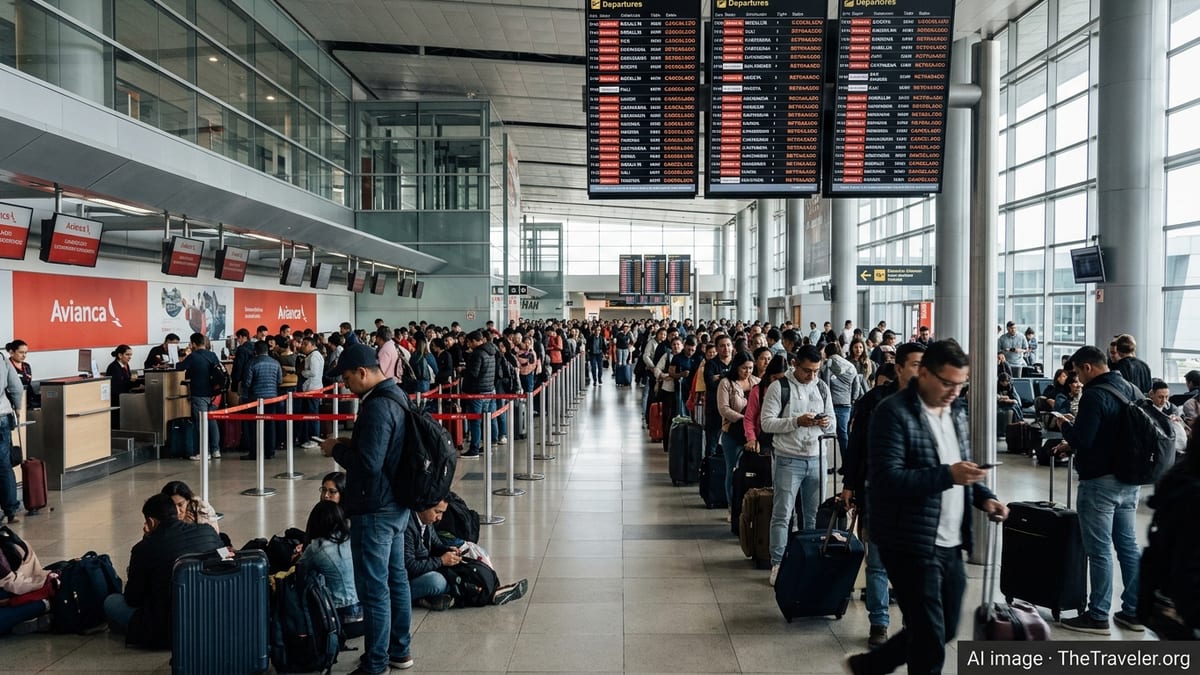
Severe travel disruption has swept across Colombia after a wave of cancellations by Avianca and LATAM Airlines led to 19 grounded flights, snarling operations at Bogotá’s El Dorado and the main airports serving Medellín and disrupting connections across the country.
Get the latest news straight to your inbox!
Grounded Flights Paralyze Key Colombian Air Corridors
Colombia’s two largest carriers, Avianca and LATAM Airlines, have jointly grounded 19 flights on some of the country’s busiest domestic routes, with Bogotá–Medellín connections among the hardest hit. Publicly available airport and flight-tracking data show a cluster of cancellations and rolling delays centered on El Dorado International Airport in Bogotá and services linking the capital with Medellín’s José María Córdova International Airport and Olaya Herrera Airport.
The disruption has rippled across peak travel periods, with multiple daily frequencies between Bogotá and Medellín removed from schedules or delayed for several hours. Travel monitoring platforms indicate that affected services include early-morning and late-evening departures, amplifying the impact on business travelers and passengers relying on tight connections to other domestic and international flights.
According to published coverage of recent operational problems at El Dorado and the surrounding airspace, Colombia’s main hub has been operating under heavy strain, with adverse weather, congestion and crew-rotation challenges all contributing to irregular operations. The latest wave of cancellations has pushed the system beyond its usual buffers, forcing Avianca and LATAM to consolidate traffic on remaining flights and rebook large numbers of passengers.
Reports from consumer-rights platforms and social media suggest that some travelers faced overnight waits in terminal halls, while others missed connections onward to secondary cities such as Cali, Cartagena and Barranquilla. With several of the grounded flights feeding key domestic spokes, the 19 cancellations have had an outsized effect on national connectivity.
Bogotá and Medellín Airports Struggle With Capacity and Weather
El Dorado International Airport, one of Latin America’s busiest hubs, has been at the center of the current disruption. Recent days have brought a combination of low visibility, heavy rainfall and air traffic management restrictions that have reduced runway capacity and increased spacing between arrivals and departures. Publicly available air-traffic data indicate repeated periods of holding patterns and ground stops for flights inbound to Bogotá.
In Medellín, operations at José María Córdova International Airport near Rionegro and at Olaya Herrera Airport closer to the city have also been affected. These airports are located in mountainous terrain and are particularly sensitive to changing weather conditions, including fog and low clouds that can interrupt approach and departure procedures. When Bogotá experiences delays, the knock-on effect on aircraft rotations in and out of Medellín quickly compounds, leaving airlines with limited spare capacity to absorb additional shocks.
Avianca and LATAM have recently expanded their domestic offerings, including additional frequencies on trunk routes such as Bogotá–Medellín. While this growth has improved connectivity in normal times, the denser schedules leave less slack when weather or operational issues disrupt the network. Once a series of flights is delayed or canceled at the main hub, aircraft and crews often end up out of position for subsequent legs, prompting further cancellations to rebalance the operation.
Observers of Colombia’s aviation sector note that El Dorado’s role as a critical connector between domestic destinations and international long-haul services makes any disruption particularly damaging. When short-haul links to Medellín falter, passengers traveling onward to North America or Europe can lose their connections, forcing airlines to arrange hotel stays, rerouting or refunds.
Avianca and LATAM Response and Passenger Options
According to public information posted by passenger-rights services that track airline disruptions, LATAM Airlines Colombia canceled a significant number of flights into and out of Bogotá during recent severe weather, while Avianca also adjusted its schedules to cope with the same conditions. The latest count of 19 grounded flights involving both carriers reflects additional adjustments as the operators seek to stabilize their networks and prioritize core connections.
General conditions of carriage and customer policies published by Avianca and LATAM outline that in situations of major disruption, affected travelers may be entitled to rebooking on the next available flight, rerouting to their final destination, or refunds for unused segments. Travel-compensation advocacy groups emphasize that passengers should retain all documentation, including boarding passes and written notices of delay or cancellation, to support any future claims.
Consumer-advocacy platforms also point out that when delays extend overnight, airlines are expected to provide basic care such as meals and hotel accommodation, depending on the cause of disruption and local regulations. However, anecdotal accounts shared online indicate that the experience on the ground can vary widely, with some passengers reporting prompt assistance and others describing long queues at customer-service desks.
Given the scale of the disruption, rebooking options within Colombia have been tight, particularly on the heavily trafficked Bogotá–Medellín corridor. With many remaining flights operating close to capacity, some travelers have turned to alternative routings via secondary cities or to ground transport, including long-distance buses, to complete their journeys.
Broader Impact on Colombia’s Tourism and Business Travel
The travel chaos has arrived at a delicate moment for Colombia’s tourism industry, which has been working to consolidate a strong post-pandemic recovery. Bogotá and Medellín serve as primary gateways for international visitors drawn to the country’s cultural, culinary and nature tourism offerings. When air links between these cities falter, the effects are felt throughout the hospitality sector, from hotels and restaurants to tour operators in smaller destinations.
Business travel is also vulnerable to repeated disruptions on key domestic routes. Frequent delays and cancellations can undermine confidence among corporate travelers who rely on tight schedules for meetings and same-day returns. Some analysts following the region’s aviation market have warned that persistent operational instability could push high-yield passengers to favor alternative routings through other hubs in the region when traveling to or within Colombia.
Regional airports that depend on feed from Bogotá and Medellín have reported irregular passenger flows in recent weeks, according to tourism and transport statistics released at the departmental level. When trunk routes are disrupted, flights to smaller cities often see sharp drops in load factors followed by sudden surges as rebooked travelers arrive in waves, complicating local planning for ground transport and accommodation.
Industry observers will be watching closely to see whether Avianca and LATAM adjust their schedules or add spare capacity on key domestic routes once the immediate disruption eases. Measures such as building longer turnaround times, improving crew-reserve availability and refining contingency plans for adverse weather may help reduce the likelihood that a cluster of cancellations grows into full-scale travel chaos in the future.