


More news on this day
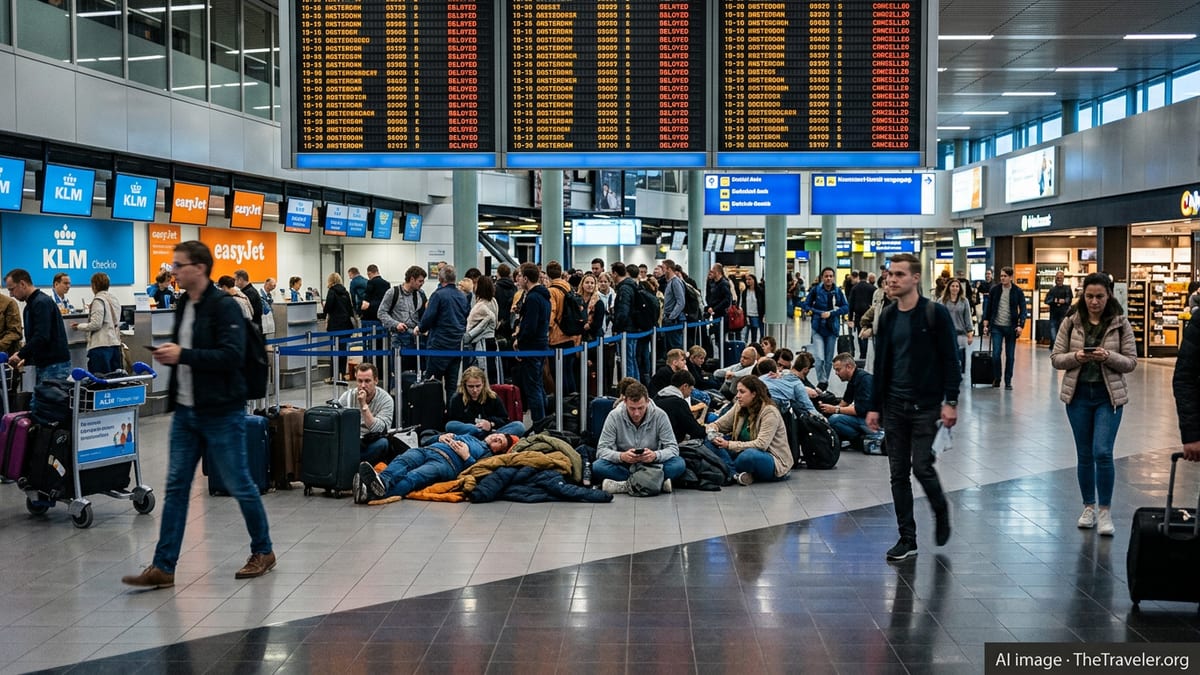
Travelers passing through Amsterdam Schiphol are facing another round of disruption as more than 20 flights on KLM, Air France, easyJet and partner airlines are canceled, affecting key routes to London, Paris, Washington and several other European and transatlantic destinations.
Get the latest news straight to your inbox!
Fresh Cancellations Add To A Month Of Disruption
Publicly available operational data and consumer-rights monitoring show that flight cancellations at Amsterdam Schiphol have intensified again in early July 2026. After an earlier bout of schedule cuts by KLM and Air France in June, recent figures indicate that more than 20 services have now been withdrawn across a three day window, with low cost and partner carriers such as easyJet, Delta and others also affected.
Independent tracking by aviation and passenger advocacy sites points to at least 31 cancellations between Saturday and Tuesday alone, with Schiphol departures particularly hard hit. Reports indicate that the latest wave follows on from at least 22 KLM cancellations around 9 June, underlining an unsettled period for travelers who rely on Amsterdam as a major European hub.
Disruption is being reported across all three major airline groupings serving the airport: the Air France KLM network and its transatlantic partners, low cost operators led by easyJet, and a mix of regional and codeshare airlines. The result is a patchwork of last minute changes that can be difficult for travelers to anticipate, especially those with onward connections.
Although not all canceled flights are long haul, the concentration of changes on busy city pairs and connecting services has magnified the impact on international itineraries. Passengers traveling to or from North America, the United Kingdom and France appear to be among the most exposed in the latest round of schedule adjustments.
Key Routes Affected: London, Paris, Washington And More
The latest cancellations are focused on some of Schiphol’s highest demand routes. According to route and flight-status data, services between Amsterdam and London, Paris and several Mediterranean cities have seen repeated adjustments, with some departures withdrawn outright and others retimed or consolidated.
Flights between Amsterdam and London, one of Schiphol’s busiest markets, have again come under pressure. Schedules on London City and Gatwick rotations involving KLM and easyJet show short notice changes and cancellations on selected departures. While many services continue to operate, the pattern of disruption makes same day connections less predictable.
On the French network, published coverage indicates that KLM and Air France have canceled or combined some Amsterdam to Paris Charles de Gaulle flights, including codeshare services where one carrier operates on behalf of the other. For travelers using Amsterdam as a stepping stone onto Air France long haul routes via Paris, these alterations have increased minimum connection times and, in some cases, forced rebooking.
Transatlantic traffic has not been spared. Flight information for KLM’s Amsterdam to Washington service on 6 July shows a scheduled departure that was subsequently marked as canceled, affecting travelers heading to the US capital and those relying on Washington as a hub for onward domestic flights. Similar disruption has been reported on other North American routes in recent weeks, though many services continue to run as planned.
What Is Behind The Ongoing Flight Cuts
Reports from aviation observers and consumer-rights organizations suggest that the current disruptions are driven by a mix of operational and capacity pressures rather than a single, isolated incident. Earlier in 2026, winter weather and de-icing fluid shortages at Schiphol triggered large scale cancellations across the Air France KLM network, setting the stage for a year of strained schedules.
More recently, industry-focused analyses have highlighted factors such as crew availability, aircraft rotations and cost pressures, including higher fuel prices, as reasons airlines have trimmed flights at short notice. Documentation discussing KLM’s 2026 cancellations refers to hundreds of intra-European flights being proactively cut over the year in response to these combined challenges.
The airport itself remains a constraining factor. Schiphol’s role as a major transfer hub means that small operational issues can quickly ripple across partner airlines and alliance networks. When one carrier reduces its schedule, codeshare partners, regional feeders and low cost competitors sometimes adjust in response, either consolidating flights or altering departure times.
For passengers, the result is a disruption environment that can appear fragmented on the surface but is linked behind the scenes through shared fleets, crew pools and slot allocations. That complexity helps explain why a cancellation on a seemingly minor European leg can lead to knock-on effects for long haul trips to destinations such as Washington or other North American cities.
What Stranded Passengers Can Do Right Now
Travel guidance from airline customer information pages and passenger rights groups points to several practical steps for those caught up in the latest cancellations at Amsterdam. The most urgent advice is to monitor bookings frequently on airline apps or websites instead of relying solely on email notifications, since some travelers report learning of cancellations only when they attempt to check in.
When a flight is canceled by the airline, most major carriers operating from Schiphol, including KLM, Air France and easyJet, offer free rebooking onto the next available service or a refund. According to publicly available rebooking policies, passengers are often able to change their travel dates within a defined window at no additional fare, subject to seat availability. In some situations, travelers may also request rerouting via an alternative hub, which can be crucial for those needing to reach London, Paris or US destinations on a specific day.
Consumer advocacy organizations remind travelers that under European passenger rights rules, many individuals impacted by cancellations or delays may be entitled to financial compensation, depending on the cause of the disruption and the amount of advance notice provided. Several third party services track large disruption events at Schiphol and allow passengers to check whether their specific flight may qualify.
For those already at the airport, practical considerations such as accommodation and meals become immediate concerns. Various reports from earlier disruption episodes at Schiphol describe passengers being advised to secure hotel rooms and then seek reimbursement from airlines afterward, particularly when local demand makes last minute lodging scarce. Keeping all receipts and written communication is recommended to support later claims.
How To Prepare If You Are Due To Fly Via Amsterdam
With cancellations and schedule changes still occurring at short notice, travelers booked through Amsterdam in the coming days are being encouraged by travel experts and online community forums to build extra flexibility into their plans. That can include allowing longer connection times, opting for earlier flights on the day of travel, or considering alternative routings through other European hubs when itineraries are time sensitive.
Checking in as early as systems allow and verifying flight status repeatedly in the 24 hours before departure can also reduce surprises. Many airlines serving Schiphol, including KLM and Air France, provide disruption alerts through mobile apps and text messages, but travelers are advised not to rely on a single channel of communication.
Passengers connecting onward to long haul flights to cities like Washington, or to major European capitals such as London and Paris, may want to confirm minimum connecting times and consider whether an overnight stop or earlier feeder flight would offer more protection against late cancellations. Travel insurance policies that specifically cover missed connections and schedule disruptions can also provide an additional layer of security, though coverage details vary.
Given the recent pattern of operational strain at Amsterdam Schiphol, experts expect intermittent disruption to continue through the busy summer period. While most flights are still departing as planned, the latest cancellations affecting KLM, Air France, easyJet and their partners underscore the importance of real time information and flexible planning for anyone relying on one of Europe’s busiest hubs.