


More news on this day
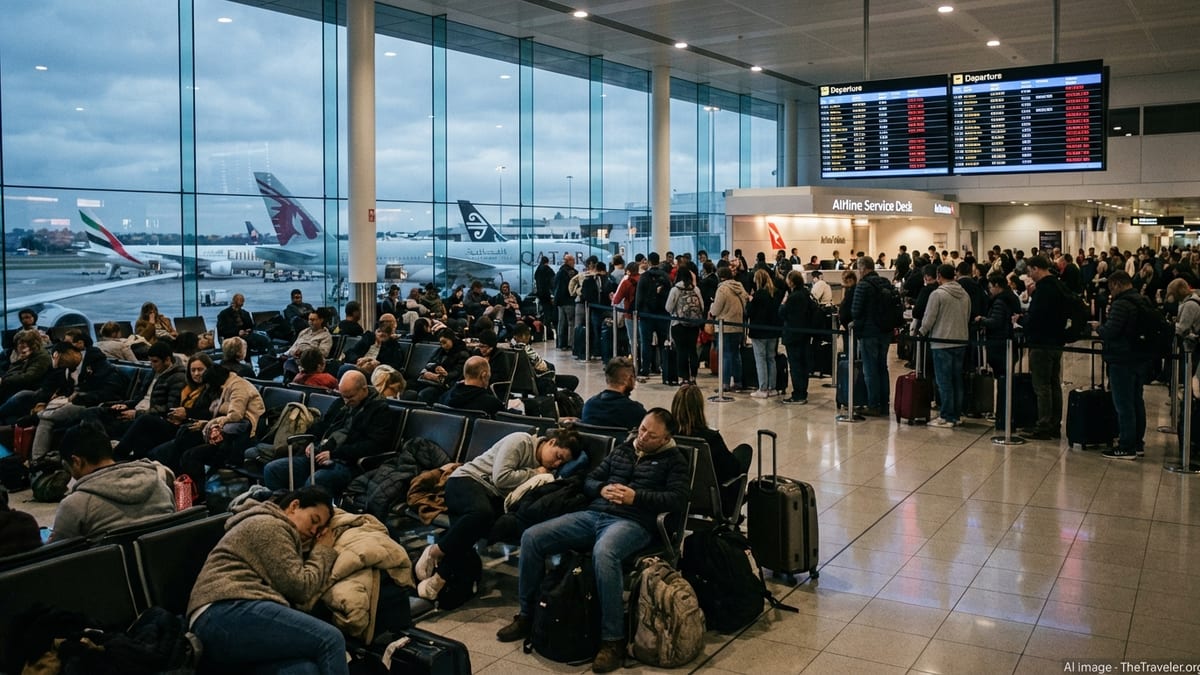
Hundreds of passengers across Australia and New Zealand are facing severe disruption after a fresh wave of operational problems led to 649 flight delays and 40 cancellations, heavily affecting services operated by Air New Zealand, Qantas, Virgin Australia and QantasLink across major hubs including Sydney, Melbourne, Perth, Wellington and Christchurch.
Get the latest news straight to your inbox!
Major Hubs Grapple With Rolling Disruptions
Operational data compiled from live flight tracking boards and airport operations feeds indicates that the latest disruption has clustered around some of the busiest trans Tasman and domestic corridors. Sydney, Melbourne and Perth in Australia, together with Wellington and Christchurch in New Zealand, have each reported dense pockets of delays across morning and evening peaks as airlines struggle to move aircraft and crew through their schedules.
Publicly available arrival and departure boards show that many affected services involve high frequency routes connecting Australia’s east coast with New Zealand’s main cities, alongside busy domestic sectors linking Sydney and Melbourne with Perth. The disruption has spilled over to feeder services, compounding the impact on passengers making onward international connections or travelling between regional centres and major hubs.
While the latest figures point to 649 delays and 40 outright cancellations, the knock-on effects are broader, with missed connections, aircraft out of position and rolling late departures affecting flights well beyond the original set of problem sectors. Travel industry coverage notes that queues at check in, security and customer service desks have lengthened as travellers seek rebooking options and updated information on departure times.
Air New Zealand, Qantas, Virgin Australia and QantasLink Most Affected
The operational strain has fallen most heavily on Air New Zealand, Qantas, Virgin Australia and QantasLink, which collectively handle a large share of traffic on routes between Australia and New Zealand as well as key domestic links feeding those services. According to aggregated flight tracking data and recent industry reports, these four brands account for the majority of the delays and cancellations recorded across the five main affected airports.
On trans Tasman routes, Air New Zealand and Qantas typically operate multiple daily services between Sydney, Melbourne and Brisbane and New Zealand gateways such as Wellington and Christchurch. When even a handful of sectors are delayed or cancelled, aircraft and crews can quickly become misaligned with the timetable, creating a cascade of knock on delays that is visible throughout the day on airport departure boards.
Virgin Australia and QantasLink, meanwhile, are central to domestic connectivity on both sides of the Tasman. QantasLink’s substantial regional network, which relies on tight turnarounds and limited spare capacity, is particularly vulnerable when trunk flights into Sydney, Melbourne or Perth run late. Travel industry analyses have noted that regional routes often feel disproportionate effects when schedules come under stress, as aircraft are less easily swapped and passengers have fewer alternative services.
Impact on Sydney, Melbourne and Perth Travellers
In Australia, Sydney and Melbourne have again emerged as focal points for disruption. These airports serve as primary gateways for both domestic and international traffic, so delays on a relatively small number of flights can quickly ripple into congestion throughout the terminal. Reports from local media and travel outlets describe long waiting times at gates and crowded departure lounges as passengers wait out rolling pushbacks.
Perth, which handles a mix of domestic connections and long haul services, has also reported a marked increase in delayed departures. Flight statistics from recent months already pointed to elevated levels of disruption across several Australian carriers, and the latest operational difficulties appear to have reinforced that pattern. When services linking Perth to Sydney and Melbourne depart late, connections to New Zealand and onward international destinations become significantly more fragile.
For travellers, the immediate effect has been missed meetings, disrupted holiday plans and uncertain arrival times. Travel advisories issued through airline channels and airport communications have urged passengers to allow extra time at the airport, monitor their flight status closely and be prepared for last minute gate or schedule changes as airlines attempt to recover their operations.
Wellington and Christchurch Feel the Strain
Across the Tasman, Wellington and Christchurch have felt the impact as key nodes in New Zealand’s domestic and international network. Flight information boards show clusters of delays affecting both trans Tasman services and internal routes that feed them, particularly during morning and late afternoon peaks when aircraft utilisation is at its highest.
Wellington’s geography and operating conditions can add an extra layer of complexity when schedules become stretched. Strong winds and low cloud are common challenges, and when combined with congestion and aircraft arriving late from Australia, turnaround times can lengthen quickly. Publicly available on time performance data already highlighted that some routes linking Wellington and Australian cities have been prone to delays, making the latest spike in disruptions especially significant for regular travellers.
Christchurch, an important hub for South Island tourism and business travel, has seen similar patterns. Disrupted services from Sydney and Melbourne have flowed through to domestic connections serving destinations such as Queenstown and regional centres. Travel industry coverage notes that passengers booked on multi leg itineraries are particularly vulnerable, as there are fewer daily frequencies to absorb rebookings when flights are cancelled.
Persistent Reliability Concerns Across the Region
The current episode adds to a broader trend of reliability concerns in the Australia and New Zealand aviation markets. Government aviation on time performance statistics from recent months show that several major carriers have struggled to keep cancellations and delays within historical norms, especially on busy routes linking Australian capitals with New Zealand cities.
Independent analyses and travel media reporting have pointed to a combination of factors behind the recurring disruption, including tight aircraft and crew scheduling, lingering staffing constraints, and weather related challenges on some of the most heavily used corridors. In particular, high utilisation of fleets across both domestic and trans Tasman networks can leave little room to recover when a single aircraft or crew pairing falls out of position.
For passengers, the latest round of 649 delays and 40 cancellations serves as another reminder of the importance of building flexibility into travel plans. Travel experts routinely recommend leaving generous connection windows, particularly when linking domestic flights in Sydney or Melbourne with international departures, and considering travel insurance or fare types that allow for easier changes when schedules unravel. As airlines across Australia and New Zealand work to stabilise their operations, travellers are likely to keep a close eye on punctuality statistics and carrier performance when choosing future flights.