


More news on this day
Travelers at Greenville-Spartanburg International Airport in South Carolina faced a difficult start to the day as multiple regional and mainline carriers cancelled five flights and reported further delays, disrupting key routes to Fort Lauderdale, Tampa, Cincinnati, Newark, Baltimore and other major destinations across the eastern United States.
Get the latest news straight to your inbox!
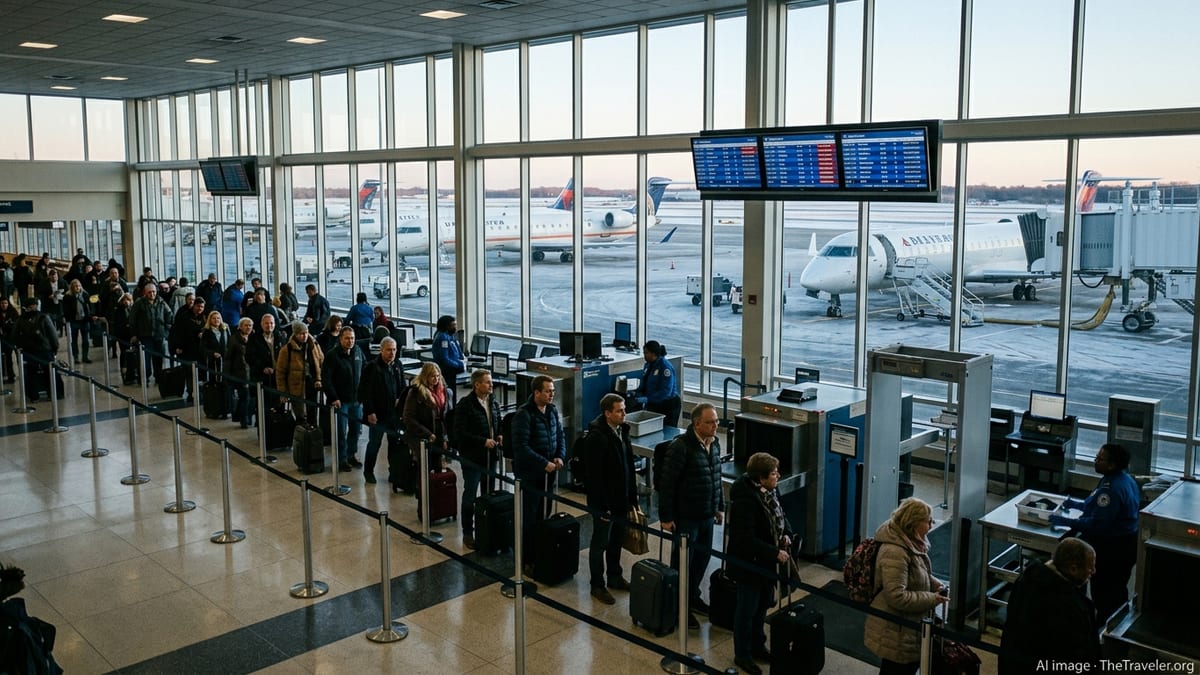
Cluster of Cancellations Hits Key Regional and Leisure Routes
Publicly available flight-status boards for Greenville-Spartanburg International Airport on Tuesday indicate a cluster of cancellations affecting services operated or marketed by Endeavor Air, Republic, Delta Air Lines and Southwest Airlines. The disruptions are concentrated on high-demand routes that typically connect the Upstate region to major hubs and leisure destinations, limiting options for passengers headed to Florida, the Mid-Atlantic and the Midwest.
Information from live tracking platforms shows that five departures and arrivals were removed from the schedule, with associated knock-on delays for connecting services. The cancellations involve regional jets serving legacy network carriers as well as point-to-point flights marketed directly by low-cost and hybrid operators. Travelers bound for Fort Lauderdale and Tampa, as well as connecting through Cincinnati, Newark and Baltimore, are among those most affected.
Greenville-Spartanburg is a key spoke airport for carriers serving Florida beach destinations such as Fort Lauderdale and Tampa, and for network links to large hubs including Newark and Baltimore. The sudden loss of multiple rotations on the same day restricts rebooking options, particularly on routes that do not have high-frequency service, leaving some passengers facing extended waits or the need to route through alternative cities.
The disruption comes at a time when demand through Greenville-Spartanburg is typically strong, with published route maps showing regular services to Florida and to major northern cities used both for business trips and for onward international connections. Even a small number of cancellations can therefore have an outsized impact on traveler itineraries when they occur across several airlines simultaneously.
Mixed Impact Across Endeavor, Republic, Delta and Southwest
The operational picture at Greenville-Spartanburg on Tuesday reflects the growing complexity of the U.S. regional airline landscape. Endeavor Air and Republic Airways operate large fleets of regional jets under brand arrangements for major network carriers such as Delta and United, meaning that a single cancelled regional flight can appear to passengers as a cancellation by a household-name airline.
Flight-tracking data and airline schedule information suggest that part of the disruption at Greenville-Spartanburg is linked to regional flying, where aircraft and crew are tightly scheduled and more vulnerable to knock-on effects from earlier delays in the system. When one rotation is removed for operational reasons, subsequent services can be affected, particularly on thinner routes such as Greenville-Spartanburg to Cincinnati or Newark that rely on specific aircraft types and limited frequencies.
Delta Air Lines, which uses Greenville-Spartanburg as a spoke to connect into its larger hubs, is also listed in the disrupted operations, as at least one of the cancellations involves a Delta-branded service that would typically rely on a regional partner for execution. Publicly available airline performance summaries for Greenville-Spartanburg show that Delta and its partners normally maintain high completion rates, which makes days with multiple cancellations stand out more sharply for frequent travelers.
Southwest Airlines, which links Greenville-Spartanburg with Florida destinations and with the Baltimore/Washington area, appears among the carriers with affected flights on Tuesday. Booking and timetable information regularly highlight nonstop services from Greenville-Spartanburg to Fort Lauderdale, Tampa and Baltimore, so the loss of even one rotation can mean fewer same-day alternatives for passengers trying to maintain their travel plans.
Ripple Effects for Fort Lauderdale, Tampa, Cincinnati, Newark and Baltimore
The disruption at Greenville-Spartanburg feeds into a wider network of routes across the southeastern and eastern United States. Fort Lauderdale and Tampa are among the most popular Florida destinations served from the airport, both for point-to-point leisure travelers and for passengers making onward connections through larger hubs in South Florida and along the Gulf Coast.
Real-time route listings show regular Greenville-Spartanburg services heading to Fort Lauderdale and Tampa, often timed to capture weekend and peak-season demand. When one or more of these flights is cancelled, passengers may be forced to connect via other airports in the region, lengthening travel times and adding pressure to already busy routes out of Atlanta, Charlotte or other nearby hubs.
Cincinnati and Newark, meanwhile, function as important connection points for travelers from upstate South Carolina heading to the Midwest, the Northeast and international destinations. A cancelled Greenville-Spartanburg service on these routes can mean missed long-haul connections and the need for last-minute rebookings across multiple airlines. This can be particularly challenging on days when weather or congestion is already straining capacity at major northern airports.
Baltimore, served from Greenville-Spartanburg primarily by low-cost carriers, offers both a gateway to the Washington, D.C. region and a springboard for domestic point-to-point flying. A cancellation on this link not only disrupts local itineraries but also reduces flexibility for travelers who might otherwise use Baltimore’s relatively extensive low-fare network to reach secondary cities across the country.
Passengers Face Long Lines, Rebookings and Uncertain Timelines
The practical impact for travelers at Greenville-Spartanburg on Tuesday has been a familiar but frustrating pattern of long lines at check-in counters and service desks, as passengers seek alternative flights or overnight accommodations. With five cancellations cutting into a relatively compact schedule, the availability of open seats on later departures to key destinations is limited.
Publicly accessible airline guidance typically directs passengers to use mobile apps or websites to rebook when flights are cancelled or substantially delayed, and many travelers at Greenville-Spartanburg are relying on these digital tools to avoid waiting in airport queues. However, when disruptions affect several carriers and high-demand routes at once, digital rebooking options can also become constrained as the remaining inventory is quickly taken.
Reports from flight-status dashboards show additional delays layered on top of the outright cancellations, further complicating travel planning. Some departures are posted with rolling delay times, reflecting broader operational pressures in the regional and national air traffic system. For passengers with tight connections in cities such as Fort Lauderdale, Tampa, Cincinnati, Newark or Baltimore, even modest delays can be enough to cause missed onward flights.
Travelers without flexible schedules or those heading to time-sensitive events may find themselves looking at alternative transportation options, such as driving to larger hub airports in Atlanta or Charlotte. While these hubs offer more frequent departures and a wider range of carriers, the extra ground travel and parking costs add further inconvenience and expense.
Ongoing Operational Strains in a Busy Summer Travel Environment
Tuesday’s disruption at Greenville-Spartanburg reflects wider operational strains across the U.S. airline industry during the busy summer travel season. Regional operators such as Endeavor and Republic, which support major carriers’ networks, continue to face tight staffing, aircraft availability constraints and demanding schedules, all of which can magnify the effect of any single operational issue.
Industry data and prior episodes of widespread cancellations indicate that days with irregular operations often begin with regional carriers, with effects then cascading into the mainline networks of larger airlines. As Greenville-Spartanburg relies heavily on regional jets to connect to major hubs and on a limited number of daily departures to Florida and key northern cities, it is particularly exposed to such fluctuations.
Greenville-Spartanburg’s role as a regional gateway to both vacation markets in Florida and business centers in the Northeast and Midwest means that sustained disruptions can affect not only individual travelers but also local tourism and commerce. Flight completion statistics for the airport in recent years have generally been strong, according to public reporting, suggesting that Tuesday’s wave of cancellations is an exception rather than a new norm.
With the current travel period still in full swing, passengers planning to fly through Greenville-Spartanburg in the coming days are being encouraged by publicly available advisories to monitor flight-status updates closely, check in early and consider backup options on alternate routes where possible. As airlines work to stabilize their schedules, the situation at Greenville-Spartanburg will remain a bellwether for how regional airports manage the ongoing pressures of a busy summer travel season.