


More news on this day
As crews continue clearing derailed rail cars from elevated tracks in downtown Richmond, one nearby restaurant owner is describing how a sudden halt in train service and days of street closures have rippled through daily trade, staffing and customer confidence.
Get the latest news straight to your inbox!
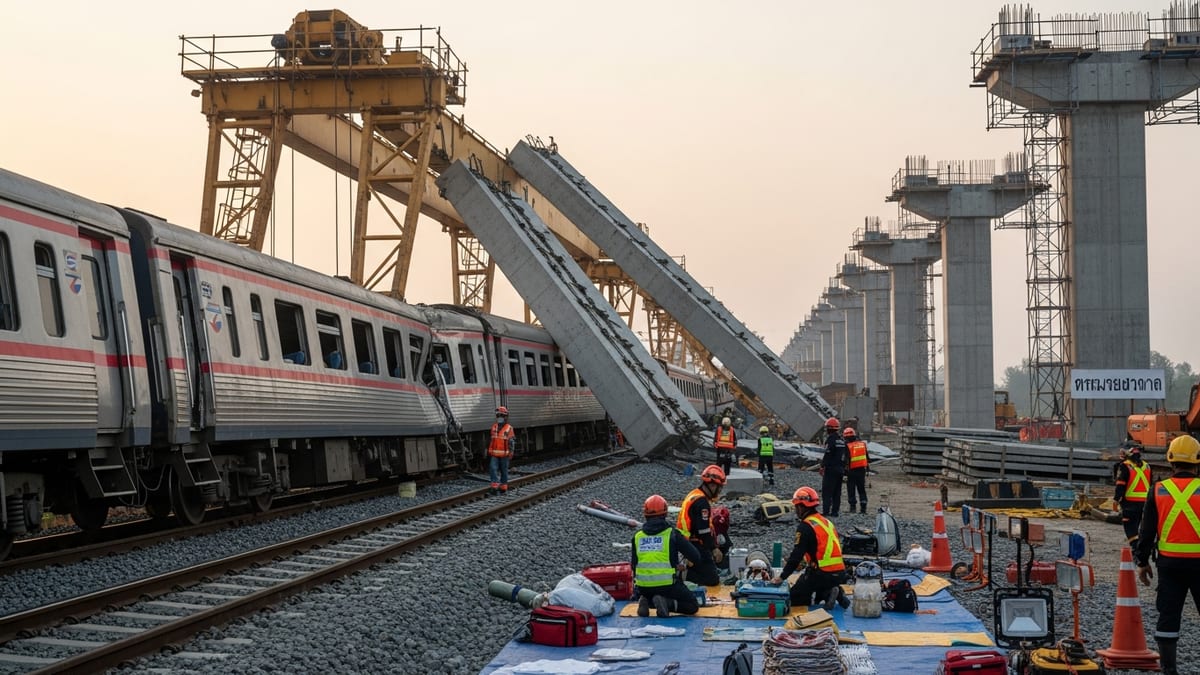
Disruption along a busy corridor
Reports from Richmond indicate that several freight cars left the tracks above the city’s canal walk area in early July, sending rail equipment into the water and prompting an immediate shutdown of nearby streets and walkways. Publicly available information shows that rail traffic through the downtown corridor was temporarily suspended while inspectors assessed the structural integrity of the elevated line and adjacent bridges.
For a local restaurant owner operating just a short walk from the derailment site, the sudden transformation of a busy rail and pedestrian corridor into a work zone has meant a sharp drop in foot traffic. Regular customers who typically combine a walk along the canal with a meal or a drink have been navigating detours, avoiding construction noise and in some cases staying away altogether while heavy equipment dominates the riverfront.
Business records reviewed by the owner in the days following the derailment point to noticeably lower sales compared with the same period last year, despite summer usually bringing a steady stream of downtown visitors. Lunch service, once buoyed by nearby office workers and travelers passing through the area, has been particularly affected as people reassess their routes and routines.
The restaurant’s leadership is also watching the broader transportation picture. With intercity passenger trains bypassing the downtown station during the disruption, the business has seen fewer out-of-town diners arriving by rail, a small but reliable segment of its customer base that helped smooth out slower weeknights.
Economic strain and mounting costs
The derailment’s impact on the restaurant extends beyond daily receipts. The owner describes facing higher operating costs just as revenue is tightening. Deliveries that once arrived on a predictable schedule are taking longer as trucks navigate restricted streets and congestion near the cleanup site, occasionally forcing last-minute menu changes when supplies do not arrive on time.
Staffing has required constant adjustment. On days when street closures are expanded or rail work ramps up, the business has reduced hours or cut shifts to match the lower volume of diners. That approach helps control labor costs but leaves servers and kitchen staff with smaller paychecks, adding a human dimension to a disruption that started on the tracks.
Insurers and financial advisers have featured prominently in the owner’s recent planning. Industry analyses following other derailments around the country describe how small businesses can face weeks or months of reduced income while still being responsible for rent, utilities and loan payments. Those same analyses note that many policies only partially cover losses tied to transportation incidents, leaving a gap that must be bridged through cash reserves, credit lines or emergency assistance.
Published coverage of similar rail accidents, including recent chemical derailments in other states, shows that some businesses have turned to civil litigation or class settlement funds to recover lost earnings. The Richmond owner is tracking those precedents while also weighing the time and legal costs involved in pursuing any claim related to the local incident.
Safety perceptions and customer confidence
Even before all rail cars are removed from the site, perceptions of safety have become another factor shaping the restaurant’s recovery. While early indications from Richmond suggest that the derailed train was carrying nonhazardous materials, images of rail cars in the canal and emergency vehicles concentrated along the riverfront have left a lasting impression on some residents and visitors.
According to business advocates who have studied the effects of high-profile transportation accidents, potential customers often overestimate ongoing risks, avoiding affected districts long after immediate dangers have passed. The restaurant owner has noticed diners asking more questions about access routes, parking and whether the area remains cordoned off, signaling that reassurance has become part of the daily customer interaction.
Local media accounts of other recent derailments, particularly the highly publicized chemical release in East Palestine, Ohio, show how quickly an isolated rail incident can influence public attitudes far beyond its immediate footprint. The Richmond owner is mindful that images shared online can blur distinctions between different events, making clear and measured communication especially important for businesses located near rail lines.
To counter lingering unease, the restaurant has emphasized routine and stability: maintaining its regular menu, keeping posted hours whenever possible and using social channels to show ordinary scenes of meals being served just blocks from the cleanup operation. The owner hopes that familiar images will help potential guests separate the reality on the ground from more dramatic scenes broadcast in the derailment’s immediate aftermath.
Call for infrastructure and policy changes
The Richmond derailment has also prompted the business owner to pay closer attention to national discussions about rail safety and infrastructure investment. Reports from transportation investigators and safety boards following other incidents point to aging bridges, deferred maintenance and operational changes within freight rail companies as recurring themes in derailment investigations.
After the East Palestine accident, federal safety hearings and technical reports highlighted concerns about train length, inspection practices and the performance of wayside detectors used to identify overheating components before they fail. Policy analysts note that many urban rail corridors, including elevated lines running through historic districts, were built generations ago and now carry heavier and longer trains than originally contemplated.
From the restaurant’s vantage point along the canal, any policy changes that reduce the likelihood of future incidents are viewed as essential to long-term business stability. The derailment has underscored how quickly a single equipment failure can shut down a neighborhood that depends on convenient rail and road access, even when no serious injuries are reported.
Business groups in rail-dependent cities have increasingly argued, in public statements and commentary, that stronger safety standards, more frequent inspections and targeted infrastructure funding are not only transportation issues but also economic priorities. The Richmond owner’s experience in the weeks since the derailment mirrors that perspective, framing rail reliability as a basic condition for downtown investment and tourism.
Looking ahead to recovery
With cleanup moving forward and rail traffic expected to resume on a limited basis, the Richmond restaurant owner is beginning to plan for the next phase. Past derailments in other communities suggest that foot traffic often returns gradually, first with curious onlookers and nearby residents, then with regular commuters and visitors once normal service patterns are restored.
The owner is preparing modest promotions aimed at drawing people back to the canal walk area as barriers come down, while remaining cautious about overcommitting resources in case work on the elevated line uncovers additional issues. That balance between optimism and risk management has become a defining feature of running a business in the derailment’s shadow.
Regional tourism advocates maintain that Richmond’s mix of historic architecture, riverfront scenery and restaurant scene remains a strong draw, particularly during the warmer months. The challenge for businesses near the tracks will be to reconnect those assets with travelers and locals who may have redirected their routines to avoid the disruption.
For the restaurant owner, the derailment has turned a theoretical concern about rail safety into an everyday operational reality. As trains eventually return to their normal rhythm above the canal, the hope is that stronger oversight and renewed attention to infrastructure will make similar disruptions less likely, allowing downtown businesses to focus again on growth rather than recovery.