

Colorado’s festival calendar is a year-round invitation to celebrate music, beer, hot air balloons, wildflowers, and Western heritage against some of the most spectacular backdrops in the United States. Whether you are a first-time visitor or a seasoned Rockies road-tripper, these annual Colorado festivals are the kind of events you book plane tickets and build vacations around. Here is a guide to the state’s marquee celebrations, what makes each unique, and how to experience them like a local.
Telluride Bluegrass Festival: Mountain Music in June
Few gatherings capture the spirit of Colorado quite like the Telluride Bluegrass Festival. Each June, the box-canyon town of Telluride fills with musicians, longtime “Festivarians,” and first-time pilgrims who come for four days of acoustic music framed by jagged San Juan Mountain peaks. Launched in the 1970s and now in its fifth decade, the festival has grown into one of the country’s most beloved roots-music events while managing to feel relaxed and communal in a way that surprises many big-festival veterans.
The festival typically takes place over the third weekend in June in Telluride Town Park, within walking distance of the historic main street’s cafés and Victorian storefronts. Daytime sets roll from late morning through early evening, with the natural amphitheater of the park providing excellent sightlines and sound from almost anywhere you spread a blanket. Evenings bring headlining performances as the alpenglow fades from the canyon walls and temperatures dip, so layers are essential.
While the festival’s backbone is bluegrass and acoustic Americana, the lineup routinely stretches into folk, country, indie, and even occasional pop or rock crossovers. Veteran performers often return year after year, and collaborations are part of the draw: it is common to see big-name artists sitting in on each other’s sets or joining informal camp pick sessions that can last well past midnight. The audience culture is mellow, family-friendly, and deeply loyal, which contributes to the event’s reputation as more of an annual reunion than a one-off concert weekend.
Tickets and lodging for Telluride Bluegrass regularly sell out months in advance, especially in busier travel years, so serious planners book early. If in-town rooms are scarce, nearby Mountain Village is linked by a free gondola that runs late into the night during the festival, offering access to more accommodations and dramatic aerial views of the valley. For travelers who prize atmosphere as much as music, there are few summer festivals in the United States that rival this one.
Great American Beer Festival: Denver’s Craft Beer Showcase
The Great American Beer Festival in Denver is the cornerstone event of the U.S. craft beer calendar and a pilgrimage site for serious beer fans. Established in the early 1980s and now held each fall, it has grown into what is widely regarded as the largest ticketed beer festival in the country. For a long weekend, the Colorado Convention Center and surrounding city venues buzz with tastings, tap takeovers, collaboration brews, and brewery-hosted events that spill into nearly every beer-focused bar in town.
The festival typically lands in late September or early October, drawing hundreds of breweries from across the nation and tens of thousands of attendees. Inside the festival hall, attendees navigate rows of booths pouring small samples of everything from classic lagers and West Coast IPAs to experimental sours, barrel-aged stouts, and nonalcoholic options. Behind the scenes, a professional competition awards medals across more than 100 beer and cider styles, making the event a barometer for industry trends and emerging regional stars.
In recent years the scope has broadened to reflect shifting drinking habits. Alongside beer, visitors can now expect to find distilleries, cider makers, hard seltzer producers, and low- or no-alcohol offerings. This evolution has helped the festival remain relevant to younger and more diverse audiences without losing its core focus on independent craft brewing. For travelers, the variety means that mixed groups of enthusiasts and casual drinkers alike can find something to enjoy.
Planning ahead is essential. Tickets for peak sessions often sell quickly, and downtown Denver hotels see noticeable demand during festival week. Many visitors pair a festival session with an afternoon exploring the city’s dense cluster of breweries in neighborhoods such as RiNo and LoDo, or with side trips to Front Range hiking trails earlier in the day. If you go, pace yourself, drink water between samples, and consider targeting specific regions or styles rather than trying to taste everything available.
Snowmass Balloon Festival: Balloons Over the Rockies
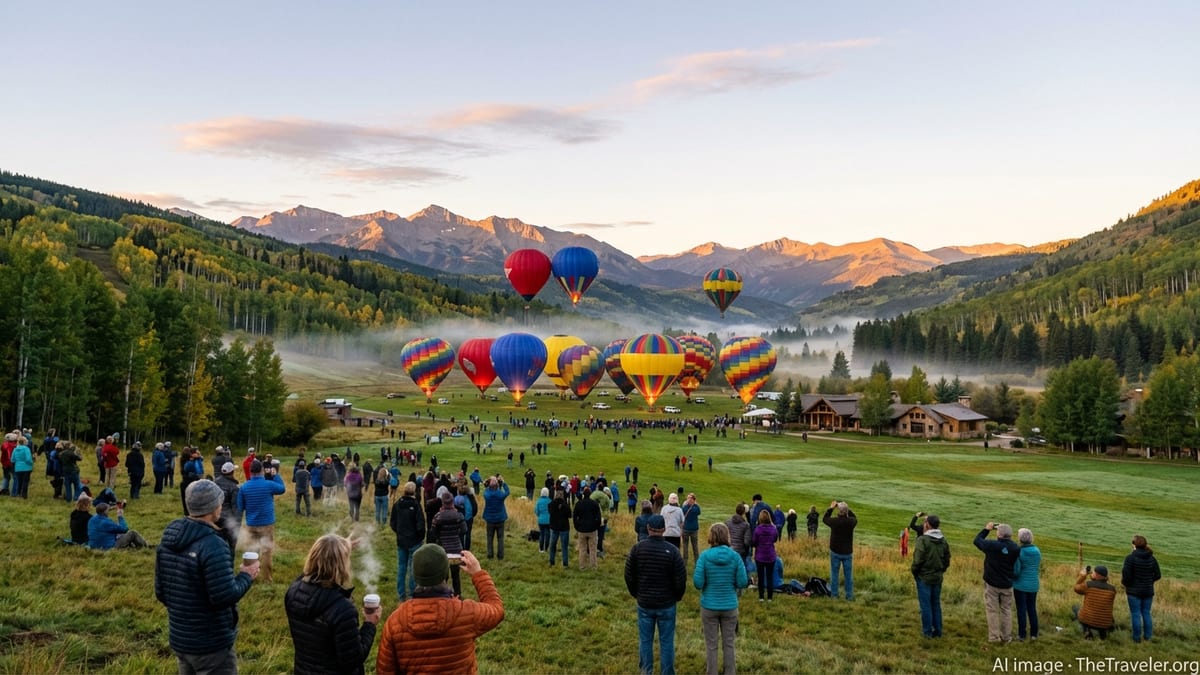
Colorado’s festival year is not only about music and beer. Each September, the Snowmass Balloon Festival brings a softer, dreamlike kind of spectacle to the Roaring Fork Valley. Centered in Snowmass Village, near Aspen, this long-running event typically spans a long weekend with early-morning balloon launches and an evening “night glow” that lights up the surrounding peaks as dusk settles in. It is one of the most photogenic gatherings in the state and a family favorite for locals and visitors alike.
The schedule usually includes daily launches from Snowmass Town Park just after sunrise, when cool, stable air provides ideal flying conditions. Spectators are encouraged to get close to the action, walking among the crews as they unfurl colorful envelopes and fire burners to bring the balloons to life. Watching them rise in staggered waves against a backdrop of alpine ridges and, in many years, early hints of fall color is a quintessential Colorado moment that requires nothing more than warm clothes, a thermos, and a camera.
Weather always plays a role at hot air balloon events, and the Snowmass Balloon Festival is no exception. Flights can be delayed, adjusted, or occasionally canceled if winds or conditions are not safe. Organizers communicate schedule changes on the ground, and even when balloons remain tethered, visitors can still enjoy static displays and the atmospheric glow events after dark. For travelers, building some flexibility into your itinerary over several days increases the chances of catching a perfect morning launch.
Because the festival is free to attend, it can be an attractive centerpiece for a broader visit to the Aspen Snowmass area. Many guests pair balloon-watching with daytime hiking or biking on local trails, or with a drive over nearby mountain passes if they are open. Lodging ranges from slopeside condos to nearby campgrounds, and booking in advance is wise, especially in milestone years such as major anniversaries that draw extra crowds.
Creede & Silverton: Small-Town Festivals With Western Soul
Colorado’s largest festivals draw national attention, but some of the state’s most rewarding events unfold in smaller, more remote communities that still live and breathe their mining and railroad heritage. In towns like Creede and Silverton, annual celebrations blend historic reenactments, local arts, parades, and homegrown music in a way that feels rooted in place. Travelers willing to venture off the main interstate corridors are often rewarded with a deeper sense of what rural Colorado is actually like.
Creede, tucked at the headwaters of the Rio Grande in the San Juan Mountains, is known for a summer calendar that can include theatre performances, arts festivals, and heritage events tied to its silver-mining past. A visit timed to coincide with one of these gatherings might feature gallery walks, live music in the streets, or guided tours that explain how the town reinvented itself after the mines closed. The combination of high-country scenery and a cohesive local arts scene makes Creede feel distinctly different from larger resort towns.
Silverton, reached by high mountain passes or the historic narrow-gauge train from Durango in the summer season, leans into its Old West character. Annual events here can include holiday celebrations, historic railroad-themed weekends, or summer festivals that pair live music with off-road, hiking, or cycling activities in the surrounding peaks. The pace is slower and the infrastructure more modest than in major ski resorts, but that is part of the appeal for travelers seeking authenticity over polish.
Because these small-town festivals may adjust dates or programming year to year, it is smart to treat them as anchors rather than rigid schedules. Plan a flexible road trip that includes time for scenic drives, side hikes, and weather contingencies. In return, you gain access to events where the ratio of locals to visitors is high, conversations are easy to start, and festival memories feel less like a mass-market experience and more like being temporarily woven into the life of a community.
Spring and Summer in Bloom: Wildflower & Art Celebrations
As the snow retreats from high elevations and alpine meadows burst into color, Colorado’s spring and summer festival season shifts toward outdoor art shows, wildflower events, and cultural fairs that make the most of mild temperatures. Various mountain towns host annual art festivals that fill streets and plazas with juried booths, live demonstrations, and food vendors, giving visitors a relaxed way to experience local creativity. These events often coincide with peak hiking conditions nearby, allowing travelers to split days between trails and town.
Wildflower-focused events are another seasonal highlight. In several high-country communities, typically in July, guided walks, photography workshops, and botany talks celebrate the short but spectacular bloom of columbine, lupine, paintbrush, and dozens of alpine species. While exact dates can shift according to snowpack and melt, the general pattern is consistent: lower-elevation towns see blooms earlier in summer, while higher basins explode with color a bit later. For visitors, this means a well-planned trip can catch multiple wildflower peaks across different valleys.
These festivals tend to be more low-key than blockbuster music or beer events, but that is part of their charm. Crowds are usually manageable, activities are often family-oriented, and schedules leave space for downtime at local cafés or picnic spots. Travelers who value uncrowded trails, shoulder-season pricing, and moderate temperatures may find these smaller celebrations even more appealing than headline-grabbing gatherings.
When planning, remember that Colorado’s mountain weather remains variable even in midsummer. Afternoon thunderstorms are common, sun at altitude is intense, and temperatures can swing quickly from warm to chilly once the sun dips behind ridgelines. Building flexibility into your days and packing layers, hats, and rain shells will keep these otherwise gentle festivals comfortable.
Winter & Shoulder-Season Events: Snow, Film, and Food
Colorado’s festival energy does not end when the first snowflakes fall. In winter and the shoulder seasons, a different mix of events takes over, often centered on snow sports, film, and food. Ski towns typically host annual winter carnivals or snow celebrations with ski races, night-ski parades, fireworks, and themed parties. These weekends create a lively counterpoint to otherwise routine ski days and appeal to families as much as to groups of friends.
Film festivals are another quiet strength of Colorado’s cultural calendar. Several mountain communities host annual screenings that range from adventure and mountain-sport documentaries to independent features and shorts. While some of the highest-profile film events require long-range planning and can be competitive to access, others remain relatively intimate, with opportunities to attend Q&A sessions, panel discussions, or pop-up screenings in historic theaters. For travelers, these festivals offer a cozy, indoor alternative when weather makes outdoor plans less attractive.
Culinary-focused events round out the cooler months, with food and wine weekends, specialty dinners, and chef collaborations drawing visitors during periods that might otherwise be quieter. These gatherings often highlight Colorado-grown produce, regional ranching traditions, and the state’s increasingly sophisticated restaurant scene. For out-of-state visitors, they can serve as efficient introductions to local flavors without the need to crisscross the entire state in search of standout meals.
Winter travel in Colorado requires extra attention to logistics. Road conditions can change quickly, mountain passes occasionally close, and storm systems can disrupt both driving and flying. When anchoring a trip around a cold-season festival, consider arriving a day early to build in a cushion for delays, and budget time for acclimating to altitude if you are coming from sea level. The payoff is the chance to experience beloved destinations in a quieter, more intimate season.
Planning Your Colorado Festival Trip
With so many marquee festivals spread across the calendar and the state’s varied landscapes, a successful Colorado festival trip hinges on smart planning. The first step is to clarify your priorities. Are you most interested in music, beer, outdoor spectacle, or small-town culture? Once you identify a primary anchor event, it becomes easier to build a route that either stays focused on one region or strings together multiple stops into a longer road trip.
Timing is crucial. Major festivals such as Telluride Bluegrass and the Great American Beer Festival routinely sell out tickets and nearby lodging well in advance, especially for weekend sessions. Booking early is particularly important if you prefer walkable, in-town accommodations or if your travel dates are inflexible. Smaller community events may be more forgiving but still benefit from advance planning, especially in popular summer months when general tourism demand is high.
Transportation logistics also deserve attention. Distances between Colorado’s marquee festival locations can be significant, and mountain driving demands caution, especially in shoulder seasons and winter. If you plan to enjoy alcohol at events, factor in walkable lodging, shuttles, rideshare options, or designated drivers rather than relying on late-night drives. In many mountain towns, park-and-ride systems or festival shuttles help reduce congestion and make getting around easier for visitors.
Finally, remember that altitude is a constant factor across much of festival-centric Colorado. Towns such as Telluride, Snowmass, and Silverton sit well above 8,000 feet, and even Denver is a mile high. Staying hydrated, easing into physical exertion, and getting adequate rest can significantly improve how you feel during busy event days. If possible, plan a gentle first day with light activity before diving into late-night sets or early-morning balloon launches.
The Takeaway
Colorado’s annual festivals are as varied as its landscapes. From bluegrass echoing off red-rock walls in Telluride to hot air balloons lifting over Snowmass meadows and tasting glasses clinking in Denver’s convention halls, each event offers a distinct way to experience the state. Together, they form a year-round rhythm that rewards repeat visits and encourages travelers to explore beyond the most familiar resort towns.
The key is to treat these festivals not as isolated bucket-list items but as gateways into local culture, history, and geography. Arrive prepared, give yourself time on either side of the main event, and stay open to unscripted moments, whether that is a conversation with a brewer at a side event or an impromptu jam session in a campground. In a state defined by big skies and big mountains, the memories that linger longest are often those forged in the small spaces between headline acts.
FAQ
Q1: When is the best time of year to visit Colorado for festivals?
The most concentrated festival seasons are summer and early fall, roughly June through early October, when weather is generally mild and travel is easier.
Q2: How far in advance should I book for major Colorado festivals?
For headline events like Telluride Bluegrass or the Great American Beer Festival, plan on booking tickets and lodging several months ahead, especially for weekends.
Q3: Are Colorado’s major festivals family-friendly?
Many are, including the Snowmass Balloon Festival and several music and art events, though large beer festivals are geared more toward adults and may have age restrictions.
Q4: What should I pack for a mountain-town festival?
Pack layers, a waterproof shell, sun protection, sturdy shoes, and a reusable water bottle, as temperatures and conditions can change quickly at altitude.
Q5: Do I need a car to attend these festivals?
A car is helpful for reaching smaller towns and combining events, but in Denver and many resort areas you can rely on walking, shuttles, and local transit once you arrive.
Q6: How does altitude affect festival-going in Colorado?
Higher elevations can cause fatigue, headaches, and dehydration. Drinking water, limiting alcohol, and taking it easy the first day help most visitors feel better.
Q7: Are tickets usually available at the gate?
Some small community festivals remain free or low-cost and do not require tickets, but major events typically sell out in advance and rarely offer reliable gate sales.
Q8: What if bad weather hits during a festival?
Organizers often adjust schedules for storms or high winds. Outdoor events may delay or modify activities, so flexibility and checking local updates are important.
Q9: Can I combine multiple festivals in one Colorado trip?
Yes, especially in summer and fall. With careful timing and routing, it is possible to attend a major event and several smaller local festivals on a single journey.
Q10: Are there festivals outside the main ski and resort towns worth visiting?
Absolutely. Smaller communities such as Creede and Silverton host annual events that offer rich local culture and fewer crowds than higher-profile destinations.